Furniture Moving in Khobar: How Each Kind of Furniture Is Protected From Old Home to New
Furniture is not one lump: wood fears scratches and damp, leather fears rubbing, glass fears impact and electronics fear vibration. This guide explains how each type is moved in Khobar in a way that protects it, and what to prepare before the move so your pieces arrive as they left.
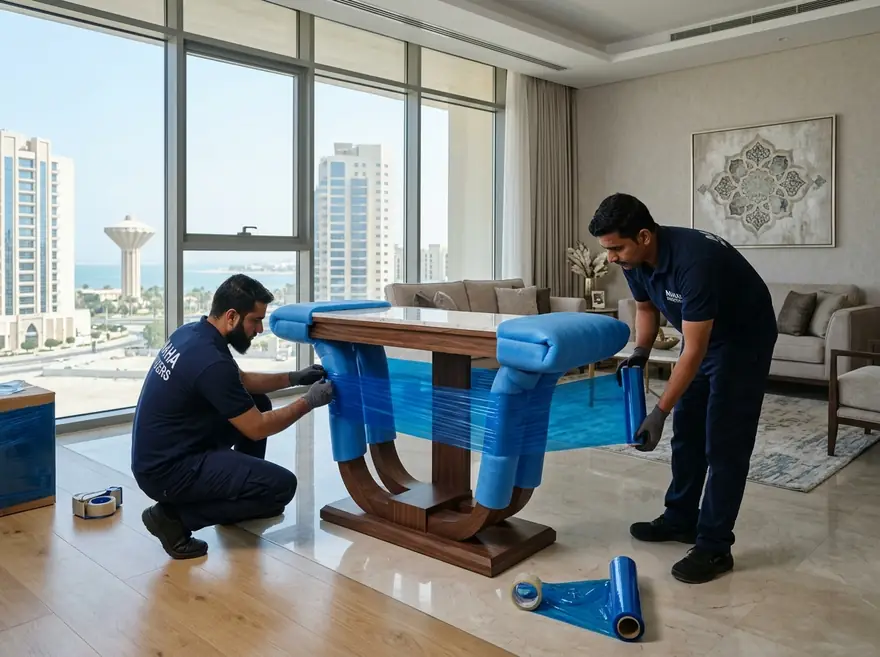
Each material has a way of moving that suits it
Good furniture moving starts with a question: what is this piece made of? Solid wood is strong but scratches easily, engineered boards swell at the edges with moisture, leather and fabric need a cover against friction and dust, and glass and marble need protection from impact.
When each material is treated as it deserves, furniture arrives in the condition it left. This page covers furniture moving in Khobar in particular, with its buildings and climate, and complements furniture moving across the Eastern Province with detail by material.
Solid wood and engineered board furniture
Solid wood is heavy and durable but suffers from scratches and knocks, so its corners are wrapped in compressed card and the whole piece in a blanket and cover. Parts that can come off are removed gently, and pieces are never dragged across the floor.
Engineered board such as MDF swells if exposed to damp and chips at the edges if scratched, so it is covered with a moisture-resistant layer, carried upright and separated by blankets. More detail is in packing by material.
Leather, fabric and sofas
A leather sofa dislikes rubbing and punctures, so it is wrapped first in a soft layer and then an outer cover, and tape is never stuck directly on it. Fabric dislikes dust and stains, so clean covers go on before trolleys or straps touch it.
Large sofas are turned at an angle through narrow doors and their legs removed where possible. For big seating sets read majlis moving and sofa moving.
Type of piece and how it is protected
A guide to the materials most common in homes.
| Piece | Main threat | Protection method |
|---|---|---|
| Solid wood cabinet | Scratches and weight | Card corners, blanket, enough hands |
| Engineered-board wardrobe | Damp and chipped edges | Moisture-resistant cover, upright carry |
| Leather sofa | Rubbing and punctures | Soft cover and wide straps |
| Mirror and glass | Impact and breakage | Corner guards, card, upright carry |
| Marble table | Weight and breakage | Extra hands, fixing, separate top |
Glass, mirrors and ornaments
Mirrors travel upright, never flat, with corner guards, between two sheets of thick card, and are fixed in the truck so they cannot move. Fragile glassware and ornaments are wrapped piece by piece in ink-free paper and layers of bubble wrap, and put in small labelled cartons.
Nothing heavy goes on top of glass boxes. Ornaments with sentimental value are best carried with you. More is in antiques and glass moving.
Marble tables and heavy surfaces
Marble is strong yet snaps with an impact on the edge or pressure in the middle of an unsupported top. Where possible the top is separated from the base, wrapped in layers and carried upright by enough hands, and never left flat without support.
Prepare the route beforehand: doors open, floors covered and no children in the way. See marble table moving for more.
Screens and sensitive appliances
A large screen travels upright in a dedicated cover or its original box, with small parts and cables bundled and labelled. Nothing is stacked on it and it is never carried lying down. Heavy household appliances are strapped and carried standing.
See TV and screen moving and appliance moving. It is wise to photograph appliance connections before disconnecting them to make reconnection easier.
Mattresses, beds and bedrooms
A mattress goes in a plastic cover that keeps out dust and stains, and spring mattresses are not folded or carried from the middle but from the ends. Wooden beds are dismantled and labelled, and attractive headboards wrapped separately.
Whole-bedroom guidance is in bedroom moving, and for rebuilding properly see furniture assembly.
Kitchen furniture, tables and chairs
Kitchen chairs and tables are many small parts whose fittings are easily lost, so they are gathered, tied and boxed. Wall and base cabinets that were taken apart are sorted and named; fixed ones need a carpenter.
Kitchen tools go in small, strong boxes to avoid excess weight, and plates are wrapped on their edge rather than flat. Custom kitchen details are in custom kitchen moving.
How Khobar's climate affects furniture
Khobar is a humid coastal city for most of the year, and dust at times becomes a hazard for uncovered furniture. Furniture is therefore best covered with wraps that protect while letting it breathe, and not left for long hours in the truck under the sun.
In summer the steel box gets hot, so loading and unloading times are planned and the box is closed straight after loading. Moving seasons in the east helps you choose the time.
How furniture is prepared before lifting
A simplified order that suits most pieces.
Empty and clean
Drawers and cupboards are emptied and pieces are wiped of dust before wrapping.
Dismantle parts
Doors, legs and removable shelves come off and are labelled in bags.
Wrap by material
The right wrap is chosen: card, bubble, blanket or a dust-proof cover.
Organised lifting
Pieces are carried with straps and enough hands and the route is protected.
Secure in the truck
Pieces are placed, fixed and separated with blankets.
Furniture in towers: lifts and narrow doors
In Khobar towers the lift and door dimensions decide what can pass whole and what must be taken apart. Measure doors and lift before buying new furniture, and decide before the move which pieces will be dismantled.
For upper floors see moving to high floors, and for buildings without a lift moving without an elevator. Some flat-pack furniture is built so that it cannot leave assembled, so ask about that.
Villa furniture and quiet districts
Villas often have bigger and heavier pieces and internal stairs. The load is shared between crews, treads and marble floors are covered, and pieces wider than the stairs are dismantled.
For a wider view of this type of move see villa moving, and for choosing a specialist villa moving company.
Children's furniture and toys
Children's furniture is usually bunk beds, coloured cupboards and small tables with thin boards that need care. Beds are dismantled carefully with their screws bagged with each piece and boards numbered to ease rebuilding.
Large toys and bikes are taken apart where possible and small toys go into clear boxes. Set aside a safe place so the child can carry a favourite toy personally.
Why you should write an inventory of your furniture
List the large pieces and their condition (existing scratches, missing parts, previous damage) and photograph them. That list helps you check pieces at unloading and shows what existed before the move.
It also helps with the crew in deciding who lifts what. The moving checklist is a ready model that you can adapt to your own pieces.
What changes the estimate according to furniture type
Cost is influenced by the type of furniture, the number of heavy and fragile pieces, whether dismantling and assembly are needed and whether some pieces need extra hands or special covers. We publish no fixed figures because every home differs.
Understanding the items helps, so see the cost breakdown and comparing moving quotes.
Mistakes that damage furniture in transit
The most common are dragging pieces across the floor, lifting by weak parts such as legs and handles, leaving furniture uncovered, stacking pieces on top of each other without separators, forgetting to empty drawers and not removing glass doors.
Prevention means treating each piece by its name and type rather than as a burden. Ask the crew how they handle your most important piece.
Unloading and checking condition
When the furniture reaches the new place it is unloaded in reverse order, pieces go into their rooms and each one is checked against the list and photos. Any scratch or break is reported at once before the crew leaves.
Then dismantled pieces are rebuilt, doors and drawers adjusted and the place cleaned. If you have notes, write them in a clear message.
Rugs, curtains and soft furnishings
A large rug is rolled, not folded, so the backing fibres do not crack, then covered against dust and tied at both ends. Wool or silk rugs are cleaned before rolling where possible, because trapped dust damages them over time.
Curtains are taken down and folded according to the fabric, then bagged and labelled by room with their rails and screws. These small details are what get lost most on moving day, so label each bag with the room and window.
Outdoor furniture and balcony pieces
Garden and balcony furniture endures sun, dust and damp, so it needs cleaning and drying before wrapping, otherwise it traps dirt or moisture and rusts or rots. Umbrellas and folding tables are dismantled, and sharp metal pieces wrapped to protect nearby furniture.
If outdoor furniture is old or damaged it may be better to let it go than pay to move it. Ask yourself whether you will use it in the new home.
Older and heritage furniture
Furniture inherited or bought long ago may carry sentimental or financial value and may have weak joints. It is not dismantled by force nor lifted by fragile parts, and may need more hands and thicker wrapping.
Photograph it before the move and tell the crew its worth, because that changes how it is handled. If it cannot tolerate dismantling, agree in advance that it moves as one piece with the route prepared.
Metal and home-office furniture
Metal cabinets, desks and steel shelves are heavy with sharp edges that can scar floors and walls. They are emptied completely, their edges covered and moved on trolleys where the route is level.
For a home office, cables and devices are organised into labelled boxes, and the computer and documents travel with you rather than in the truck. For bigger office moves see office furniture moving.
Drawers and cupboards: what stays and what comes out
The golden rule is not to move furniture full. Loaded drawers add weight, slide open during carrying and can break the base. Take everything out, sort it into boxes, then return drawers empty or fixed with a suitable tape that peels off without a mark.
If a cabinet holds valuables, take them out yourself and carry them with you. That simple habit protects you from loss, lightens the load and speeds the work.
Sorting before the move: what to take and what to drop
A move is a chance to lighten the load. Sort furniture into three groups: what you will move, what you will sell or donate and what you will throw out. Old pieces that will not suit the new home often cost more to move than they are worth.
Measure the new home before you decide, and sketch what will go in each room. That way you do not move a piece only to find it does not fit.
Between vacating and receiving: protecting furniture while it waits
Sometimes the new home is handed over later than the old one is vacated, and furniture stays on the truck or in a temporary place. That place must be clean, dry and closed, and pieces kept covered and off the bare floor.
Ask early about storage if you expect a gap, and do not leave furniture on a truck in the strong heat for days. Planning for this gap protects your pieces and saves trouble.
The short version before you decide
Good furniture moving treats each material as it should be treated: wood with corner protection, leather with a soft cover, glass carried upright, marble with enough hands and electronics secured and wrapped. Allow for Khobar's climate and buildings.
Send us a description of your furniture with photos and both addresses, and we will tell you the method, crew and vehicle that suit it, without obligation.
Questions about moving furniture in Khobar
Short answers before you book.
How is leather furniture moved without scratches?
Are beds and wardrobes dismantled for the move?
How are mirrors protected?
Will the crew move marble tables?
Does humidity harm furniture in Khobar?
What about furniture that will not fit the lift?
Can flat-pack furniture move assembled?
How do I request a quote?
Related services and guides
More on protecting furniture.
Movers in Khobar
The main service page for the city.
Furniture moving, Eastern Province
The regional reference.
Packing by material
Wraps for each material.
Majlis moving
Large sofas and fabrics.
TV and screen moving
Protecting sensitive devices.
Packing in Khobar
Preparing pieces before loading.
Marble table moving
Heavy tops.
Request a quote
Send your move details.
Same-day moving in Al Khobar
Quick same-day moves.
24-hour moving in Al Khobar
When round-the-clock moving fits.
Dyna truck moving in Dhahran
Dyna truck furniture moving in Dhahran: how to estimate your load, when one truck is enough, when tw
Moving company in Dhahran
Choosing a moving company in Dhahran: how to vet movers, handle compound gate rules, protect furnitu
Furniture moving in Dhahran
Furniture moving in Dhahran explained piece by piece: how wood, sofas, marble, glass, screens and ap
Furniture moving company in Dhahran
Furniture moving company in Dhahran: the written agreement, item list and condition notes that preve
Furniture moving in Qatif
Protecting each type of furniture in Qatif.
Furniture moving in Saihat
Furniture moving in Saihat: how we protect wood, leather, fabric, glass, marble and appliances during a move,…
Want to move your furniture safely in Khobar?
Send a description and photos of the furniture and both addresses, and we will tell you the method and crew that suit it, without obligation.