Villa Moving in the Eastern Province: Running a Large-House Move Across Floors, Majlis Rooms and Annexes
Moving a villa is not moving a flat that happens to be bigger. It is a project with stages: dividing the house into zones, numbering rooms, deciding what leaves first and what leaves last, protecting marble, stairs and chandeliers, and supervising a larger crew across several floors. In the Eastern Province villas range from stand-alone houses in older districts, to modern villas in newer plots, to villas inside gated compounds, and each imposes a different order of work. This page walks through a villa move from start to finish: how to split the zones, what needs special care such as majlis rooms, chandeliers, marble and outdoor furniture, how to expect the time needed and what to prepare before asking for a quote.
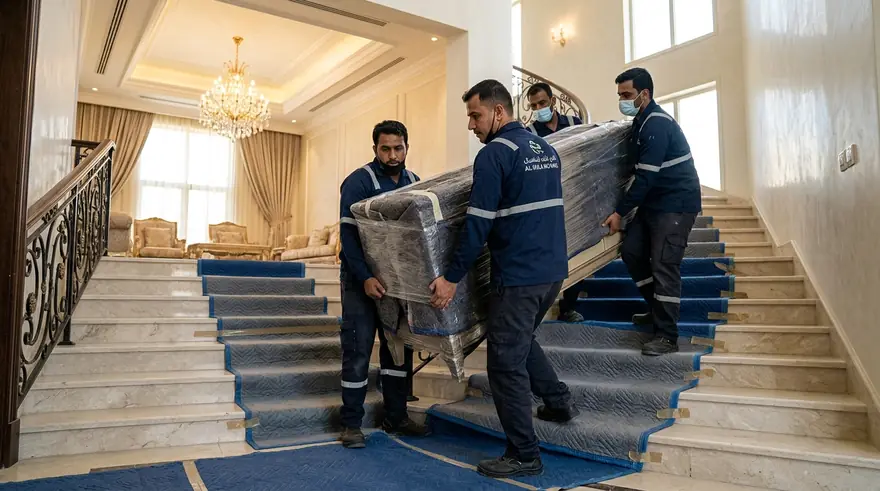
Why a villa move behaves like a small project
When a house has three floors, a men majlis and a women majlis, many bedrooms, an annex, a yard and a roof, it is not enough to pick a moving day. You need a sequence: what is wrapped first, who supervises each floor, where cartons gather before loading and what is loaded last so it comes off first. That order is what stops chaos from turning into scratches, losses and exhaustion.
The upside is that villas are usually easier to reach: a wide entrance, space for the truck and no shared lift. But the volume and variety of furniture raise the number of heavy and fragile pieces together, so success rests on organisation.
Zones of a villa and what marks each one
Dividing the house into zones is the first step of organisation.
| Zone | What is usually there | What needs care |
|---|---|---|
| Majlis and reception rooms | Large seating, tables, curtains, chandeliers | Big pieces, glass and marble |
| Ground floor | Kitchen, dining room, appliances | Fridges, appliances and dining tables |
| Upper floors | Bedrooms, wardrobes, beds | Dismantling, stairs and mattresses |
| Annex and maid room | Mixed furniture and stored items | Small items that have piled up |
| Yard and roof | Outdoor seating, toys, storage | Outdoor furniture exposed to dust and sun |
Give every zone a colour or code on its cartons so crew members know where to place each one in the new house.
Seven stages of a villa move from first to last
A sequence that reduces surprises and tells each team its role.
A survey before the date
Walk the house with photos or video of every zone so we understand the volume, the heavy pieces and the access.
Zoning and numbering
Zones are set, rooms numbered and the numbers stuck on doors in both the old and new house.
Dismantling and wrapping
[[Carpenters|/en/services/furniture-assembly/]] start with large pieces and wardrobes; items are wrapped in stages according to material.
Loading in reverse order
What the new house needs first is loaded last so it comes off first; heavy at the bottom, fragile in a stable spot.
Transport
Trips are organised by volume and distance, and carton numbers are logged per vehicle.
Unloading and placing
A supervisor at the new house receives each number and directs the crew to its room.
Assembly and checking
Furniture is assembled and checked against the list, and any notes are recorded the same day.
Majlis rooms and big seating sets: the most space and the most attention
A Gulf-style majlis often has large floor or Arabic-style seating, back cushions, side tables, carpets and sometimes heavy curtains and feature lighting. These pieces are large but delicate: fabrics collect dust, carved wood suffers friction and glass and marble break at any knock. Seating is therefore cleaned before wrapping, covered in several layers and carried well clear of door edges.
It helps to photograph the majlis layout before dismantling so the same arrangement can be rebuilt quickly in the new place, especially if the seating is made of separate units fitted together. Cushions and bolsters are not loaded with heavy furniture, so they are not soiled or crushed.
Chandeliers, lighting and curtains: take them down before moving day
Chandeliers are among the most expensive and fragile items in a villa, and removing them during a crowded loading session is not advised. It is better for an electrician or specialist to take them down a day or two earlier, with parts wrapped in bubble film and paper and placed in rigid numbered boxes, and with photos of how they were wired to make reinstalling easy. The same applies to valuable hanging and wall lights.
Curtains and rails are taken down and folded carefully into clean covers, with screws and brackets kept in a small bag labelled with the room name. If curtains were made to fit the old rooms, find out the new rooms measurements before moving so you know whether they will suit.
What needs special care in a villa?
Items that recur in villas and deserve dedicated wrapping or handling.
Marble and glass tables
Tops are separated and wrapped in bubble film and cardboard, moved upright and carried by at least four hands because of their weight.
Mirrors and artwork
Corners are protected and pieces stand between supporting boards, numbered to return to the same spots.
Large screens
Moved in the original box if you have it or with dedicated wrapping, carried upright by strong hands.
Kitchen appliances
Fridge, oven and washer are emptied and disconnected, with technicians for built-in units.
Outdoor furniture
Cleaned, dried and wrapped against dust and scratches, with removable metal parts taken apart.
Large cabinets and wardrobes
Taken apart in numbered order, with doors carried separately and screws bagged and labelled.
Protecting marble, stairs and entrances
Modern villas often have marble or porcelain floors and polished stairs, and these are the first to suffer when something is dragged or dropped. Thick covers or cardboard are laid along the main route, stair edges are protected, trolleys with soft wheels are used instead of metal ones and nothing is pulled across the floor.
Pay attention to the entrance, gate and yard too: paving stone and garden floors can be marked by loaded trolleys, and wooden doors need guards where furniture passes. It is wise for someone to walk the route before the start, photograph it and confirm it is clean.
When volume is large: a collection area and a loading map
One of the secrets of a successful villa move is a collection area close to where the truck stands, where cartons and wrapped pieces are gathered by zone and number before loading. That stops loading from halting while a piece comes down from the third floor, and keeps the loading continuous and orderly.
It also helps to sketch a simple map of the truck body: what goes at the front and what at the back, with heavy items low and fragile pieces in stable positions. This is different from choosing a vehicle type, which we cover on another page; here we are talking about arrangement, not selecting the vehicle.
The annex, yard and roof: places everyone forgets
A common mistake is to count the furniture inside the house and forget what is in the annex, on the roof, in the maid room and in the outdoor store. Those places usually hold old furniture, garden tools, broken appliances and boxes unopened for years. If they are left out of the estimate the number of trips can surprise you or the crew may run late.
So give these places a line in the preliminary walk-through and decide early what will be moved, what will be sold or donated and what will be thrown away. Reducing the load before wrapping is cheaper and easier than moving things you will not use.
How long does a villa move take? Factors behind the estimate
We do not give a fixed duration because a villa with few rooms differs from a big villa packed with furniture. But the factors that decide the duration are known: the amount of furniture and number of floors, the amount of dismantling, how much wrapping is already done when the crew arrives, the distance of the new house, the number of trips and the number of workers available. The more is wrapped beforehand, the shorter the loading day.
In large villas the operation may stretch over two days: one for dismantling and wrapping and one for loading and delivery. This is calmer and less risky than forcing everything into one exhausting day, and we agree the schedule with you before the date.
What the owner prepares and what the crew handles
Clear roles reduce friction on the day.
| Task | You | The crew |
|---|---|---|
| Removing valuables, papers and jewellery | Carry them yourself | — |
| Emptying drawers and small items | Pack them or agree they will be packed | Wrapping, if requested |
| Chandeliers and valuable lighting | Arrange a specialist beforehand | Move them once removed and wrapped |
| Large furniture and wardrobes | Decide what is dismantled | Dismantling, wrapping and loading |
| Built-in appliances | Have a specialist disconnect them | Move them once prepared |
| Supervision in the new house | Direct where rooms go | Place pieces and assemble |
Agree these details in the written quote so there is no confusion over what it includes and what it does not.
Safety for workers and family during a large move
In a big house with several workers and heavy pieces on stairs, the family needs to be more careful: keep children away from carrying routes, shut pets in a closed room, keep corridors clear and leave no sharp tools on the floor. Someone from the family should supervise each floor without being distracted by other tasks.
It is advisable not to leave the house during the move without someone representing you, and to keep your keys and papers with you. In larger households assign a supervisor per floor or zone, since that person knows where each item goes.
On arrival: unloading in order and checking against the list
At the new house the crew should know who supervises and who directs, rooms should be numbered, doors opened and routes prepared. Unloading starts with large pieces, wardrobes and beds, then cartons by room, and finally small items.
When it is over, go through the list with the handover crew and document any scratch or break with a photo the same day; quick documentation is the basis of any resolution. Do not hesitate to ask for any piece to be reassembled properly before the crew leaves.
What should you send us for a detailed villa quote?
Send the city and district, the number of floors, rooms and majlis rooms, whether there is an annex, yard or roof holding furniture, the heavy and fragile pieces, whether there are chandeliers or built-in appliances needing technicians, whether you want wrapping and dismantling, the location of the new house and a preferred date. Photos or video of each zone make the estimate more accurate.
Then contact us on WhatsApp or by phone, and we will arrange a visit or a photo walkthrough and give you a written quote that spells out what it includes.
Frequently asked questions about villa moves
Answers to what people usually ask before moving a large house.
Does a large villa need two days?
How are chandeliers moved?
Does the crew move the outdoor furniture and annex contents?
How are marble and stairs protected?
Does the quote include disconnecting built-in appliances?
Do I need a family member to supervise?
How are the number of trips estimated?
What helps you give a more accurate quote?
Pages related to villa moves
Guides and services that help plan the move.
Villa moving service
The general service page
Large truck moving
For villas, offices and long routes
The moving-day crew
Roles and safety
Furniture packing by material
Which wrap for which piece
Furniture disassembly and reassembly guide
Numbering and documenting parts
Moving timeline
When each stage should start
Apartment moving
Lift and parking planning
Furniture storage warehouses
When there is a gap between moving out and settling in
Request a written quote
Send your move details
Villa movers
How to size and prepare a villa move.
Luxury furniture moving
Protecting valuable wood, marble and chandeliers.
Custom kitchen moving
Is a made-to-measure kitchen worth moving?
Sofa moving
Corner sofas, leather and majlis seating moved safely.
Majlis Moving
A whole majlis: floor seating, carpet, tables and curtains.
Piano Moving
Upright, grand and digital, and tuning after the move.
Moving a villa and want a clear plan?
Send photos of the main zones and the number of floors on WhatsApp or call us, and we will prepare a detailed moving plan and written quote in the Eastern Province.