Majlis Moving in the Eastern Province: How a Traditional Sitting Room Moves as One System
A majlis is not a single piece of furniture. It is a whole room of floor cushions, back rests, carpets, low tables, curtains, lighting and hospitality items. This page explains how we inventory, wrap and load it across Dammam, Khobar, Jubail and the rest of the Eastern Province.
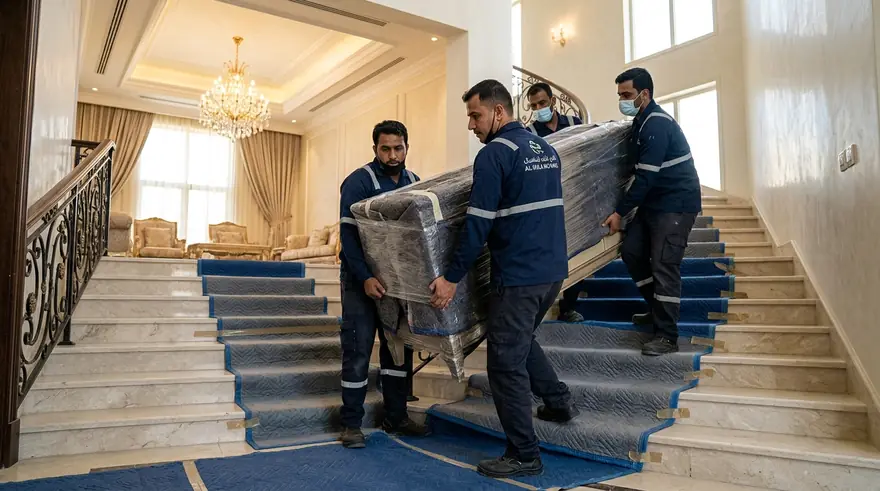
Why moving a majlis is different from moving a normal living room
A typical living room revolves around a sofa, a coffee table and a TV. A traditional majlis is built from many low, soft and closely arranged parts: long floor seating along the walls, back rests, a large carpet underneath, side tables, sometimes display cabinets, incense burners and shelves for coffee pots and cups.
The main risk is disorder rather than weight. Each piece is light, yet there are many of them, and they get damaged when mixed up or left unwrapped. So we treat the majlis as one system: list first, wrap each group separately, then load in an order that is easy to reverse at delivery.
Make a list of everything in the majlis
Many problems start when an item is forgotten or considered too small to wrap. Before moving day we walk through the room item by item and write a short list. It also helps at delivery, because you can match what arrived against what left the house.
- The floor seating pieces, whether foam blocks or tailored mattresses.
- Back rests, side cushions and loose pillows.
- The main carpet and any protective underlay beneath it.
- Low tables, end tables and storage units.
- Curtains, rods, brackets, lamps and the chandelier.
- Hospitality items such as coffee pots, cups, incense burners and serving trays.
- The TV, its stand and any small devices connected to it.
Carpets: roll with the pile, never fold
The carpet under a majlis is the first item lifted and the last item laid, so we plan its place inside the truck early. Thick wool carpets are rolled slowly along the direction of the pile, on a tube or onto themselves. Folding leaves permanent creases and cracks the fibres over time.
We cover the carpet with a clean sleeve against dust and abrasion and tie it with a wide strap, not a thin cord that squeezes the fibres at one point. A heavy carpet is carried horizontally by two people. In the dusty, humid conditions common in the Eastern Province, the sleeve stays closed until it is unrolled in the new room.
Floor seating and cushions: protection from dust and odours
Floor seating is usually foam under a fabric cover, which absorbs dust and odours quickly and stains easily if carried uncovered. Each piece is wrapped in a closable cover or a full stretch wrap, and matching pieces are stacked in the same direction so the edges do not bend.
Back rests and pillows go into separate bags according to the side of the room they belong to, with a simple label on each bag. This small habit saves a lot of time when the room is rebuilt, because nobody has to guess where each piece came from, and embroidered fabrics stay away from rough surfaces that can snag them.
How a majlis is moved on loading day
One rule governs the whole room: what will be laid first in the new home is loaded last.
Take down curtains and lights
Curtains, rods and lamps come down first so the crew does not trip over them while carrying larger pieces.
Wrap the small items
Coffee pots, cups and burners go into padded cartons, which are sealed and marked fragile.
Roll the carpet
Once the edges are cleared, the carpet is rolled, strapped and carried flat.
Bundle seating and cushions
Pieces are wrapped, grouped into equal bundles and numbered by position around the room.
Carry tables and cabinets
Shelves are emptied, glass doors secured and corners covered before these pieces go out.
Load in reverse order
Heavier items go in first, while seating and carpet go in last so they come out first.
Low tables, shelves and glass display cabinets
Low tables look safe because they sit near the floor, yet glass or marble tops are what break most often, since they are carried flat and something is easily placed on them. We remove detachable tops, cover the glass with a thin foam layer and cardboard on both faces, and carry it upright in a fixed position where it cannot slide.
If the majlis has a glass cabinet for dishes, emptying it first is the foundation. We then secure the doors with tape that leaves no residue and protect the cabinet from vibration. Some of this furniture is heavy because of solid wood or marble, so see our page on heavy furniture moving in the Eastern Province for how we approach difficult loads.
What threatens each item in a majlis and how we protect it
A short table of the main risk for each group and the usual protection.
| Item | Main risk | Usual protection |
|---|---|---|
| Large carpet | Folding, dust and humidity | Rolled with the pile, closed sleeve, carried flat |
| Foam seating | Dust, stains and odours | Full wrap and matching stacks |
| Back rests and cushions | Snagging and dirt | Separate labelled bags |
| Glass tables | Breakage when carried flat | Detach top, board both faces, carry upright |
| Coffee pots and cups | Impact and scratches | Individual wrap and padded cartons |
| Curtains and rods | Bending and lost fittings | Orderly removal and one sealed fittings bag |
These are general guidelines. We adapt them to your pieces and their condition during the pre-move walkthrough.
Curtains, chandeliers and wall lighting
Lighting in a majlis often includes glass or crystal parts that need careful removal. Chandeliers should be disconnected from power by you or only after the circuit breaker is confirmed off. Their hanging parts are wrapped individually and placed in a divided box. Heavy curtains are folded in wide folds and bagged against dust, while rings and rod brackets go into one small sealed bag marked with their location.
We do not promise new electrical wiring as part of a move, and prefer that an electrician handles any connection that is not simple. Removing and re-hanging basic wall decor is something we can arrange with the dismantling and assembly crew if requested.
Hospitality items: coffee pots, cups and incense burners
These objects may matter more sentimentally than financially, and some are inherited. We wrap them with the same care as luxury pieces: each in ink-free paper and then bubble wrap, cups laid on their sides rather than stacked, and gaps filled so nothing moves. Burners should be cooled completely and cleaned of ash before packing.
You are welcome to carry your most precious items yourself in your own car. If you have pieces you particularly value, tell us before loading and we will set aside a separate carton and a protected position inside the truck.
Men's and women's majlis: entrances and privacy
Many homes in the Eastern Province have two separate majlis rooms or more, and entrances differ between a villa and an apartment. It helps if you tell us the best time to load each room and the route the crew should use, so family members are not made uncomfortable.
You can also empty the women's space or pack personal belongings in closed boxes in advance, so only the furniture to be carried remains. We respect these arrangements wherever possible within the agreed time, and we send only a limited number of crew members into each room at once.
Moving a majlis from a villa, an apartment or a tower
In a villa the majlis is often on the ground floor with its own entrance, so seating and carpets leave without an elevator. In an apartment the lift and corridors matter: a long rolled carpet may not fit standing in a small elevator, so we change its angle or use the stairs when needed. In towers and upper floors we ask for lift reservation and a fixed time window to avoid crowding.
Because the region has many villas and compounds, you can read how we organise loading from several rooms in one day in our page on villa moving in the Eastern Province.
Rebuilding the majlis in its original order
When the truck arrives, unloading runs in reverse: the carpet first so it can be laid, then seating and cushions by their numbers, then tables, and last the small items and lighting. A clear photo of the majlis from two angles before dismantling will save you much hesitation.
You remain free to change the layout if the new majlis has different measurements, and we help move pieces before final positioning. Before we leave we ask you to review the inventory list and sign it yourself after checking the condition of the pieces.
Majlis moving FAQ
Short answers to what people ask most about moving a majlis.
Do you move the whole majlis including seating, cushions and carpet?
How do you protect a wool carpet?
Can the majlis move from an apartment to a villa on the same day?
Do you remove curtains and chandeliers?
How do you handle old coffee pots and cups?
Do dust and humidity affect the foam seating?
Can you move just one room, such as the majlis?
How do I request a quote for a majlis move?
Pages that may help with a majlis move
Topics close to preparing and moving a sitting room.
Sofa moving
Corner sofas, leather and fabric, legs and backs.
Luxury furniture moving
Sensitive pieces that need extra covering.
Packing by material
How to wrap wood, glass and fabric.
Room by room packing
The order of preparing a home for loading.
Heavy furniture moving
Marble tables and large cabinets.
Villa moving
Loading several rooms of a villa in one day.
Moving boxes
Carton sizes and packing small items.
Request a quote
What we need to estimate the cost.
Prepare your majlis for the move with a crew that knows the details
Send us the number of pieces and the pickup and delivery addresses and we will explain the steps and price factors.