Furniture Moving in the Eastern Province: Protecting Each Type by Material
Furniture is not all moved the same way. Solid wood differs from MDF, leather from fabric, glass from marble. This page explains how we handle each type when moving furniture in the Eastern Province, and why humidity and dust shape the choice of protective materials.
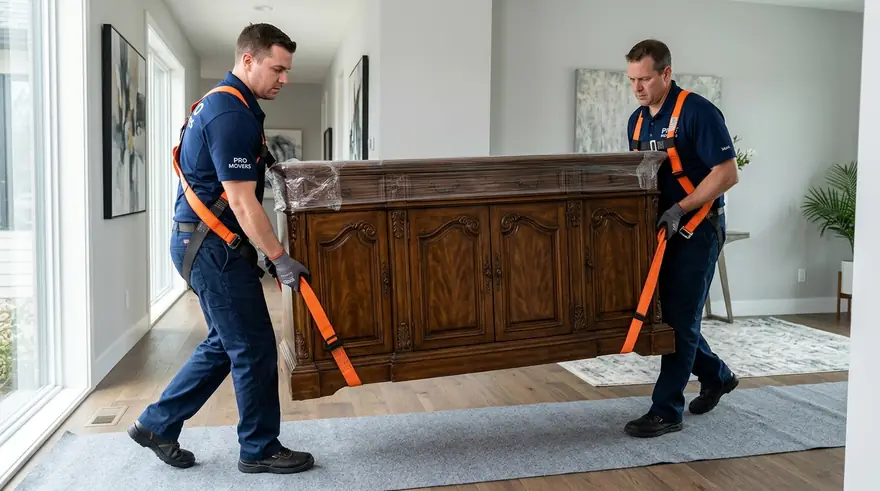
Why does furniture need a different method from one piece to the next?
What damages furniture in a move is rarely a dramatic fall. It is small repeated rubbing, uneven pressure, heat and moisture. A piece that copes with the motion inside a truck may suffer from stretch film pressed straight against it, and another may need ink-free paper under any wrap so colour does not transfer to its surface.
So on every job we sort the pieces by material before choosing packing materials and how to secure them. In the Eastern Province we also allow for high humidity in coastal cities and dust on windy days, because either can cling to furniture surfaces if they are left exposed while loading.
A quick guide: what suits each type of furniture
This is a general table to explain the logic. We may adjust the method to the condition and age of a piece and where it is going.
| Furniture type | Main risk in transit | Usual protection |
|---|---|---|
| Solid wood | Surface scratches and cracked edges under pressure | Ink-free paper, then bubble wrap, then stretch film at moderate tension |
| MDF and particle board | Loose joints and swollen edges in damp air | Careful disassembly and wrapping that keeps moisture out, with edge guards |
| Leather | Scratches, rubbing and trapped moisture that leaves marks | A soft cloth or paper layer before film, leaving light ventilation |
| Fabric sofas | Dust, stains and tears from sharp edges | Clean covers and protection for legs and corners |
| Glass and mirrors | Breakage from pressure or knocks | Protective boards, fixed corners and upright secured storage |
| Marble and heavy tables | Breakage at weak points and sheer weight | Planned team lift, a padded base and never resting on edges |
| Mattresses | Wetting, dirt and excessive bending | Dedicated covers and a fixed carrying direction |
| Appliances and screens | Shocks and damage to circuits | Double bubble wrap, upright transport and securing inside the truck |
These are general rules. If you have a very old, restored or specially valuable piece, tell us before the appointment so we can choose the right handling for it.
How we handle the most common furniture in homes
Here are some cases we see again and again in Eastern Province moves.
Bedrooms and wardrobes
Large wardrobes are taken apart when needed to fit through doors and lifts, screws are kept in numbered bags, and doors and mirrors are wrapped separately. Details on bedroom moving.
Sofas and majlis seating
Large seating is covered with clean sheets, legs and arms are protected, and pieces are arranged in the truck so heavy items do not press on them.
Dining tables and marble
A marble table is lifted by a coordinated team and separated from its base where possible, then carried in a fixed position to reduce breakage. See heavy furniture moving.
Kitchens and appliances
Appliances are emptied and their doors secured, and glass and screens get doubled protection. More on appliance and TV moving.
Children's furniture
Beds and children's pieces are taken apart carefully and small parts kept in clearly marked bags so nothing goes missing at reassembly.
Art, antiques and large mirrors
These need special boards or crates and travel upright in a fixed position. We usually load them last so they come off first.
How we classify and sequence furniture in six steps
The right order prevents many mistakes before the truck starts moving.
Room-by-room inventory
We walk through each room and note large pieces and their condition before wrapping, so we know what scratches were already there.
Sort by material
Pieces are grouped into wood, leather, fabric, glass, marble and appliances to choose the right protection for each group.
Disassemble where needed
We take apart pieces that will not pass doors or that need exposed parts protected, and keep each small part with its piece.
Wrap in layers
The suitable paper or cover goes on first, then bubble wrap, then stretch film, according to each material.
Arrange in the truck
Heavy pieces at the bottom, lighter ones above, each secured against sliding, with glass and mirrors kept somewhere safe.
Receive and review
At unloading, the condition is compared with the inventory, pieces taken apart are reassembled, and you review them with us.
Humidity and dust: why they matter when moving furniture
In coastal cities of the Eastern Province such as Dammam, Khobar and Jubail, humidity rises during parts of the year, and water vapour can condense on cold surfaces under wrapping if furniture is wrapped damp or straight after intense air conditioning. That is why we recommend drying pieces and surfaces before wrapping, and avoiding very tight wrapping on damp mattresses and fabric.
Dust increases on windy days and can cling to polished wood and mirrors left exposed between the house and the truck. We deal with it by preparing the wrap before the piece leaves the room as far as possible, and delaying the removal of covers until the piece reaches its new place.
- Dry surfaces before wrapping, especially on humid days.
- Do not wrap leather very tightly for a long period.
- Ask the crew to leave covers on until furniture is in position.
- Let old wooden pieces dry well before fitting any attachments.
Securing the load in the truck: why wrapping alone is not enough
Wrapping protects the surface of a piece, but securing is what stops it moving. Heavy furniture that is not secured can shift when the truck brakes or turns, pressing on lighter items or hitting the wall of the truck. So we build the load in stable layers, support tall pieces in their natural position, and fill gaps with protective cushions or wrapped small items.
When moving between cities, securing matters even more because a highway means higher speed and a longer stretch without stopping. You can read about truck types and how the load is arranged on our closed trucks page.
How to check your furniture when it is delivered
The best moment to spot any problem is when the furniture comes off the truck, not a week later when details of its earlier condition have faded. Take a few minutes to review the large pieces as they are unloaded and compare them with photos you took before the move or with the inventory we noted at the start.
If you notice a scratch, break or missing part, tell the supervisor straight away and photograph the piece. It makes agreeing a solution much easier, and it is best done together in the new home rather than on a later call.
- Check legs, corners and top surfaces on every large piece.
- Open drawers and make sure the runners move freely.
- Test doors and hinges after reassembly.
- Confirm that all screws and keys belonging to the furniture are present.
- Switch appliances on once connected to check them.
- Photograph any concern before the crew leaves the site.
How you can help us protect your furniture before work starts
You know your furniture best. Tell us about old, restored or previously repaired pieces, and any piece with a hidden fault such as a weak leg or a cracked panel, so it is not carried in a way that increases the damage. If you own imported furniture or a custom-made piece, send us photos.
- Send photos of large and valuable pieces on WhatsApp.
- Tell us about old, restored or fragile pieces.
- Mark the pieces that are not moving.
- Keep assembly manuals for complex furniture if you have them.
- Empty wardrobes of heavy items before disassembly.
Frequently asked questions about moving furniture in the Eastern Province
Short answers to what customers ask most about protecting furniture.
Does all furniture need wrapping?
Do you take apart large wardrobes before moving them?
How do you move leather sofas?
Do you move marble tables?
What about mirrors and paintings?
Does humidity affect furniture during a move?
Do you move children's furniture and beds?
How do I know the right method for my furniture?
More on protecting and moving furniture
Pages on the same topic.
Multi-layer packing system
Protection materials and the order of layers
Bedroom moving and packing
Handling wardrobes, beds and mirrors
Heavy furniture and marble moving
Carrying heavy tables and large cabinets
Appliance and TV moving
Protecting electronics and screens
Furniture assembly
Carpenters take pieces apart and rebuild them
Furniture protection during moving
How we prepare furniture before it moves
Closed moving trucks
How the load is arranged
Request a furniture moving quote
Ask for a written offer
Do you have furniture that needs special care?
Send us photos on WhatsApp or call us and we will tell you the right protection method and give you a written quote.