Not all furniture is wrapped the same way
Packing is more than a quick layer of plastic wrap. It's an engineered, functional system of layers designed around how delicate each material is: a first layer that keeps the finish from scratching, a middle layer that absorbs road shocks, and dark blue industrial stretch film that seals the furniture off from the Eastern Province's humidity and blowing sand.
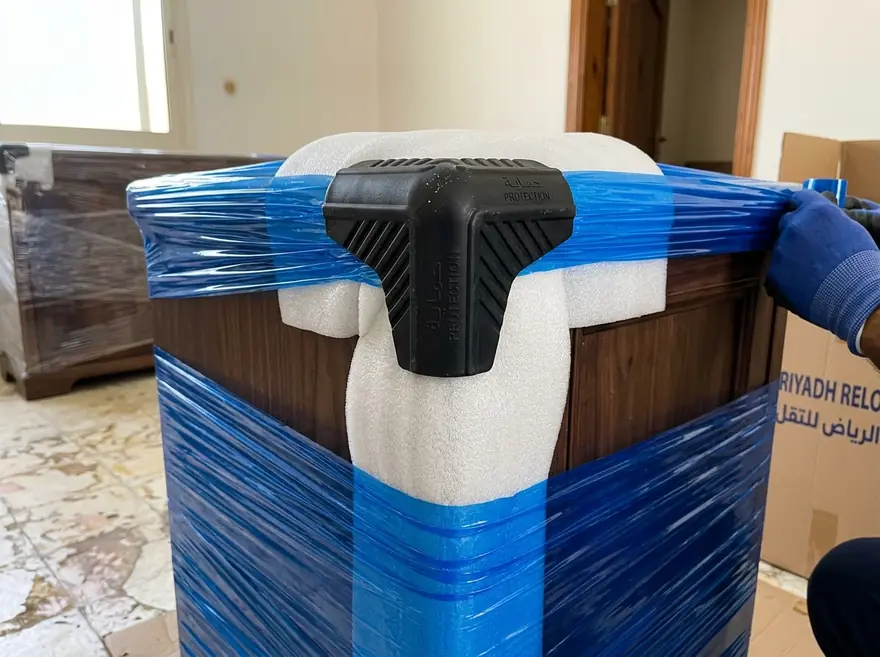
How do we choose the right packing level for each piece of furniture?
Try describing your piece to see the level of preparation and protection we recommend:
A soft inner foam layer to protect the surface + a layer of bubble wrap to absorb shocks + tightly stretched industrial blue stretch film.
Sealing the wood's pores from dust and heat, absorbing the shock of accidental contact, and bracing the frame so nothing works loose on the road.
The three packing levels: material specs and application
Every piece of furniture has physical properties that dictate the layer thickness and protective materials chosen, so that it arrives in its original condition:
Surface-level protection that keeps dirt and outside dust off the piece during quick handling.
Suitable for:
Solid wood pieces, pieces whose surfaces don't scratch easily, and items being moved within the same building or over very short distances.
Layer sequence:
- 1.Outer surface wiped clean of any clinging dust.
- 2.Outer wrap of industrial stretch film, sealed tight against dust.
- 3.Doors and cabinets secured against opening accidentally in transit.
The standard level for most household furniture. It combines surface protection with absorption of light impacts.
Suitable for:
Master bedroom sets, dining tables, sofas and majlis (sitting room) seating, AC units, and cabinets with delicate finishes.
Layer sequence:
- 1.A first layer of fabric or thin foam against the wood to prevent scratches completely.
- 2.A middle layer of bubble wrap to absorb shocks and vibration.
- 3.A final layer of high-tension industrial blue stretch film to seal the piece and hold it together.
Advanced structural protection, reinforced with rigid cardboard frames, for pieces that are breakable or very expensive.
Suitable for:
Large TV screens (OLED/4K), mirrors, natural marble slabs, glass fronts, and delicate antiques.
Layer sequence:
- 1.Smooth surfaces and screens cushioned directly with soft foam blocks.
- 2.Reinforced multi-layer cardboard corners fitted to absorb much of the energy of side impacts.
- 3.A thick, double-thickness layer of bubble wrap.
- 4.A reinforced cardboard sleeve or custom box that fully prevents vertical pressure.
- 5.A final tight seal of insulating industrial blue stretch film.
Why do we use dark blue industrial stretch film?
Many people assume plastic wrap is just for show, but 23-micron dark blue stretch film is purely an engineering choice for protecting furniture in the Eastern Province's environment:
Resistance to UV rays and summer heat
The dark blue color blocks direct sunlight, which reduces heat transfer to furniture surfaces and varnish when furniture is moved in the heat of an Eastern Province day.
Higher tensile strength and cling
Industrial blue stretch film is made from high-density virgin polyethylene (23 microns), so it holds disassembled parts together with calculated pressure that keeps them from coming loose, with no need to touch the wood itself.
A barrier against coastal humidity and blowing sand
It forms a near-airtight barrier against high humidity and salt spray in the coastal cities (Khobar, Jubail, Saihat), and keeps fine blowing sand from seeping into the furniture's crevices.
Full visual privacy for the customer's belongings
Dark blue stretch film hides the contents of your pieces and private furnishings from view during the move and while unloading in front of buildings, giving families and customers peace of mind and complete privacy.
How do we handle each type of furniture in your home?
Every piece has a specific weak point, and prevention starts with knowing that point and guarding it in advance:
Sofas, majlis seating and fabrics
Dust stains, fabric tearing on door edges, or the inner padding losing its shape.
We use a breathable protective cover that keeps out dust, followed by a tight blue stretch film wrap that grips the corners and legs firmly and keeps the fabric in shape.
Dining tables and marble tops
Marble slabs cracking when they flex, and polished wood edges wearing down from rubbing.
We separate the marble from its base, wrap it in reinforced cardboard and bubble wrap, then move it upright at a tilt, with sturdy wooden supports fixed in place to prevent impacts.
Bedroom sets and disassembled wardrobes
Scratched varnished fronts, lost hinges and screws, or long panels warping.
We number the panels with labels, sort them and wrap them in soft foam and then stretch film, and collect the hinges and fittings in dedicated numbered bags attached to the piece.
TV screens and electronics
Pressure on the internal display panel (LED/OLED), or broken rear ports.
We protect all four corners with ready-made foam blocks, cover the screen with a soft foam layer, then place it in a dedicated upright cardboard box with a securing strap.
Home appliances (refrigerators, washing machines)
Dents in the outer sheet metal, refrigerant gas leaks, or doors swinging open suddenly in transit.
We secure the doors with non-adhesive straps, protect the edges with shock-absorbing foam, and wrap the entire body, keeping the refrigerator upright at all times.
Mirrors, ornaments and glassware
Shattering instantly under a point impact or vertical pressure.
We apply a crisscross (X) of securing tape to reduce internal vibration, wrap each piece in thick bubble wrap, and place it in divided boxes with clear markings (Fragile).
The stages of wrapping a piece, from our arrival to loading
A methodical, orderly sequence that makes sure no safety detail is overlooked before the furniture is moved from its place:
Surface inspection and sorting
We check the condition of the piece, note any existing damage, and decide which materials suit its surfaces (wood, glass, fabric).
Methodical disassembly and removal of attachments
We remove interior shelves, protruding handles and table legs so they don't break on the way through doorways.
Applying the first contact layer (soft foam)
We cover delicate wood and painted finishes with a soft foam layer or non-woven covers that keep surfaces from rubbing.
Fitting reinforced cardboard edges and corners
We fit purpose-made corners to all eight corners of the piece to absorb any accidental knock against hallway walls.
Wrapping in bubble wrap
We wrap delicate pieces in a thick layer of bubble wrap to disperse the energy of shocks and vibration from rough roads.
Mechanical tensioning with industrial blue stretch film
We wrap high-tension stretch film around the piece with calculated pressure, binding the layers into one solid block that is fully sealed off from moisture and dust.
Numbering and handling labels
We apply clear labels showing the room name, which way up the piece goes (top/bottom), and fragile warnings to guide the unloading crew.
Correct practices vs. common packing mistakes
Why does furniture get damaged in the hands of some non-specialist crews? Here's the difference on the ground:
Placing a soft insulating layer against the wood before any bubble wrap or stretch film.
Sticking adhesive tape (packing tape) directly onto wood or the furniture's finish.
Fitting dedicated rigid corner supports to the edges of tables and cabinets.
Relying on a single light layer of plastic wrap with no purpose-built corner protectors.
Moving TV screens and mirrors standing upright in their dedicated boxes.
Laying TV screens or marble flat underneath boxes or other pieces.
Using high-density industrial stretch film (23 microns) to block moisture and sun.
Using thin kitchen cling film that tears at the first light rub.
Numbering glassware boxes, and placing heavy boxes at the bottom and light ones on top.
Piling boxes into the truck at random, with no safety barriers or separators.
Sample wrapping and securing methods
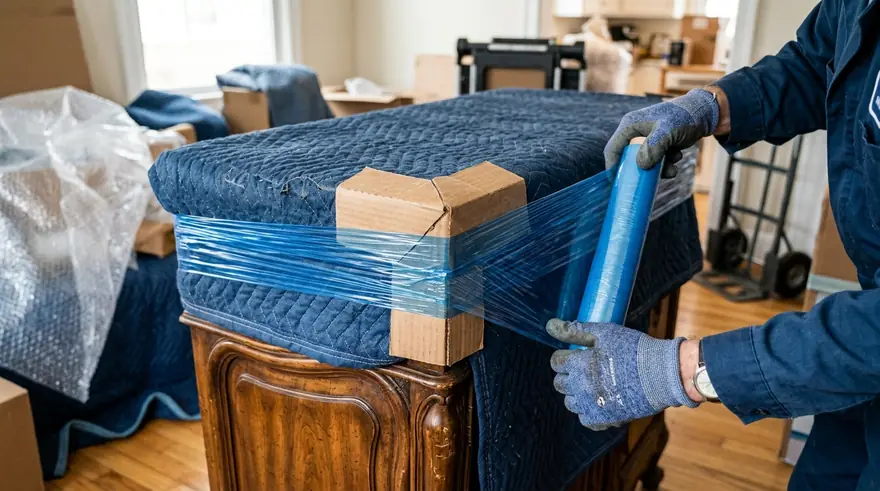
Securing wooden corners
Shock-absorbing foam that keeps edges from rubbing against doors.
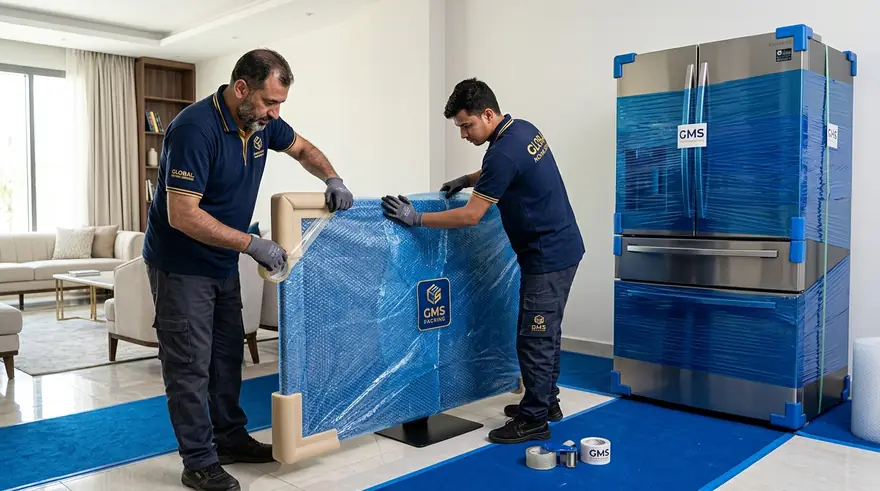
Isolating TV screens and appliances
Upright cardboard boxes and dedicated foam for glass panels.
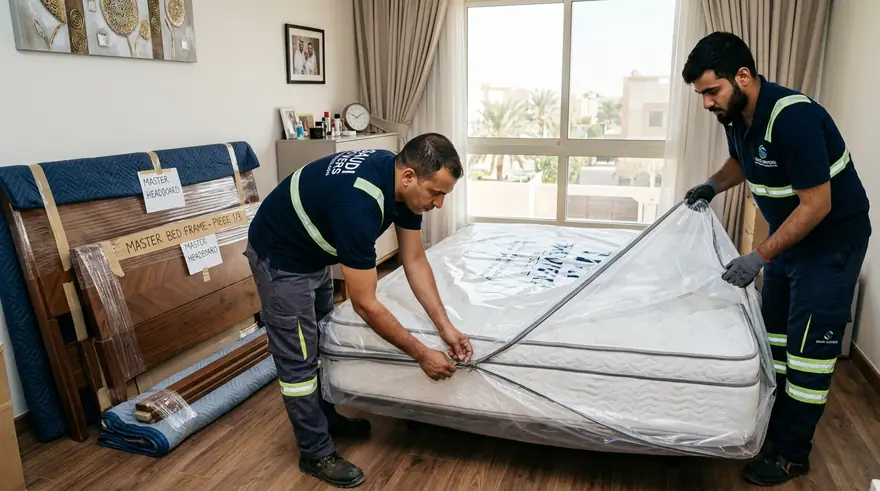
Bedroom sets and bedding
Full wrapping that seals out dust and keeps fabrics and wood clean.
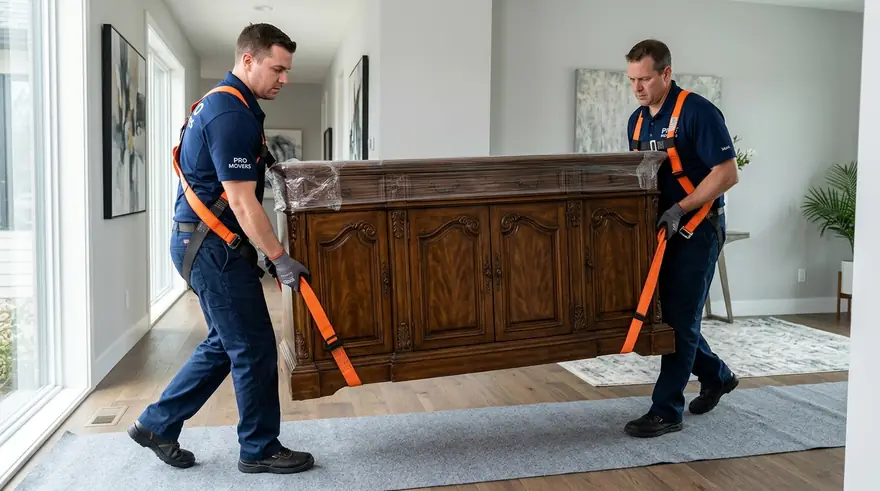
Handling with straps
Lifting straps that keep the wrapped piece steady on the way down.
Not sure which packing level your pieces need?
Take a photo of any delicate piece in your home (a TV screen, a marble table, ornaments, a bedroom set) and send it to us on WhatsApp. A packing technician will work out the best way to protect it and estimate the cost right away.
Frequently asked questions about the furniture packing system and materials
Straight, direct answers about the differences between packing materials, stretch film specs, and ways to protect delicate belongings.