Moving Boxes in the Eastern Province: How Many Your Home Needs, Which Sizes to Choose and How to Pack Without Breakage
The cardboard box is the simplest moving tool and the one most often left out of planning. People buy a random number, half too many or too few, and packing stalls on moving day. In the Eastern Province, where families move between apartments, villas and neighbourhoods, estimating boxes is part of getting ready. This page explains the types and sizes of boxes and what each suits, how to estimate a rough number by room, how heavy one box should be, how to number, write on and protect the contents, and where boxes are available within our packing service. It is a practical planning page, not a price list.
Why box count and size matter
A large box filled with books is too heavy for one person, while a small half-empty box wastes truck space and crew time. The goal is neither the largest number nor the cheapest carton, but the right size for each kind of content in a number that covers the home without waste. When boxes are estimated early, packing becomes a calm job over several days instead of one exhausting night before the move.
So we separate three questions: which box type suits which item, roughly how many you need, and how to fill and number them. We will take them in order.
Box types and what each one suits
A simple rule: the heavier the contents, the smaller the box.
| Type | Best use | Note |
|---|---|---|
| Small box | Books, heavy pans and tools | Stays carriable even when full |
| Medium box | Kitchenware, clothes, household items | The most used type in a home |
| Large box | Light items like pillows and blankets | Never fill it with heavy things |
| Double-wall box | Glassware and small appliances | Takes more pressure |
| Original appliance box | Screens and delicate devices | Best if you kept it |
| Hanging wardrobe box | Coats and dresses | Saves ironing; ask whether it is available |
How to estimate your box count step by step
A method that gives a rough figure you can adjust.
List the rooms
Write down rooms, storerooms, kitchen, laundry and corridors.
Sort the contents
Split each room into books, kitchenware, clothes, decor and small appliances.
Estimate per category
Count shelves or drawers and how many boxes the kitchenware needs.
Add a margin
Add a few extra boxes for things that appear at the last minute.
Choose sizes
Share the count across small, medium and large according to contents.
Check with us
Send us the list and we will suggest a suitable number within the packing service.
A rough planning guide by home type
No fixed number applies to every home, because your lifestyle and how much you own decide it. For first planning, however, a small apartment with few belongings needs a few dozen boxes, an average family apartment needs clearly more, and large villas with several kitchens, rooms and stored items can need hundreds of boxes in some cases.
These are not binding figures but examples to help you expect, and the more accurate way is for us to review your room list or photos of shelves and storerooms and suggest a number close to reality. See also our room-by-room packing guide to know what to pack in each room.
Safe weight for a single box
The most important packing rule is that a box should not exceed a weight one person can lift easily and carry upstairs. So heavy things go into small boxes, large boxes are filled with light items, and heavy and fragile items are never mixed in one box.
If you lift a box and feel it pulling at your shoulders, it is too heavy. A very heavy box tears at the bottom, injures whoever carries it, or crushes what sits under it in the truck. Choose the size by weight, not by how much empty space remains.
Six rules for a sound box
They apply to nearly every size.
A reinforced base
Seal the bottom with strong tape in a cross or more before packing.
Heavy at the bottom
Put the heaviest items at the bottom and lighter ones on top.
No gaps
Fill gaps with paper or cloth to stop movement.
Do not overfill
A bulging box does not stack and cannot take pressure.
Wrap fragile items
Wrap each fragile item alone before it goes in.
Close and label
Seal with tape and write room, contents and which side is up.
Numbering and labelling: ten minutes that save hours
What saves most unpacking time is a clear numbering system. Write on each box the room it will go to, a running number and a brief word about the contents, mark the top with an arrow and write fragile where needed. It helps to write on two sides rather than the lid only, because boxes are stacked.
You may also keep a short list of box numbers and their key contents. That makes it easy to find what you need on the first day without opening twenty boxes, and it is where the early estimate of the box count pays off.
What should not go in boxes?
Some things are not moved in ordinary boxes: flammable liquids and hazardous materials, perishable food, and valuables and important documents that are better kept with you. Medicines and daily essentials are separated into a bag for the first day.
Large items such as mirrors, large paintings and glass tops need special protection and not a plain box, and screens go in their original boxes or in suitable wrapping. The details of these cases are covered on the specialised packing pages.
Clothes, shoes and bedding
Clothes are among the easiest to pack when organised: folded and stacked in medium boxes, sorted by season or person, with formal or valuable clothes in hanging boxes if available. Shoes go in separate boxes so clothes stay clean, while bedding, blankets and pillows go in large light boxes or sealed bags.
Wash and dry bedding before packing, because humidity in a closed box for days in the Eastern Province climate can cause odour or mould. In summer, avoid leaving closed boxes in a hot closed vehicle for long periods.
The kitchen: the room that needs the most boxes
The kitchen usually needs the most boxes: pots, plates, glasses, small appliances and dry food. Plates are wrapped one by one and stood on edge, gaps are filled, glasses go upside down, and knives are gathered in their own cover.
Double-wall boxes suit glassware, with the word fragile written on the sides, and they are placed in the truck above heavier items rather than under them. For details see our page on packing small items and boxes.
Books and documents: small but heavy
Books are heavier than you think, so use small boxes and fill them with less than half what they could hold by space, packing books flat on their sides so pages and spines are not damaged. Important documents and official papers should be carried by you or kept in a closed bag that stays with you.
If you own a large library, estimating the number of book boxes early prevents packing delays, and work papers and electronics are best placed in boxes of their own with a clear mark.
Appliances and electronics
Small appliances such as microwaves, blenders and internet equipment travel in their original boxes if you have them, otherwise in medium boxes with padding. Cables are coiled, tied and placed with the device they belong to with its name written on them.
If you have a large screen it needs its own protection, covered on our page about TV and screen moving. Large appliances are handled as explained on the appliance moving page.
Are used boxes acceptable?
Used boxes can work if their corners and bottoms are sound, they are dry, free of odour and insects, and the right size. They are not suitable if damp, torn, or if they once carried something oily or strongly scented.
They may be cheap but lose strength after more than one use, so do not put heavy items in them. The best approach is to inspect each box before packing: press its sides and corners and check that its base holds with tape.
Where boxes are available within our service
Our packing service relies on layered materials and includes cartons when needed. To confirm which carton types, sizes and quantities are available for your job, contact us and tell us the number of rooms and the type of home, and we will confirm what is available and how it is counted in the quote.
We do not publish a price per box or any offers here, because that is set in the written quote for each request. You can read about the packing system on our packing system page.
Pack yourself or let us do it?
The choice is yours: you can pack small items yourself and leave furniture, fragile pieces and the kitchen to us, or we can handle all packing. Many families combine: they pack clothes and books and leave kitchenware, glass and furniture to us.
What matters is agreeing in advance who packs what, so the crew does not arrive to find half the rooms not ready. For the full service see moving with packing.
A timeline for preparing boxes before the move
Two weeks before: estimate the number, buy or reserve boxes and start with things you do not use daily, such as books and decor. Eight days before: guest rooms and storerooms. Three days before: the kitchen in stages, keeping what you need to cook. The day before: daily items and the essentials bag.
This pacing avoids a rush on the last night. If your date is close you can contact us to arrange full packing in less time, and the timeline will change with the size of the home.
Common mistakes with boxes
We often see boxes bought larger than needed and filled with heavy things, bases not sealed well so they open under load, items from different rooms mixed in one box so it is hard to place, and gaps left inside so contents move and break.
The biggest mistake is starting to pack before planning, then finding midway that there are not enough boxes. That is why this page sets the foundation before you begin.
Does packing differ between local and inter-city moves?
For a move within one city the trip is short with fewer stops, so sound packing and good sealing are usually enough. For a move between Eastern Province cities, such as from Jubail to Al-Ahsa, the road is longer and vibration greater, so gaps must be filled tightly, bases taped with a double cross, and fragile boxes kept away from friction.
In summer it also matters not to leave boxes holding heat-sensitive items, such as candles, food and thin plastic, exposed to truck heat for long, which we plan with you when arranging the loading.
After arrival: unpacking and reusing boxes
Unpacking starts with the essential rooms: bedroom, kitchen and bathroom, then the rest of the home gradually. When boxes are numbered and labelled, crews place them in the right room directly so they do not pile up in the living room. Open a box from the top by cutting the tape, not with a long knife that scratches the contents.
Afterwards you can flatten sound boxes and keep them for later or dispose of them in an orderly way. Do not leave them at entrances because they block movement and break many building rules. Our moving checklist helps you organise this stage.
What affects the cost of box packing?
We name no prices here, because cost changes with each request. Factors include the number of rooms and the volume of belongings, how many boxes and which sizes, whether we pack or you do, the presence of fragile items needing extra material, and the date.
For a clearer picture send us the room list or photos of storerooms and shelves, and we will provide a written quote. See how to compare moving quotes to be sure each quote covers the same materials.
A practical scenario: a three-bedroom family apartment
A family is moving a three-bedroom apartment with a kitchen and a living room. Their list shows the kitchen and storeroom need the largest number of small and medium boxes, bedrooms need medium and large ones for clothes and bedding, and the living room needs few.
They start with the guest room a week early, then the storeroom, then the kitchen in the last days, number every box by room and keep an essentials bag. On moving day the crew finds boxes tidy and clear, and the job runs smoothly.
What to send us so we can estimate your boxes
Send by WhatsApp the number of rooms and the home type (apartment or villa), photos of the kitchen, storerooms and any library, what you want to pack yourself and what you want us to handle, your expected date, and both addresses.
We will reply with a first estimate and a written quote, and confirm which boxes and materials are available within the service in the Eastern Province.
Frequently asked questions about moving boxes
Short answers to what customers ask before packing.
How many boxes do I need for my home?
Which box size is best for books?
How heavy should a box be?
Should I write on the boxes?
Can I use second-hand boxes?
Do you provide boxes?
Should I pack myself?
How do I get a quote?
Pages related to boxes and packing
Topics that complete getting your home ready to move.
Furniture packing materials
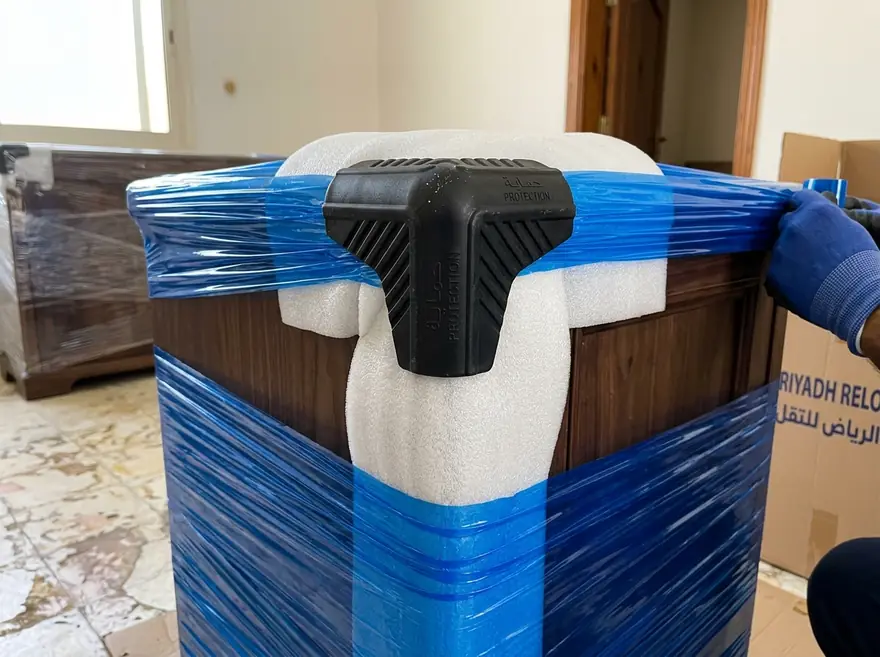
Covers, bubble wrap, corner guards and what each does.
Packing small items and boxes
How to pack delicate items.
Room-by-room packing
What to pack in each room.
Moving with packing
The full service with packing.
Furniture packing service
The general packing service page.
Packing system
The protection layers and how they work.
Moving checklist
Steps to prepare for the move.
Request a quote
Send your room list for a written quote.
Antiques and Glass Moving
Assessing, wrapping and securing fragile pieces.
Want to estimate the boxes for your home?
Send us your room list and photos of the kitchen and storerooms by WhatsApp, or call us, and we will suggest the number and sizes and provide a written quote in the Eastern Province.