Furniture Storage Warehouses in the Eastern Province: What to Check Before You Hand Over Your Things
When you put your furniture into a warehouse, you are handing the contents of your home to a place you may never have seen before. Many people compare prices and skip the questions that matter more: is the floor dry, does water or dust get in, who holds the keys, and what happens if you need a single item three months from now? This page is for anyone searching for furniture storage warehouses, storage units or warehouse storage in the Eastern Province who wants to inspect the place properly before deciding. We explain the different kinds of arrangements, give you a practical visit checklist, show what belongs in a written agreement and how to organise an inventory and the trips in and out. To confirm whether storage can be arranged for your request, contact us.
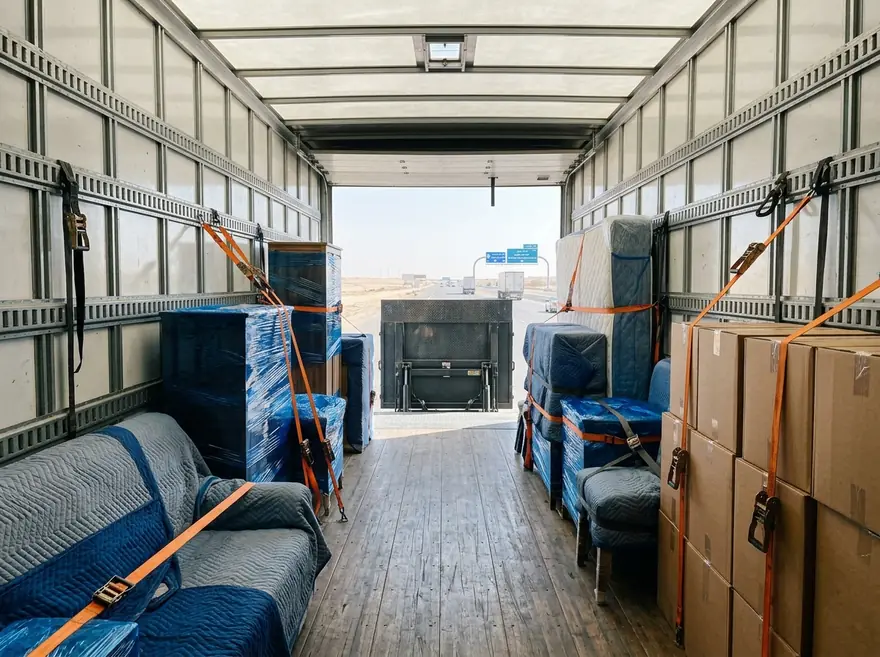
How a warehouse differs from a rented room or a spare room at home
The word warehouse is used loosely. It can mean a large hall divided into bays, a lockable unit with its own door, a commercial store where several customers keep goods on shared racks, or a side room in a residential building. What matters is not the label but what happens inside: how the space is protected from water and dust, who can enter, how goods are arranged, and whether you can get to your things when you need them.
A well-run warehouse usually beats a rented room on practical points: pallets or racks to lift items off the floor, doors wide enough for a truck, and staff who know what is inside. A spare room or annex at home can be enough for a few pieces over a short period, but it takes more heat and coastal humidity than a purpose-built building. Choose by quantity and duration, not by the first place offered to you.
Common storage arrangements and which one fits
Storage comes in several forms, each with a benefit and a hidden cost.
| Arrangement | How it works | Best for | What to ask |
|---|---|---|---|
| Private lockable space | A unit or bay with a door only you open | Full-household furniture and privacy | Who has a copy of the key, and can you enter whenever you wish |
| Shared racks or pallets | Your items sit in a corner of a store used by others | A few pieces and cartons | How your items are separated and labelled from others |
| Fully managed storage | You hand over, items are recorded, stored and returned on request | People who do not want to manage the layout | Is everything inventoried in writing, and who is liable for damage while loading |
| Room in a residential building | A side room or annex | Small quantity, short period | Heat, humidity, leaks and insects |
No arrangement is best for everyone. A private space gives peace of mind and costs more; shared racks save money but demand clearer labelling of your goods.
Six things that reveal a lot in ten minutes
You do not need engineering knowledge. Walk in as someone about to place their most valuable belongings.
Look at the floor first
Watch for old water marks, damp patches or cracks where dirt gathers. A damp floor means furniture absorbing moisture from below.
Look up at the roof and corners
Brown stains or peeling paint near the ceiling suggest leaks. Ask when the roof was last checked.
Smell the air
A musty or stale smell comes before damage shows on furniture. A good space smells neutral.
Check lighting and ventilation
A dark space with no airflow encourages damp and insects and makes it hard to check your things.
Watch how things are stacked
Are goods piled randomly, or arranged with clear aisles and racks? Random stacking usually means scratches on the way out.
Ask to see the way in
Stand at the door and picture a truck and a crew carrying something heavy: is it wide enough, is the ground level, where does the truck stop?
Floors and roofs matter more than floor area
People often ask how many square metres they need and forget that a large damp space is worse than a smaller dry one. Wooden furniture absorbs moisture from a floor it touches, mattresses and sofas hold it more than you would expect, and the smell and stains appear weeks later. That is why pieces should be lifted off the floor on pallets or boards and kept a small distance from walls so air can pass.
Roofs can be a quiet problem. A small leak during the few rainy days in the Eastern Province, or condensation dripping from metal sheeting on humid days, can land on particular pieces. Ask to see the ceiling, ask whether water collects near the entrance in rain, and have the manager show where your furniture would sit relative to the weakest point in the building.
Entry, monitoring and fire: questions that offend nobody
Security in a warehouse has three layers: who gets in, what is watched, and what happens in a fire. Ask calmly whether there is a gate that closes, who keeps the keys, and whether entries are logged. Ask whether cameras cover the aisles and how long recordings are kept. Do not accept a general answer such as the place is safe; ask for a description of what actually exists.
For fire, ask about extinguishers in visible places, exits that are not blocked, and whether flammable materials are kept away from furniture. We are not describing any particular site here, so treat these questions as a reference you can apply to any warehouse, whether we arrange one for you or you find one yourself.
How each category should be placed inside the warehouse
Correct placement protects against pressure, scratches and damp.
Large furniture
On pallets or raised boards, a gap from the wall, and never a heavy piece resting on a fragile one.
Mattresses
In a proper cover, flat or upright depending on thickness, with nothing heavy on top.
Sofas and seating
Cleaned, dried and covered with a breathable cover; cushions removed and wrapped separately.
Cartons
On racks if possible, heavy ones at the bottom, with labels facing the aisle rather than the wall.
Glass and mirrors
Standing on their long edge between supporting boards, corners protected and clearly marked fragile.
Appliances
Emptied and dried with doors slightly open where suitable, covered with something that lets air through.
Insects and rodents: a risk you will not see on the first visit
A warehouse can look clean on the day you visit and still develop problems weeks later. Rodents and insects look for warmth and food, and furniture stored for months with food residue in a drawer or carton is an invitation. Ask whether the place has regular pest control, how a problem is handled when it appears, and whether food items are banned from storage.
On your side, reduce the risk: empty drawers, store no food or plants, wrap fabrics in material insects do not eat, and keep furniture off the floor. When you reopen the storage after some time, check edges, mattresses and fabrics first because they are the most affected.
Opening hours: can you really reach your belongings?
Many complaints are not about damaged furniture but about difficulty reaching it: a warehouse that opens only at set hours, needs two days notice, or places your carton behind other peoples goods. Ask early whether access is open or by appointment, whether weekends are possible, whether you can visit unaccompanied, and agree on who loads and unloads when you take things out.
If you know you will need certain items, such as seasonal clothes or work papers, keep them in cartons near the entrance or at home instead of burying them at the back. Every time a stacked warehouse is opened, several pieces must be moved just to reach one.
How your furniture gets in and out safely
Storage means two trips, in and out, and each carries a risk of scratches if poorly organised. You want to know who carries the furniture inside, whether there are trolleys or a loading dock or workers carry everything by hand, and whether the truck reaches the door or unloads at a distance. On the way out, you do not want your furniture to be the last thing placed in the furthest corner.
It helps when one party handles moving, wrapping and placing the items, because whoever plans the loading knows how it comes out. If we arrange this for you, we will agree the number of trips based on quantity and city, and explain what the quote includes before work starts.
Clauses worth putting in a storage agreement
A verbal agreement disappears at the first dispute; a written one protects you and the owner.
| Clause | Why it matters |
|---|---|
| Description and count of items | So both sides agree on what went in and what comes out |
| Storage period and how to extend | So you know what happens if you need longer |
| Access hours and how to request entry | So you are not surprised by a closed door when you need something |
| What the quote includes: transport, wrapping, loading | So you understand the real price and what will be added |
| Condition of items at handover | Recording existing scratches before entry protects you |
| Who is responsible for loss or damage and under what terms | Ask this directly and have the answer spelled out |
| How to end the agreement | When and how you withdraw your goods without complications |
Asking for these clauses is not distrust; it is normal practice between professionals. A party unwilling to write down what it promises may not be ready to deliver it.
Numbering and a simple map: finding an item six months later
If you have dozens of cartons and pieces, you will not remember where anything is. The fix is simple: give every item and carton a number, keep a list with the number and contents, and photograph each carton before closing it. Then ask for a simple layout showing where each number sits in the warehouse, so you know whether the cartons you need are in front or behind other furniture.
Do not rely on anyones memory, neither yours nor a workers. The written list is the reference at pick-up, and it confirms that everything that went in came back. Keep a copy on your phone and another with the storage provider.
What goes into the cost of warehouse storage, and what gets forgotten
The number you are told verbally may not reflect the full cost. The space itself is only one part. Usually added are transport trips, loading and unloading, wrapping materials, dismantling and reassembly of large furniture, the length of storage and any extension, and access difficulty such as upper floors or narrow entrances. The less you agree in writing, the more room there is for surprises.
So we describe cost factors rather than figures: quantity and size of furniture, duration, the cities involved, the wrapping needed, dismantling and reassembly, and the number of trips. Ask for a written quote that itemises each element and compare quotes line by line, not just by the final amount.
Is the nearest warehouse always the best?
Proximity helps because it cuts trip costs and makes visits easy, but it is not the only measure. Dammam, Khobar and Dhahran are close neighbours, while Jubail is roughly ninety kilometres from Dammam and Al-Ahsa roughly one hundred and thirty, both approximate. If a better warehouse sits in a neighbouring city, the quality may save you more than the extra road costs.
What matters is counting trips both ways: moving in, perhaps a visit, then moving out to your new home, which could be in a third city. If your relocation is between cities in the province, plan both legs together so you do not pay for one trip twice.
When a warehouse is the answer and when something else will do
A warehouse suits cases with a long gap between moving out and settling in: a long trip abroad, a full renovation, waiting for a new home, or lightening your furniture for a while. If the gap is only a few days, a truck kept loaded, a room at a relatives house, or a delayed delivery to the new home may be enough.
Equally, do not store what you can easily sell or donate and will not use again. Every stored piece costs money and attention. Ask yourself for each item: will I use it within a year, and is storing and returning it cheaper than buying a replacement?
What to prepare before asking us to arrange storage
The clearer your information, the more accurate the quote. Prepare a rough list of large pieces and number of cartons, the expected duration, the pickup city and the delivery city, the type of building: ground floor, upper floor or apartment with a lift, whether there are fragile or very heavy items, and whether you want wrapping and dismantling included. Send photos of big pieces if you can.
Then contact us on WhatsApp or by phone. We will explain what can be arranged, confirm availability for your request and tell you what the quote covers.
Frequently asked questions about storage warehouses
Answers to what people ask most before choosing a storage place.
How do I know a warehouse suits my furniture?
Should furniture stand directly on the floor?
Do I need a written agreement?
Can I visit my belongings during storage?
Does the quote include moving furniture to the warehouse?
How long can furniture be stored?
Do you offer storage?
What should I prepare before handing items over?
Pages related to storage and moving
Guides and services that help you plan storage and the move.
Furniture storage in the Eastern Province
Preparing furniture and what to ask a provider
Furniture packing by material
Which wrap for which piece
Packing boxes and small items
Cartons, labels and inventory
Moving timeline
When each stage should start
Dyna truck moving
Choosing truck size and number of trips
Furniture disassembly and reassembly guide
Numbering and documenting parts
Compare moving quotes
Compare line items, not only totals
Moving between Eastern Province cities
Intercity moves in detail
Request a written quote
Send your move details
Furniture packing materials
Furniture packing materials in the Eastern Province: thick blue stretch wrap, bubble wrap, ink-free paper, corner guards and cartons, what each…
Furniture storage company
How to choose and prepare furniture for storage.
Warehouse Moving
Stock count, racking and phased relocation.
Looking for a safe place for your furniture?
Send us the number of pieces, the duration and the city on WhatsApp or call us, and we will explain what can be arranged and confirm availability for your request in the Eastern Province.