Warehouse Moving in the Eastern Province: Moving Stock and Racking Without Stopping Your Business
Moving a warehouse is not moving furniture, because the value lies in how goods are ordered and tracked. This page explains how the move is planned in phases, how goods are counted, coded and loaded, and how steel racking is dismantled and rebuilt so a few days of moving do not turn into stock chaos.
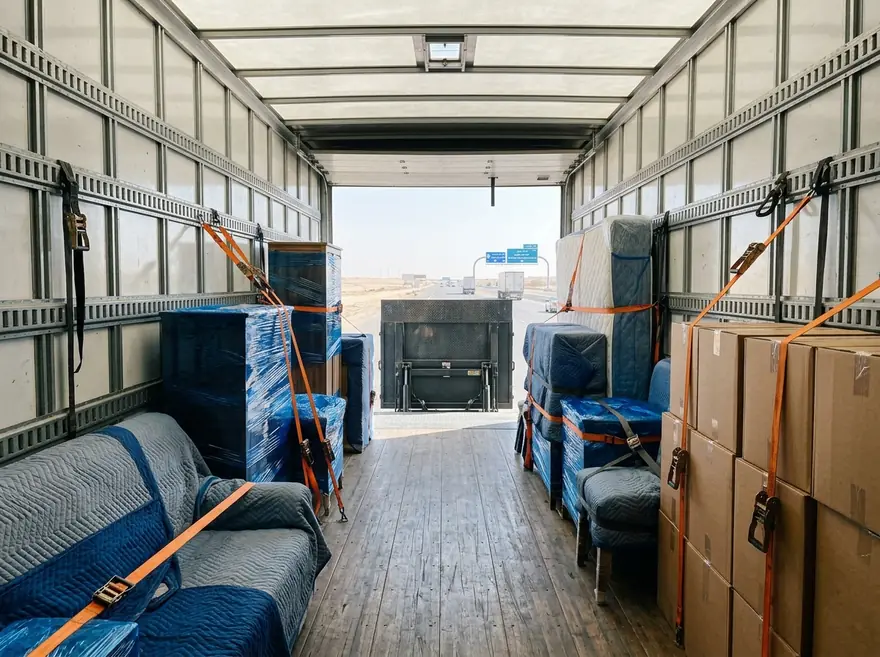
Warehouse moving: the key is order and traceability
In a home move it is enough that items arrive undamaged. In a warehouse it is not enough for goods to arrive undamaged; they must arrive in order and be traceable. If item codes get mixed or a layer of cartons vanishes from a pallet, the stock count after the move becomes harder and longer than the move itself, and sales or customer deliveries may stop for days.
So we start by asking how your warehouse is organised now: is it divided into aisles and shelf numbers? Do you have an item coding system? Do you store heavy, fragile or date-sensitive goods? Then we build a plan that carries this system as it is into the new place, instead of you rebuilding it from zero afterwards.
What usually moves in a warehouse?
Warehouses differ, but these are the items we most often handle:
- Cartons of different sizes, stacked on wooden pallets or on the floor.
- Dismantlable steel racking with arms and boards, and heavier shelving that holds large loads.
- Warehouse office furniture such as packing tables and tool cabinets.
- Tools, hand equipment and light to medium machines depending on the case.
- Packing equipment, display shelves, baskets and plastic crates.
- Goods sensitive to humidity or breakage that need extra wrapping.
Heavy mechanical equipment and exceptional loads are reviewed case by case before we commit, and we tell you frankly what we can and cannot do.
Counting stock before the move: the base for everything
Some time before moving day the person responsible for the warehouse should know the number of items, their quantities and locations. This count serves three purposes: it determines the number of trucks needed, exposes slow-moving or damaged goods that may not deserve moving, and becomes a reference to compare against after receiving.
We suggest photographing the warehouse from several angles before dismantling and recording where the busiest items sit. If you use inventory software, pause large transactions on moving day or record them manually so the numbers do not conflict. That is your responsibility, not ours; we provide the work on the ground only.
Dismantling and rebuilding steel racking
Warehouse steel racking usually consists of side uprights, horizontal boards, support arms and bolts. First we photograph each rack's structure and record board heights and positions, then dismantle it once fully emptied. Similar parts are bundled and tied, and bolts and nuts go in bags coded with the rack and aisle.
In the new place each rack is rebuilt in its planned position according to the new warehouse map, and column straightness and board stability are checked before goods are placed on it. Heavy racking designed for large loads needs floor anchoring according to its design, which is done by the manufacturer or a specialist technician.
A phased plan for moving a warehouse
We recommend dividing the move into phases so sales do not stop and customer delivery is not disrupted.
Visit and assessment
We visit the old and new warehouse, measure aisles and doors and estimate crews and trucks.
Prioritise item groups
Goods are split into fast and slow movers; slow movers go first and fast movers last.
Prepare the new place
The new space is equipped with racking and coding before the first truck arrives.
Phased moving
Groups of items move in turn and are coded and placed in new locations.
Move fast-moving items
The most demanded items move in the final phase with the shortest possible pause.
Post-move review
What arrived is compared with the count, and any shortage or damage is recorded with photos.
Wrapping goods and securing them on pallets
Goods on wooden pallets are secured with stretch film with corners protected by cardboard pieces, so they do not collapse in transit. Loose cartons are arranged so the same sizes share a layer, heavy ones at the bottom and light ones on top, with an aisle left between stacks for easy unloading.
Fragile or sensitive goods get extra wrapping and clear marking. We do not change the original manufacturer packaging of packed products unless necessary, as it is designed for protection. We need to know whether you hold heat-sensitive goods so we can plan to reduce their time in the truck.
What determines the size of a warehouse move
Factors we ask about to estimate time, crew and vehicles.
| Factor | Why we ask | Effect on the plan |
|---|---|---|
| Warehouse area and number of aisles | To estimate dismantling and loading time | Crew size and days |
| Type and weight of racking | Dismantling and rebuilding racks | Time and tools |
| Number of pallets and cartons | Estimating the load | Number of trucks and trips |
| Goods type and sensitivity | Wrapping and securing | Materials and timing |
| Distance between sites | Trip duration | Number of trips and scheduling |
| Access to the building | Doors and loading dock | Method of entry and carrying |
These factors are the basis for the quote, which is why we need your information before we set a figure.
Suitable trucks for warehouse moves
Vehicle choice follows load size and type: light bulky goods, heavy goods on pallets, or a mix of racking and cartons. We may use more than one vehicle in a day to reduce loading time, or repeat trips between nearby sites. See moving vehicle types to understand the differences between closed, open and padded vehicles.
In warehouses that need forklifts or mechanical lifting equipment, tell us whether they are available at both sites and whether we use them or your team does. To confirm the availability of special lifting equipment for your request, contact us before the appointment; we do not promise anything before we know the details of the place.
Loading doors, docks and entrances
Many warehouses in the industrial areas of the Eastern Province have loading docks or wide gates, while some small stores in residential districts have only a small door or narrow entrance. We measure the door height and width, check whether the truck can enter or park near the entrance, and decide where each item will be loaded from.
We ask about gate opening times and permits, since some industrial areas and compounds have rules for trucks. If the new site is newly built we review its readiness to receive goods: lighting, floor and security, so we do not arrive at a place that is not ready.
Safety when working inside a warehouse
A warehouse is an environment with heavy loads, high shelving and narrow aisles, so safety is central. We agree with the warehouse manager on hazard zones, decide which racks are emptied top to bottom, and set movement lanes and places for separate materials. The crew wears the necessary protective gear, and working under suspended loads is prohibited.
If the warehouse holds flammable or chemical materials we must be told in advance, as it may not be safe to move them in the same truck or they may need a specialist body. We prefer to know and tell you clearly what we cannot move rather than discover it on loading day.
Mistakes that repeat when warehouses move
These mistakes cause lost days and stock that is hard to reconcile after the move:
- Moving stock without a count, so nobody knows what arrived and what got lost.
- Dismantling racking without coding the parts, so they are rebuilt wrongly or bolts are missing.
- Loading fast-moving items in the first phase so selling stops for longest.
- Not preparing the new place before the truck arrives, so goods stay on the floor.
- Placing heavy pallets above light cartons so they are crushed.
- Neglecting the documents tied to the stock, which remain in the old place.
After the move: review and reconciliation
After unloading, quantities are compared with the count, any shortage or damage is recorded with photos immediately, and then a quick count of the busiest items is made before doors open to customers. We suggest setting aside one day for review before resuming full deliveries.
If a coding or distribution problem appears it is easiest to fix in the first days. We stay in contact with you during that period to answer any remark about the move itself.
Warehouse moving FAQ
Short answers for warehouse and store owners.
Do you move a whole warehouse with its racking and goods?
How do I avoid a stop in sales during the move?
Do you do the stock count?
Do you have forklifts?
Do you move sensitive or flammable goods?
Can the move happen on the weekend?
Do you move warehouses in industrial cities?
How do I get a quote for moving a warehouse?
Pages related to warehouse and business moves
Topics close to moving premises and storage.
Company relocation
Moving departments and multiple offices.
Office furniture moving
Desks, cabinets and chairs.
Furniture storage
Storage service and duration.
Furniture storage warehouses
What to ask before storing.
Moving vehicle types
Closed, open and padded.
Large truck moving
For large loads and longer distances.
Crew and safety
How crews are organised and protected.
Request a quote
What we need to estimate cost.
Move your warehouse with a plan that does not disturb your stock
Send the warehouse area, number of racks and pallets and both addresses and we will explain the steps and price factors.