Piano Moving in the Eastern Province: Getting the Instrument There Safely and Keeping It In Tune
A piano is a heavy musical instrument with hundreds of precise parts inside a large wooden case. This page covers its types and approximate weights, how it is lifted, wrapped and secured, and how to protect its tuning from humidity and vibration after arrival.
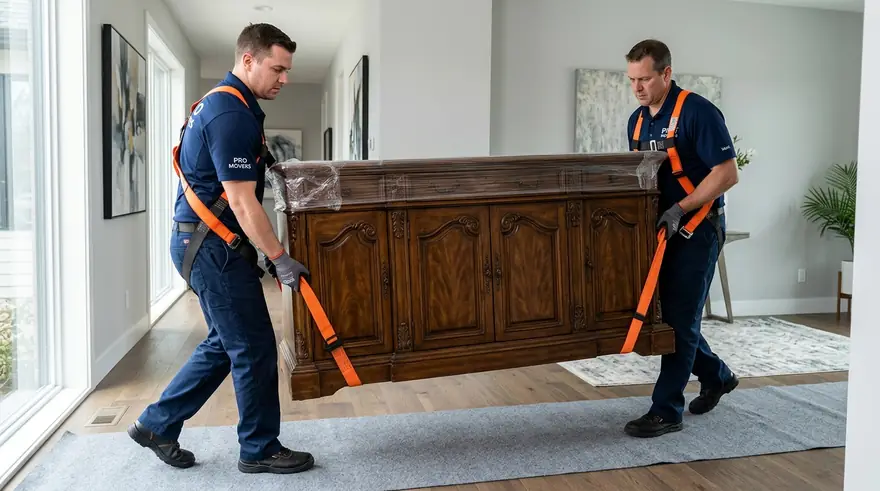
A piano is not just heavy furniture; it is a precision instrument
Many people treat a piano like a large cabinet. In reality its case holds a heavy metal frame under the tension of hundreds of strings, a thin wooden soundboard and thousands of small parts in the key and hammer action. Weight alone exceeds 200 kg for many models, and a tilt or knock can affect the inner parts without any visible sign outside.
So the method rests on three things: controlling weight with enough movers and suitable equipment, keeping the instrument in its natural orientation without sharp tilting or turning over, and protecting the lid, keys and corners from scratches and impact. Tuning is something that comes after the move and is done by a specialist technician.
Types of piano and their approximate weights
The following is a rough guide only. It varies with manufacturer, model and age, and it does not replace the real specification of your instrument.
| Type | Description | Moving notes |
|---|---|---|
| Upright piano | Stands against a wall; the most common at home | Heavy on a small base; needs straight lifting and a skid |
| Grand or baby grand | Horizontal body on a raised leg with a hanging pedal lyre | Legs and lyre are removed; body goes on its side on a board |
| Console digital piano | Wood or plastic cabinet with internal electronics | Lighter but keyboard and electronics are delicate |
| Portable keyboard | Light with a separate stand | Moves in a case or suitable carton |
| Stage electric piano | Medium weight, metal stand | Protect knobs and ports |
If you are not sure of your piano type, send a photo from the front, side and back and we will estimate what is needed.
What we check before lifting
We inspect the instrument and the site together. On the instrument: the model, whether upright or grand, the condition of lid, keys and pedals, and whether there are removable parts such as the music desk and legs. On the site: the width of doors and corridors, the number of steps and turns, lift dimensions if any, the floor type, and thresholds or level changes along the route.
This tells us the crew and equipment needed and reveals whether the route suits the instrument or needs a special solution. We may suggest you photograph it and record old scratches, which prevents any later dispute about its earlier condition.
Preparing the piano for lifting, step by step
The fallboard lid is closed over the keys and secured with cloth straps or soft tape that leaves no residue, so it cannot open during the carry and strike fingers or damage the keys. The top is cleared of objects and vases and pictures are removed, and the music desk is taken off if removable. The body is wrapped in heavy tie-down blankets that protect the edges.
On a grand, the legs and the hanging pedal lyre are removed according to the design, bagged and wrapped in foam. The body is carried on its side on a padded wooden board, often called a piano board, and strapped on. The instrument is never gripped by the legs or pedals, because they are not designed to bear its full weight.
How the instrument gets from the room to the truck
Steps differ between uprights and grands, but the idea is the same: enough hands and slow movement.
Assess weight and route
We decide the crew size, inspect the route, clear obstacles and protect floors and walls.
Close the lid and secure parts
The keyboard lid is fastened and removable pieces such as the desk and legs are separated.
Wrap the body
The instrument is covered in thick blankets with extra protection on corners and front.
Place it on the carrier
An upright goes onto a wheeled base or suitable board; a grand is tilted onto its board and strapped.
Synchronised carrying
The crew moves on one signal and takes each step slowly with support from below.
Secure in the truck
It stands against the truck wall and is strapped from both sides, with nothing placed on top.
Stairs, lifts and upper floors
Ground floor to ground floor is the easiest case. Stairs raise the risk because of the slope and the unequal load between the person lifting from above and the one supporting from below. So we assign more movers, check the stair width, riser height and tight bends before starting, and we may advise postponing until conditions suit.
In lifts we measure the cabin and door beforehand, as some lifts cannot take a large piano. When needed we discuss options with you, such as using the stairs or lifting from the facade, which is not a guaranteed option before a site visit. You can read our page on crane and winch lifting for furniture for its limits.
Protecting floors, walls and door frames
A piano concentrates its weight on small casters or legs and may leave marks on marble, parquet or thin ceramic. We lay protection boards or thick carpets along the route, protect wall corners and door frames with foam or cardboard, and clear any decor near the path.
On arrival the piano is placed on a firm, level floor, and pads are used under the legs to spread weight where the floor is delicate. We avoid dragging the instrument on a floor without proper casters.
Humidity, heat and air conditioning, and how they affect tuning
Wood in a piano expands and contracts with humidity, which changes the tension of the strings and shifts the pitch. The Eastern Province is known for humidity on many days of the year and heat in summer, and moving suddenly from an air-conditioned home into a hot truck and then into another home can affect the instrument.
We therefore advise placing the piano away from direct AC vents and from windows that let in sun, and away from the kitchen and bathroom. We also try to reduce the time the instrument spends in the truck. We do not promise a specially cooled truck, but we plan timing and route as far as possible.
When should the piano be tuned after a move?
Tuners commonly advise waiting a few weeks after a move so the instrument can settle to the new humidity and temperature before tuning, because an early tuning may drift quickly. Tuning is not one of our services, and we prefer you contact a specialist who knows your type of instrument.
What we do is receive and unload the instrument, position it where you choose, make sure it stands firmly and that the lid and pedals are intact, and photograph any remark at handover. If you notice an unusual sound or a change later, contact the tuning specialist first.
Common mistakes when a piano is moved the wrong way
These are repeated experiences that can be avoided:
- Lifting it with too few people without estimating weight, so it slips or the carriers are injured.
- Gripping it by the legs, pedals or keyboard lid.
- Rolling it on its casters straight over a delicate floor without protective boards.
- Carrying it at a sharp tilt or turning it onto its back without the technician's guidance.
- Leaving it in a hot closed truck for a long time before unloading.
- Putting objects on top during the trip or tying it with thin rope over the wooden case.
Moving a piano between Eastern Province cities
We move instruments between Dammam, Khobar, Dhahran, Qatif, Jubail, Al-Ahsa and other cities in the region. The trip is affected by road length, bumps, temperature and time of day, so we add securing points and check the straps at stops on longer distances.
It is best to set the appointment so the piano is unloaded when you or someone to receive it is present, and so the new place is ready for it, with the lift reserved or the entrance prepared in advance.
Digital pianos and keyboards: lighter but sensitive
Digital instruments are much lighter, but the electronic keyboard, power sockets and control buttons are affected by knocks and dust. We separate the stand when possible, wrap the instrument in bubble wrap and cardboard, and carry speakers and pedals separately. Cables and adapters go in one bag so they are not lost.
A keyboard is best moved standing on its long edge in a padded carton with the keys facing up. A fixed digital piano with a wooden cabinet is treated as heavy furniture with front protection.
Piano moving FAQ
Short answers to what people ask most when moving large instruments.
Do you move grand pianos?
How many movers are needed?
Does a piano need tuning after the move?
Do heat and humidity affect the instrument in transit?
Can a piano be moved from an upper floor?
Do you guarantee the sound will not change?
Do you move keyboards and digital pianos?
How do I get a cost estimate?
Pages related to piano moving
Topics that help you prepare heavy and sensitive pieces.
Heavy furniture moving
Working with pieces that need more than two people.
Crane and winch lifting
The limits of facade lifting.
Winch lifting for furniture
Lifting method for upper floors.
Marble table moving
Weight, cracking and upright carrying.
Antiques and glass moving
Fragile pieces that need individual protection.
Luxury furniture moving
Sensitive and high value pieces.
Crew and safety
How crews are organised and protected.
Request a quote
What we need to estimate cost.
Moving a piano starts with a visit and photos
Send us the type, photos and pickup and delivery addresses and we will explain the steps and price factors.