Furniture Crane Lift in the Eastern Province: How the Lifting Site Is Assessed Before We Say a Crane Suits Your Job
The word crane suggests a quick fix for any furniture that will not enter a building, yet the truth is that a successful lift starts before any equipment arrives: it starts with assessing the site. A narrow street, high cables, a weak pavement or a tree in front of the balcony can change the whole decision. This page does not repeat what external lifting is, which is explained on our winch page. It concentrates on the part many people overlook: how we assess the site, which questions we ask you, which checklist we go through point by point, and when a crane is not needed at all because a simpler answer will do.
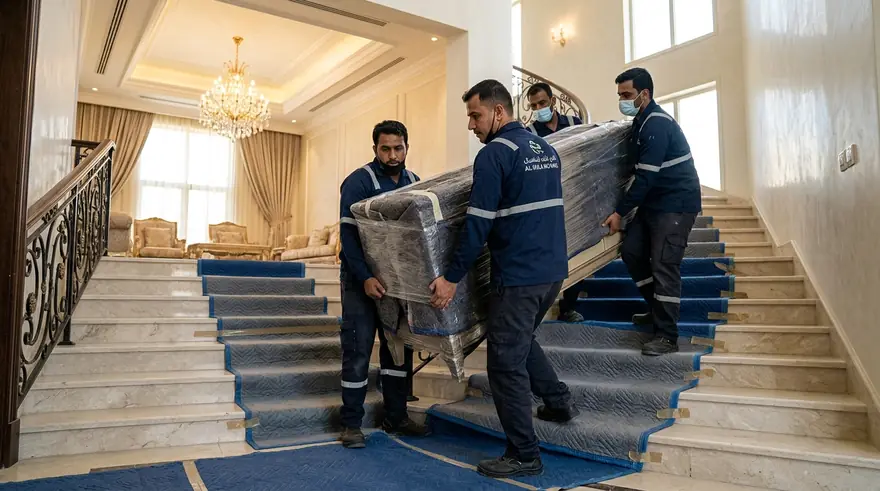
Why the story begins with a site assessment
Every lifting site differs. A wide street with no cables is nothing like a narrow lane with wires overhead and cars packed beneath. The same piece may rise easily at one site and be impossible at another. That is why we do not answer the question is a crane suitable with yes or no until we have seen photos and know the measurements.
The assessment protects three parties: the piece, which is never put at risk; the building, which is not scraped or broken; and the people beneath the lifting path. It also protects you from spending time and money on a solution that cannot work at your location.
The lifting site checklist: what we review and why
Any one of these items can change the decision or the schedule.
| Item | What we ask | Why it matters |
|---|---|---|
| Street and pavement width | Is there room for equipment and a safety zone | No lift without safe space |
| Cables and wires | Do they cross or come near the lifting path | A direct danger that can stop the lift or move it elsewhere |
| Trees, poles and signs | Do they block the way to the opening | They may change the angle or prevent the lift |
| Ground condition | Is it firm, sandy or uneven | It affects equipment stability |
| Receiving opening | Its size and the strength of the balcony or window | Decides whether the piece passes safely |
| Time of work | Street traffic and quiet hours | Makes the site easier to secure |
Assessment stages from photos to confirmation
Most requests need only photos and measurements, and some need a visit.
Receive photos and measurements
We ask you for photos of the building, the street and the opening with its size, and photos of the large pieces.
Go through the checklist
We run through the site items one by one and note what needs clarifying.
Choose the suitable solution
It may be a lift, inside carrying, dismantling and rebuilding, or a mix.
Agree the time and the security
We pick a quiet hour and arrange to secure the lifting zone.
Reconfirm before work
We review the weather and the site on moving day before any lift begins.
Work with guidance from both sides
From inside and from below, with constant communication in the team.
Cables and trees: what changes the plan most
In many neighbourhoods electricity, telecom or lighting cables run near facades, and trees may stand close to balconies. A cable near the lifting path is not a detail; it is a hazard that can stop the whole operation, force the lift to another facade or leave only inside carrying.
So we ask for a photo of the building from the street that shows what is above the facade and around it. We do not begin a lift unless we are sure the path is clear, even if that delays the appointment, because safety is not negotiable.
Street width and the safety zone
Any lift needs space for equipment and a zone where pedestrians and cars are kept away from beneath the path. In narrow or busy streets that can be hard to provide, so a quieter time is considered, or the rear of the building if it is wider.
If the parking in front of the building is full of residents cars, advance coordination with them or the guard helps. These organisational details decide the success of the day more than the piece itself does.
The ground beneath the lifting spot
Equipment stability depends on firm ground. A weak pavement, shifting sand or ground dug up by nearby works may prevent placing it safely. We try to learn the ground type, whether it is level and whether there is digging or plumbing work close by.
This is one reason we ask you about the site in detail, and we may request a photo of the ground below the facade. The clearer the photo, the quicker the decision.
Questions we ask you that decide a lot
Answer them as best you can before contacting us.
Which floor is the flat on?
It sets the lift range and the suitable opening.
What are the dimensions of the largest piece?
Compared against the opening, not only against its weight.
Is there a lift in the building and how big?
It may remove the need for a crane if the piece fits.
Are there cables or trees in the street?
They decide whether lifting from the facade is possible.
Does management ban lifting?
Some buildings require prior approval.
What time suits you?
It helps choose a quiet hour.
When you do not need a crane at all
If the lift is large enough for the pieces and the floor is reasonable, inside carrying is quicker and less complicated. If a piece can be dismantled, it is dismantled and carried. If all items are small or medium, there is no reason to complicate the day with outside equipment.
A crane proves its worth where these solutions cannot bring the piece in safely. We tell you plainly when lifting is not necessary, because the simpler answer costs less and carries less risk.
How this page differs from the winch page
Our page on furniture winch lifting in the Eastern Province explains the idea of external lifting, its steps and how a piece is prepared. This page focuses on the assessment, the checklist and the decision criteria. The two complement each other, so read both if your job includes lifting to a high floor.
For large and heavy pieces in general, see our page on heavy furniture moving, which explains carrying, dismantling and protection.
The signaller: the person who prevents mistakes
In any outside lift someone must see the piece and its path and guide the team with clear signals or direct contact, since the person on the balcony cannot see beneath the building and the one in the street cannot see the opening. This simple role prevents the piece from hitting the facade or neighbouring windows.
Emergency stop signals are agreed before work begins, and side conversations are not allowed during the lift. These disciplines keep the operation calm and safe.
Neighbours, passers-by and parked cars
An external lift is visible to everyone and may disrupt parking or movement for a while. It is good practice to tell neighbours the time, to assign someone to keep pedestrians from walking under the path, and to coordinate with whoever parks in front of the facade so the space is cleared for a short time.
If the building is inside a managed compound, ask about permitted hours and the entrance for equipment. Compounds usually have their own rules, and they are settled early with a simple call.
Wind, heat and dust
Weather changes the lifting decision. Strong wind delays the lift, thick dust reduces the signaller view and strong heat weakens the crew focus. This shows clearly in summer and dusty periods in the Eastern Province, so we prefer the first hours of the morning.
We do not hesitate to postpone a lift when conditions are unsuitable and we offer a close alternative date. Rescheduling costs less than any accident.
Preparing the piece and the opening before the crew arrives
You can make the operation easier: open the window or balcony door and remove curtains, screens and obstacles, clear the area in front of the opening of furniture, disconnect appliances and empty wardrobes. If you can remove a movable window frame, tell us beforehand so it is not damaged.
Wrapping and tying are done by us, but your preparation shortens the time, reduces confusion and makes the lift clearer for everyone.
Alternative options if lifting does not suit
When it turns out that lifting does not suit, that does not mean your request is impossible. A piece may be dismantled and carried by the lift or the stairs, split into parts, or replaced by a smaller piece in the new home if that is possible. We explain these options honestly.
Often dismantling and reassembly is the best answer, so see our page on furniture assembly and dismantling to learn how it works.
Crane lifting in villas and residential compounds
In big villas the problem is usually a twisting or narrow indoor staircase, and an upper balcony may have an opening that takes the piece. In residential compounds, management controls when equipment may enter and where it may stand.
Please tell us if your home is inside a closed compound so we can arrange access and timing with you. For general villa details see villa moving in the Eastern Province.
What we do not promise before an assessment
We do not state maximum loads, heights or a fixed time per operation on this page, because all of that depends on the site, and we do not want to give you a number we cannot honour at your home. What we do promise is to review your site seriously, to be frank about what is and is not possible, and to propose the suitable alternative.
If anyone tells you a crane is possible without asking about the street, the cables and the opening, ask them about those details, because their absence is a sign the decision was not properly studied.
Morning checklist for lifting day
An hour before the crew arrives: open the window or balcony door and make sure the area in front of the opening is clear, empty the parking below the facade or coordinate with the guard, place the pieces to be lifted near the opening once emptied, tell the neighbours about the outside activity, and keep your phone close.
If the weather turns at midday or unexpected wind appears we will call you to decide together on postponing or moving to the backup plan, so do not be surprised if we ask for that.
What building management usually asks
Some managements ask about the time and length of work, where equipment will stand, whether corridors will be closed, whether anything on the facade could be affected, and the names of those doing the work. It helps to have answers ready before you call them and to ask for written approval if the building is strict.
If management requests any information about us, tell us and we will provide what is needed without delay. Early coordination with management is easier than negotiating at the door on moving day.
What affects the cost of a crane lift?
We quote no numbers here because cost belongs to each site. Factors include the floor height, the number and size of pieces, the difficulty of the site and the street, the need to secure the area, the expected time for the operation, the date, and whether dismantling and reassembly are required.
Send us the details above for a written quote, and see how to compare moving quotes so you can check that the offers you receive contain the same items.
A practical scenario: a villa on a narrow street
A three-floor villa on a narrow street needs a large sofa and two wardrobes brought to the third floor because the internal staircase twists. The assessment starts with photos of the facade, which show a cable above the front, so the plan moves to the wider side.
There the street width, ground firmness and safety zone are confirmed, and the pieces rise in turn with a signaller below, finishing early in the morning. The scenario shows how a simple site check can change the whole plan.
What to send us for the assessment
Send by WhatsApp photos of the building from the front and sides showing the street and what is above the facade, a photo of the opening with its size, the floor number, photos of the large pieces with sizes, the address and any restriction from management. If you are inside a compound, name it.
We will reply after going through the checklist to confirm whether the lift is available and suitable for your request, and what other solutions exist if it is not.
In summary: the lifting decision is yours and ours
A crane is an excellent tool in its place, but it is not the permanent answer. Reading this page means you now know what we look for and why we ask. We commit to explain the solution that truly suits your location, whether lifting, inside carrying or dismantling and reassembly.
Contact us with photos and measurements and we will reply with what we see and when we can do it in the Eastern Province, truthfully and clearly.
Frequently asked questions about furniture crane lifting
Short answers to what customers ask before the site assessment.
How do I know if I need a crane?
What is checked most at the site?
Do cables prevent lifting?
Do I need a visit for the assessment?
What if lifting does not suit?
Does weather matter?
Is this service available for my request?
How do I get a written quote?
Pages related to the lifting site assessment
Solutions and services that complete planning for upper floors.
Furniture winch lifting
The idea of external lifting and its steps.
Heavy furniture moving
Large and heavy pieces and their carry plan.
Villa moving
Multi-floor homes.
Apartment moving
Lifts and upper floors.
Furniture assembly and dismantling
An alternative for pieces that will not pass.
Comparing moving quotes
What a good quote contains.
24-hour moving
Flexible timing for the job.
Request a quote
Send site details for a written quote.
Marble Table Moving
Weight, upright carrying and separating top from base.
Piano Moving
Upright, grand and digital, and tuning after the move.
Want your site assessed before deciding on a lift?
Send photos of the building, the street, the opening and the pieces by WhatsApp, or call us, and we will go through the checklist and confirm the suitable solution with a written quote in the Eastern Province.