Moving Labour in Dammam: Who Is on the Crew, What They Do and How to Choose
The quality of a move is decided by the hands that lift each piece long before the truck drives off. This guide explains the roles in a Dammam moving crew, how the right team size is estimated for a flat or villa, and what a tenant or homeowner should ask before the crew arrives.
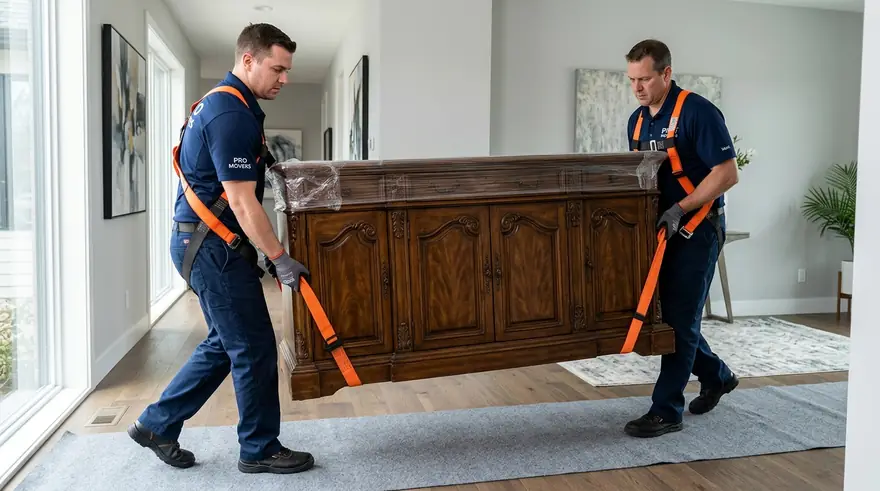
A moving crew is a set of roles, not just a headcount
People searching for movers and packers in Dammam usually ask how many workers will come. A better question is who will do what. Four people who each know their task will outperform six who crowd the bedroom door. A move is a chain of jobs: dismantling, wrapping, carrying, loading, driving, unloading, reassembly and placement.
So this page describes how a crew thinks before it describes how big it is. For the wider picture of the service itself see furniture moving in Dammam; here the focus is on the people doing the work.
Who works on moving day and why each role differs
A typical crew has a supervisor who coordinates the order of work and talks to you, handlers who carry and load, a technician or carpenter who dismantles and rebuilds furniture when needed, and a driver responsible for the vehicle and for securing the load. In small moves one person may cover two roles.
The supervisor decides which room clears first, where the truck stands and what happens if something unexpected appears. Having one decision maker avoids the chaos that follows when each worker simply lifts whatever is nearest.
Handlers are trained to lift heavy items in ways that protect their backs and your furniture, and they rotate on the heaviest pieces. More hands do not always mean faster work, because narrow corridors limit how many people can work at once.
How the right number of workers is worked out for your home
There is no magic number. The count follows the number of rooms, the volume of furniture, how many floors are involved, whether a lift exists, how far the truck must park from the entrance, and how long the job should take. A ground-floor flat is a different job from a two-storey villa with an annex, and both differ from a flat in a tall tower with one shared service lift.
A practical rule is to add people where work genuinely runs in parallel: one room being dismantled, another wrapped, a third loaded. Extra people add little if everyone waits for the same lift. That is why we ask about access before suggesting a team.
Photos improve the first estimate a great deal. Send pictures of the rooms, the entrance and the stairs and the crew can be adjusted to match. A wider method for judging effort appears in the moving day crew guide.
How home type shapes the crew
A thinking aid only; the actual assessment decides.
| Home type | Where the effort sits | What matters in the crew |
|---|---|---|
| Ground or first-floor flat | Wrapping and direct loading | Speed and flexibility |
| Tower flat with lift | Lift booking and timing | A good coordinator and patience |
| Villa or duplex | Internal stairs, many rooms | Larger team split by floor |
| Older family house | Tight entrances, many belongings | Organised manual carrying |
| Office | Equipment, files, fixed hours | Accuracy and labelling |
Lifting methods that protect the piece and the worker
Safe lifting is a skill, not only strength. Handlers bend their knees, keep the item close to the body, avoid twisting, and use lifting straps for wardrobes and fridges that spread weight across the shoulders. Hand trolleys serve items that roll on level floors.
Each item has its own method. Sofas are tilted through narrow doors, mirrors travel upright with corner guards, and televisions go near vertical in a dedicated cover. One handler walks ahead and guides the person carrying, because the guide sees doors and corners the carrier cannot.
Before lifting, the team agrees clear signals: who counts, who stops, when to set down. These small habits prevent most scratches and injuries.
Working safely in Dammam weather
Summer in Dammam is hot and humid, and heavy physical work at midday strains anyone. A sensible crew schedules loading for cooler hours where possible, provides drinking water, rotates people on the heaviest tasks and takes short rests.
You can help by clearing corridors, running the air conditioning indoors and keeping cold water ready. Treating the crew considerately shows in how carefully they treat your belongings.
Marble or wet floors call for warnings about slipping and for mats along the route. Boxes should be stacked so they do not block movement, and loose cables or tools should be checked before anyone walks through.
How a working day runs from arrival to handover
A sequence seen in most moves.
Arrival and walk-through
The supervisor tours the home with you, confirms which items move, and checks the entrance, lift and truck position.
Protect the route
Floor covers go down and door frames and wall corners are padded before any piece leaves.
Dismantle and wrap
Dismantling and wrapping teams work in different rooms at the same time to save hours.
Organised loading
Heavy and large items load first and are strapped, with blankets between pieces.
Unload and rebuild
Pieces are placed in the marked rooms, dismantled items are rebuilt and the list is checked with you.
Crew and building: management, lifts and neighbours
Many moving problems come from the building rather than the furniture: the service lift is busy, management bans loading before a certain hour, or neighbours complain about noise. An experienced crew asks about these in advance.
Tell building management the date several days ahead and ask whether the lift can be reserved and whether a deposit applies. In multi-storey blocks, moving to high floors explains planning, and for buildings without a lift see moving without an elevator.
Courtesy with the security guard saves a great deal; introducing the crew, the purpose and the expected finish time lowers tension.
The crew's part in packing before lifting
Packing is separate from carrying even when the same team does both. Packers know how to use bubble wrap, covers and the right cartons, that glassware needs padding between items, and that mirrors take layers of protection before corner guards go on.
Good packing also helps loading, because wrapped pieces stack neatly and rub less. Materials and methods are explained in the packing system and packing in Dammam.
If you prefer to pack personal items yourself, keep sensitive ones with you in your own car and leave furniture, appliances and fragile pieces to the crew.
Assembly workers and when you need a carpenter
Not every handler is qualified to take apart a bedroom suite or fitted kitchen. That job belongs to someone who understands joints, fixings and how parts return in order. If you own built-in wardrobes or a kitchen, ask for a carpenter on the team.
Every dismantled part is marked and its screws bagged with a note, so reassembly is quick and accurate. For more depth, see assembly and disassembly in Dammam and the guide to taking furniture apart and rebuilding it.
Handling mistakes and damage if they happen
However experienced a crew is, a rare scratch or break can occur. What matters is the response: tell the supervisor at once, photograph the item, and agree the next step before the crew leaves. Silence or delay makes things harder.
Read the guarantee terms and protection and care and do not assume clauses that were never written down.
It also pays to photograph valuable pieces before the move, because those photos settle any dispute about their earlier condition.
Questions that reveal how serious a crew is
Ask how many workers will come and who the supervisor is, whether a carpenter is included, how they deal with lifts and building rules, what happens if the amount of furniture changes, whether packing is inside the offer, and whether photos can be used to estimate the team.
Detailed answers show real planning; a vague "don't worry, all fine" invites more questions. The guide on choosing a moving company helps you judge the replies.
How you can help the crew work faster
Preparation before the crew arrives saves hours. Empty drawers of small items, unplug appliances before the appointment, decide what moves and what stays, and label the new rooms so handlers know where each box belongs.
Keep corridors clear of shoes and toys, set aside a safe corner for fragile items you want to watch yourself, and arrange a quiet place for children or elderly relatives away from the activity.
Prepare a short contact list too: building management, the guard, the crew supervisor and whoever is receiving you at the new address. That list solves most small problems in minutes.
When to book and when flexibility shrinks
Moving seasons in Dammam get busy at the end of the school year and when tenancy contracts expire, and flexibility drops on Thursdays and Fridays. Booking early gives you a fresher, better prepared team; booking late may tie you to a time you would not have chosen.
If your date is fixed, tell us early. For flexible timing options read weekend moving and night moving to understand the differences.
How the work changes between Dammam neighbourhoods
In older districts with narrow streets the crew may carry furniture further by trolley because the truck cannot stop at the door. In newer tower districts most of the effort goes to lifts and permissions.
Between waterfront areas and inner neighbourhoods the access route and the traffic differ, and the better choice may be to schedule outside rush hours. An experienced crew asks about these details instead of guessing them.
Respecting the privacy of your home
Letting strangers into the house is sensitive, especially for families. A good crew follows the household's instructions: no entering bedrooms unless required, family members warned before a room is entered, closed doors respected, and no photographs taken inside without permission.
Keep personal papers and valuables in a bag you carry yourself instead of leaving them along the route. These precautions protect you and the crew from any misunderstanding.
Items that need extra hands
Some pieces exceed what two people can safely handle: large double-door fridges, solid wood wardrobes, marble tables and heavy lounge units. These are carried by three or four people with straps and covers, using agreed signals.
If you own such an item, mention it at the start so the crew size accounts for it, and read heavy furniture moving and marble table moving to see how the piece is prepared.
Checking the work and taking the home back
Before the crew leaves, walk through the rooms with them: are pieces in their places, are doors and drawers refitted, are walls and floors undamaged, and has anything been left in the truck or the old home? A short tour settles any question in minutes.
Keep your pre-move list for comparison and ask for any item placed wrongly to be moved, which is normal at unloading time.
The short version before you decide
A good crew is recognised by its questions before its work: it asks about floors, lifts and access and estimates numbers from information rather than guesses. Choose a team that explains each person's role, can supply a carpenter when needed, protects your building and handles problems openly.
To have the right crew suggested for you, send a description of your home with photos and we will reply with a recommended team and services, without obligation.
Questions about moving labour in Dammam
Short answers before you book.
How many workers do I need to move my flat?
Is labour included in the truck price?
Is there a technician for dismantling and rebuilding furniture?
What should I do while the crew works?
Do crews work in summer?
What if something gets damaged?
Can I pack my own things?
Can I hire workers without a truck?
Related services and guides
More material on the crew and the work.
Movers in Dammam
The main service page for the city.
Moving day crew
How the work is organised on the day.
Moving workers safety
Lifting and protection rules.
Packing in Dammam
Preparing pieces before loading.
Assembly in Dammam
Rebuilding furniture after the move.
Apartment movers Dammam
Flats and towers.
Villa movers Dammam
Multi-storey villas.
Request a quote
Send your home details for an estimate.
Moving workers in Khobar
The crew, its roles and safe handling.
Moving workers in Jubail
Moving workers in Jubail: how a moving crew is formed, roles, safe handling of heavy pieces, ho.
High-floor moving in Dammam
Stairs and buildings without a lift.
Kitchen and appliance moving
Preparing fridge, washer and cooker.
Marble, glass and antiques moving
Wrapping heavy and fragile pieces.
Pickup truck moving in Dammam
When a pickup is enough.
Want the right crew for your home?
Send a description of your home with photos of the rooms and entrance, and we will suggest the crew and services that fit.