Kitchen and Appliance Moving in Dammam: How to Move the Fridge, Washer and Kitchen Units Without Faults
The kitchen is the most complicated room to move: heavy and sensitive appliances, units fixed to the wall, many small utensils and pipes and connections that only someone used to them can handle. One mistake in preparing a fridge or a washing machine can mean a fault that shows only days later. This page explains how each appliance is prepared before the move, how kitchen units are taken down and rebuilt and what must be left to a qualified technician, so that your appliances arrive undamaged and work after the move.
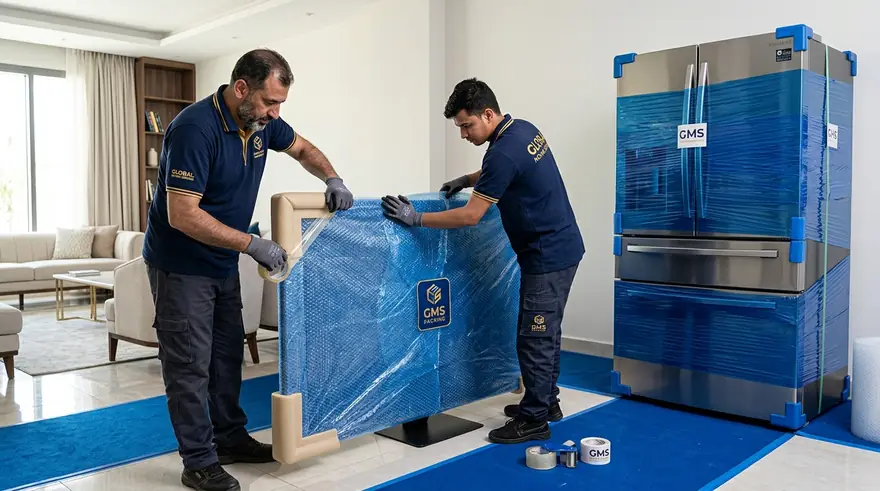
Simple mistakes in moving turn into costly faults
A fridge has a compressor, pipes and refrigerant, a washing machine has a motor and a drum hung on springs, an oven has glass and heating elements, and kitchen units are made of boards, drawers and fine hinges. All of this reacts to tilting, vibration and knocks, and damage may not show on arrival but a day or two after switching on. That is why the kitchen needs more planning than other rooms.
People often forget that a kitchen is not only furniture but a set of electric, water, gas and drain connections. Disconnecting and reconnecting them takes knowledge and care, and some of it needs a qualified technician who should not be skipped, which is what we explain in the following paragraphs.
How each appliance is prepared before the move
These are general guidelines; check the appliance manual, and tell us about any device you are unsure how to prepare before the day.
| Appliance | Preparation before the move | Position in transit | After arrival |
|---|---|---|---|
| Fridge | Empty it fully, defrost, dry it and secure the doors | Upright where possible | Wait before switching on as the manual advises |
| Washing machine | Drain water from hose and drum, secure the door and sometimes fit transit bolts | Upright and secured | Connect water and drain and test a cycle |
| Oven and gas cooker | Gas disconnected by a technician, shelves cleaned and glass wrapped | Upright or by type | Safe technician connection and leak test |
| Dishwasher | Drain water, secure racks and disconnect hoses | Upright | Technician connection and test |
| Microwave and small appliances | Remove turntables and wrap each item | In padded cartons | Check and switch on |
| Screens | Unplug cables and wrap the screen in protective layers | Upright in a rigid carton | Mount and switch on |
These guidelines do not replace the manufacturer's manual. If you have an appliance under warranty, keep the manual and check what it says about moving.
How a whole kitchen is moved from dismantling to reassembly
This is a general plan adjusted to the type of kitchen, and it always starts with an inspection.
Inspect and photograph the kitchen
Photograph wall and base units, built-in appliances and connections, and decide how each unit is fixed and how to take it down without damage.
Disconnect services by qualified hands
Disconnecting gas, electricity, water and drains is done by a qualified technician, and we advise against trying it yourself, especially with gas.
Empty the units and drawers
Take out dishes, tools and food, wrap them in cartons by size and fragility, and mark the kitchen cartons clearly.
Dismantle and number the units
Doors, drawers and shelves come off, parts are numbered and logged, and boards are wrapped in layers that protect surfaces and edges.
Transport with board protection
Boards go upright and strapped with protective layers between them, and any marble or stone worktops are wrapped with great care.
Reassemble and connect
Units are rebuilt at the new place by their numbers, doors and drawers adjusted, then the technician connects the appliances and tests them.
An important difference between a ready-made, a tailor-made and a built-in kitchen
The type of kitchen decides what can be dismantled and rebuilt and what may be harmed during dismantling.
Ready-made fitted kitchen
Standard units that can usually be taken down and rebuilt without major problems if dismantled carefully and numbered, though the quality of the new fit depends on how well the space matches.
Tailor-made kitchen
Designed for one particular space and may not fit another. We move, dismantle and rebuild, but how well it suits the new place depends on measurements and it may need adjustment by a manufacturer.
Kitchen with stone worktops
Marble and stone tops are heavy and breakable and are not normally easy to take off. We agree with you on assessing the condition before any decision.
Built-in appliances
A built-in oven or washer needs careful disconnection and it is best to check its manual, and each piece moves with its own protection.
What you do not do yourself and leave to a qualified technician
Gas is the most dangerous item in a kitchen move. Disconnecting a gas line and reconnecting it must be done by a qualified technician who checks for leaks after fitting, since a simple error could cause an accident. The same goes for electrical connections for large appliances and electric ovens, and for water and drain connections for washing machines and dishwashers, all of which need precision.
We recommend booking the right technician before moving day so times can be coordinated, and not switching appliances on before the connection is confirmed safe. If you need a technician, we do not usually provide that service ourselves, but we coordinate the schedule with you so that his visit coincides with the unloading of the appliances.
- Gas: a qualified technician checks for leaks after fitting.
- Electricity for large appliances: safe connection and load check.
- Water and drain: secure hoses and test for leaks.
- Air conditioners if any: coordinate with an AC technician.
How to protect sensitive appliances from knocks and scratches
Screens, oven doors and fridge fronts are glass and polished metal, and any scratch or knock may leave a permanent mark. These appliances are wrapped in layers: a soft layer touching the surface, then a bubble layer, then an outer cover held with tape that does not stick to the surface. They go in their original boxes if available, otherwise in rigid cartons of fitting size.
Screens travel upright, not flat, and the cables are disconnected and kept in a bag labelled with the device they belong to. Avoid putting anything heavy on top of a sensitive appliance in the truck, and give it a fixed place where it will not slide.
Packing utensils and small tools so they do not break
A kitchen holds hundreds of small pieces and most of them are fragile: glasses, plates, glass and ceramic dishes. Start by wrapping each piece in ink-free paper or a bubble layer, put them in small rigid cartons that are not overloaded and fill the gaps with padding so pieces do not move. Heavy items go at the bottom and light ones on top.
Mark the cartons as fragile with the right-way-up direction and note the contents briefly. Do not forget knives and sharp tools: wrap them separately and tie them so they do not hurt anyone when opened. Finally, leave one carton of basic cooking tools and cups for your first day.
An example: moving a fitted kitchen with appliances from a flat to a villa in Dammam
A family moves from a flat to a villa inside Dammam, with a fitted kitchen of wall and base units, a large fridge, a washing machine, a gas cooker and a dishwasher. The plan begins with an inspection and photographs of the units, then booking the technician to disconnect gas and water before moving day. On the first day the fridge is emptied, defrosted and dried, the washing machine drained and the appliances wrapped.
The crew arrives, dismantles and numbers the units and wraps the boards, then carries the appliances upright and secured. At the villa the units are rebuilt by number, the technician arrives to connect gas and water and test them, and the fridge is left for a while before switching on. So the appliances work the same day or the next and the kitchen is ready with the least possible damage.
- Inspection and photos before agreeing
- Book the technician before moving day
- Prepare and empty appliances
- Rebuild by number, connect and test
A checklist for the day before a kitchen move
Keep this list at hand before moving day: empty the fridge and freezer and leave them open to dry. Drain the washing machine. Take the turntable out of the microwave. Unplug small appliances and wrap them. Prepare marked cartons for utensils and dishes. Book the technician to disconnect and reconnect gas. Measure the new kitchen space and compare it with the unit measurements.
Make sure the floors and walls on the route are protected and provide a place to set down boards so they are not knocked. If you have appliances under warranty keep the warranty papers and each device's manual, as you may need them after the move.
- Empty, defrost and dry the fridge
- Drain the washing machine and secure the door
- Technician for gas, water and electricity
- Marked cartons for utensils and tools
- Compare kitchen measurements with the new space
Mistakes that lead to faults or breakage in a kitchen move
The first mistake is moving the fridge tilted or upside down and switching it on at once, the second is leaving water in the washing machine, the third is ignoring the gas technician and trying to connect it yourself. The fourth is dismantling units without numbering so hours are lost putting them back. The fifth is loading boards flat on top of each other without protection so they bend or break.
The sixth is neglecting to measure the new kitchen, so the units turn out not to fit once taken down. That is why we advise measuring and inspecting before any decision to dismantle.
What we offer in kitchen and appliance moving
We are Al Bayt Al Hadith for furniture moving in the Eastern Province, moving homes, apartments, villas and offices with multi-layer packing, dismantling and reassembly and appliance moving. We dismantle, number, move and rebuild kitchen units, and we do not manufacture kitchens or alter their design. Gas, electrical and air-conditioning connections we coordinate with a qualified technician.
Call or message us on WhatsApp at 0566300558 and send photos of the kitchen and the appliances, the number of pieces and the floor, and we will explain what is dismantled, what moves as it is and what needs a technician in a written offer.
Common questions about kitchen and appliance moving in Dammam
General answers to help you prepare; send your details and we will confirm what applies.
Do you dismantle and rebuild kitchen units?
Do you move fridges and washing machines?
Who disconnects and connects the gas?
How long should I wait before switching on the fridge?
Can an oven door glass break in transit?
Do you move screens?
What about a tailor-made kitchen?
Do you offer kitchen modification?
How do I request an offer?
Pages related to kitchen and appliance moving
Services and guides that complete the planning.
Movers in Dammam
Main page for moving services in Dammam
Appliance moving
Details on appliances and screens
Furniture assembly in Dammam
Dismantling and reassembly details
Furniture packing in Dammam
Multi-layer protection
Apartment movers in Dammam
Apartment scenarios
Villa movers in Dammam
Details of moving villas
Moving with packing in Dammam
Packing details
Request a quote
Send details and get an offer
Send photos of your kitchen and appliances
We will read the photos and explain what is dismantled and what moves as it is, and what needs a qualified technician, in a written offer.