Furniture Assembly in Dammam: Flat-Pack, Beds, Wardrobes and Kitchens Done Properly
Taking furniture apart and putting it back together is careful carpentry, not just loosening screws. This guide explains how a technician handles beds, wardrobes, desks, kids' rooms and kitchens in Dammam, which tools and labelling protect the parts, and what you should prepare, whether you are moving, rearranging or have just bought new furniture.
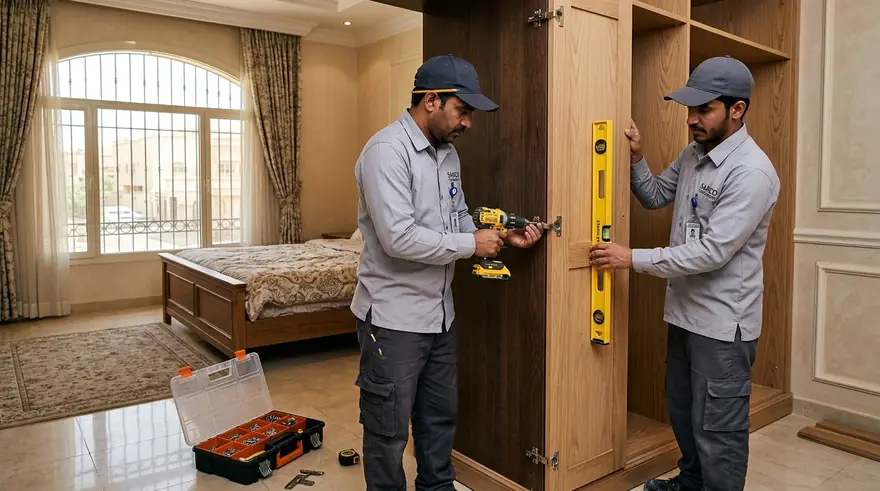
Assembly is a separate skill from moving
Many people assume anyone with a screwdriver can dismantle a bed or wardrobe. In practice modern furniture is made of engineered boards with several kinds of fittings, and each one needs its own method. Take it apart wrongly and the boards crack, screw holes strip and the piece never feels solid again.
This page treats assembly and dismantling as a stand-alone service in Dammam, with or without a move. If you want transport and assembly in one job, see moving with assembly in Dammam.
Which furniture needs dismantling and assembly
The most common are bedroom suites with beds, dressers and wardrobes, then clothes wardrobes with sliding or hinged doors, then desks, TV units and bookcases, kids' rooms and bunk beds, and finally modular kitchens and wall shelves.
Each type has its own trouble spots. A tall wardrobe needs many hands so it does not bow; a solid wood bed needs patience with its joints; a kitchen is tied to water and power, so it requires coordination with other trades. More detail on rooms is in bedroom assembly, wardrobe assembly and kitchen assembly.
What a furniture technician carries
A good technician does not rely on one screwdriver. The kit holds screwdrivers in several sizes, hex keys in different measurements, an adjustable-torque drill, a spirit level, a rubber mallet, clamps and often a tape measure and marker.
To protect finishes the technician lays boards or blankets under the work and uses bags to sort fixings. This modest equipment is what keeps furniture looking good through repeated assembly cycles; without it, every dismantling slowly wears the piece out.
The correct dismantling order, step by step
Work starts by emptying the piece and photographing it, noting where each fitting sits. Next come doors, drawers and removable shelves, then the side panels, and finally the frame. That order stops the piece from falling or twisting while it is opened.
Each piece gets its own bag of screws labelled with the item and room. Large panels are stacked in a way that protects faces, and edges and corners are wrapped in cardboard or covers. Phone photos of each stage become the reference for rebuilding.
Fitting types and how each is handled
A general guide to common fixings.
| Fitting | Where it appears | Handling note |
|---|---|---|
| Plain metal screws | Desks and shelves | Loosen gently to avoid stripping the hole |
| Cam bolts and dowels | Flat-pack furniture | Turn to open position, never force |
| Barrel nuts and bolts | Modern bed frames | Use the right hex key and avoid over-tightening |
| Wood screws and glue | Solid wood furniture | May not dismantle at all and move as one piece |
| Hinges and sliding tracks | Wardrobes | Remove with track and wheel protection |
Frequent problems after assembly and their causes
The usual complaints are a door that does not close, a drawer that rubs, or a piece that wobbles. The cause is typically an unlevelled base, parts fitted in the wrong order, one lost screw or an old worn hole.
Stripped holes are repaired with wooden filler or longer screws, doors are adjusted through the hinges, and tall units are anchored to the wall to prevent tipping, especially where children live. If a key screw is missing, it should be replaced by the same type, not a similar one.
How Dammam's climate affects wooden furniture
High humidity in the Eastern Province, particularly in the hot months, makes engineered boards swell slightly at the edges and can weaken glue over time. Avoid leaving dismantled furniture in damp or unair-conditioned rooms for long.
Store boards upright or lifted off the floor, wrapped in layers that breathe rather than trap moisture. Wherever possible, rebuild on the same day to reduce exposure to warping.
How the technician's visit runs from start to finish
A sequence that reassures you at each stage.
Inspect and photograph
The technician views the pieces, photographs them, identifies fittings and tools, and estimates the time.
Empty and protect
Pieces are emptied, floors covered and walls protected before work begins.
Labelled dismantling
Parts come off in order and screws are sorted into marked bags.
Assemble and adjust
The piece is rebuilt in its new place, doors and drawers adjusted and stability checked.
Check and clean
You inspect the result with the technician and the work area is cleared.
What to prepare before the technician arrives
Empty drawers and shelves, move valuables and fragile items away, and clear space around each piece. Keep any original instruction leaflets or bags of screws, because they save time.
Decide which room and wall each piece will stand against, and tell the technician about special measurements such as ceiling height or door width. For wall-mounted items, find out what the wall is made of and whether pipes or cables run behind it.
If your new furniture is still in boxes, keep the packaging until the technician confirms every part is present, which protects your right to a replacement when something is missing.
Building flat-pack and newly bought furniture
Many people buy flat-pack furniture and then discover assembly takes a whole day. A technician who reads the plan, sorts the parts and builds quickly saves you that day, especially on tall wardrobes and beds.
Build large pieces where they will stay, since moving an assembled wardrobe later can loosen its joints. For flat-pack from large retailers, see IKEA furniture moving for notes on their particular fittings.
Dismantling when you move between two homes
When a whole home moves, dismantling becomes part of the plan: decide which pieces will come apart and which travel whole, and check door widths, stairs and lifts at the new place before deciding.
Ideally the person who dismantles also rebuilds, because he knows where each part went. To coordinate with carrying and wrapping, read moving labour in Dammam and moving with assembly and packing.
Kitchens and wall units: a special case
A fitted kitchen is a series of units connected to walls, floor and worktop. Taking it apart requires water, power and gas to be disconnected by qualified people first, and only then can the carpenter start. Units may travel complete or be reduced to boards depending on how they were made.
Wall units need attention to their load and the wall type. For details on custom units, see custom kitchen moving.
Kids' rooms and bunk beds
Safety comes first: a bunk bed must be built with firm rails and a solid ladder, and any missing or loose screw can become a hazard. Make sure fittings are tightened firmly and re-check them after a week.
In children's rooms keep furniture away from windows and edges, anchor tall units to the wall, and avoid accessories with small detachable parts a child could pull off.
Assembling in small flats and saving space
Small flats in Dammam need planning before assembly: where will the wardrobe door swing, and will it block the entrance? What gap is left beside the bed? Measure first, then decide positions, to avoid building a piece and then taking it apart because it does not fit.
Sliding doors instead of hinged ones, or a change in shelf height, are easier to arrange before the final build than after.
Coordinating with electricians, plumbers and air conditioning
Some furniture connects to other services: kitchens to water and gas, TV units to electricity, dressing tables to built-in lighting. The technician handles the carpentry while qualified specialists do the connections, and schedules must be coordinated.
Switch power off before dismantling any lit unit and never let an inexperienced person disconnect gas pipes. These are basic safety steps.
Antique and valuable items: when we do not dismantle
Some old, hand-made or glued solid wood pieces cannot survive dismantling, and forcing them can cause damage that cannot be repaired. These are best moved as a single piece with strong wrapping and enough hands.
For valuable or fragile items ask for an assessment first; an honest technician will tell you when a piece should not be taken apart rather than gamble with it. See luxury furniture moving for further guidance.
What changes the estimate for assembly work
We explain factors, not numbers: how many pieces and how large, the type (a sliding wardrobe differs from a simple shelf), the floor and lift access, whether you need dismantling, assembly or both, and whether older furniture has worn fixings.
To compare offers, check what each includes in tools, protection and a follow-up visit. The quote comparison guide helps you do so fairly.
After assembly: tightening and simple upkeep
After one or two weeks it is wise to tighten fittings again, because furniture settles with use. Checking sliding tracks and cleaning them now and then prolongs their life.
If a fault appears, such as an uneven door or a sticking drawer, tell us the same day so we can explain the remedy, and avoid loosening joints without experience, which usually makes the problem worse.
Typical errors when people dismantle furniture themselves
The most frequent are taking everything apart without sorting the screws, losing small parts, dismantling a piece that was glued and never meant to come apart, using the drill at high torque and cracking boards, and failing to photograph the original assembly.
Such mistakes leave furniture wobbly or incomplete. Hiring a technician avoids that loss and saves hours that can stretch very long without experience.
A short summary before you book a technician
Choose a technician who explains the tools and the labelling method, checks fittings before starting, then builds, adjusts and reviews the result with you. Prepare the space and measurements, send photos early and choose a time that suits the building.
If you have furniture to dismantle or assemble in Dammam, send photos and dimensions and we will give you the time and plan, without obligation.
Questions about furniture assembly in Dammam
Short answers before you book.
Can I book assembly without a move?
How long does a bedroom take to assemble?
What if screws go missing?
Do you assemble newly bought flat-pack furniture?
Can a kitchen be dismantled and moved?
Can old furniture be dismantled?
Do you anchor tall units to the wall?
How do I book a technician?
Related services and guides
More on dismantling and assembly.
Movers in Dammam
The main service page for the city.
Moving with assembly
Transport and assembly with one crew.
Bedroom furniture assembly
Beds, dressers and wardrobes.
Wardrobe assembly
Sliding and hinged doors.
Kitchen assembly
Kitchen units and shelves.
Dismantling and rebuilding guide
General steps and warnings.
Moving crew in Dammam
Roles on moving day.
Furniture assembly service
The general service page.
Moving with assembly in Qatif
Dismantling and rebuilding in Qatif.
Kitchen and appliance moving
Preparing fridge, washer and cooker.
High-floor moving in Dammam
Stairs and buildings without a lift.
Furniture to assemble or dismantle in Dammam?
Send photos of the pieces, their dimensions and the location, and we will tell you the time and plan that suit you, without obligation.