Moving From High Floors and Buildings Without a Lift in Dammam: How to Carry Furniture Down and Up Safely
The hardest part of moving furniture is not the distance but the staircase. A flat on the fourth floor with no lift, a building whose lift is too narrow for a wardrobe, or a large majlis sofa that will not turn the corner: these are the situations that separate a smooth move from an exhausting one. This page is for anyone living on or moving to a high floor in Dammam, and it explains how a safe move is planned, from measuring and dismantling to protection and unloading, and what to know before you agree terms with any crew.
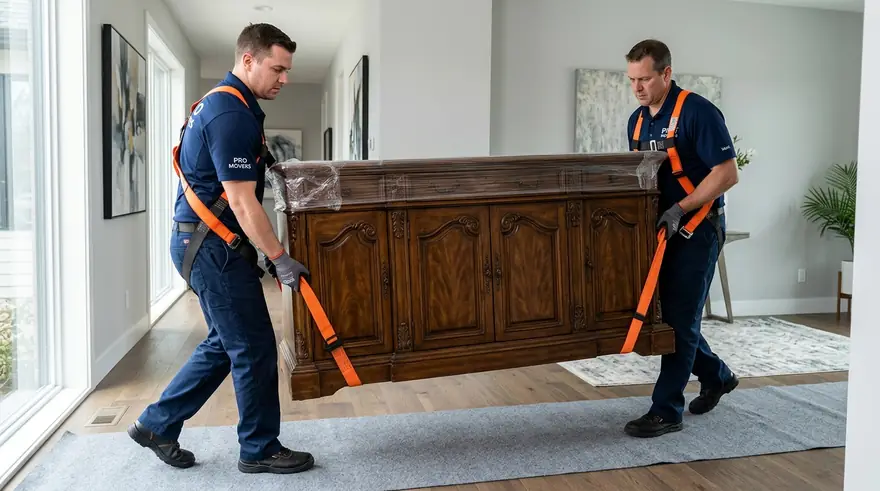
Why moving from high floors is hard and when it becomes exhausting
On the ground floor a move is measured by the number of pieces, but on a fourth floor with no lift it is measured by how many times each piece must go up and down the stairs. Every wardrobe needs more than one worker, and each worker tires after a limited number of floors, so crews must rotate. That raises the duration and changes the cost, and this is not exaggeration, it is practical reality.
Even when a lift exists it may not solve the problem. The lifts of some buildings are narrow or have a weight limit and will not take a large wardrobe or a standard bed, so the job returns to the stairs. That is why the first step in a high-floor move is not carrying but inspection: measuring, photographing and understanding the route.
How to measure the route and know what will fit and what needs dismantling
A simple measurement before the move prevents surprises on the day, and you can take it yourself and send us the result.
Measure stair width and ceiling height
Measure the stair width between the wall and the railing and the height of the passage, and note the turns and tight corners that make a piece tilt.
Measure the lift and its door
Record the lift door width, depth and height, and whether it takes a standing wardrobe or whether it must be dismantled or carried by stairs.
Measure the biggest pieces
Length, width and height of the wardrobe, the length of the sofa and the size of the bed, to compare against the figures above and see what passes and what does not.
Photograph the whole route
Photos of the stairs, the turns, the entrance and the flat door save a long explanation and help the crew plan from the images.
Decide what will be dismantled
Beds, wardrobes and large tables can be taken apart, while rigid pieces that cannot be dismantled, such as a fixed-frame majlis or a large fridge, need a special plan.
Leave time in reserve
A high-floor move takes longer than many expect, so book a flexible day so the crew is not squeezed.
How the method changes by floor and lift
These guidelines are general, and the crew fixes the final method after inspection or after reading your photos.
| Situation | Usual method | What changes | What we need from you |
|---|---|---|---|
| First or second floor with easy stairs | Organised hand carry | Extra workers for heavy pieces | Stair width and photos of the pieces |
| Third to fifth floor without a lift | More workers carrying in rotation | More time and more wall protection | The floor and number of turns |
| Narrow lift | Small pieces by lift and large ones by stairs | Wardrobes dismantled to fit the door | Lift door size and depth |
| High floor with a very large piece | Study lifting from outside if possible | Needs coordination and special conditions | Photos of the facade, balcony and street |
| Building with strict rules | Lift booking and set hours | Precise scheduling | Management approval and entry times |
We do not say every case has one solution, but that each case has a plan built on its own measurements, which is why we begin with questions before giving a figure.
Protecting walls, doors and stairs during the move
On high floors, rubbing is constant: every turn may scratch a wall, strike a corner or hurt the railing. Buildings keep a long memory of such damage, which may lead to disputes with neighbours or the landlord. So the crew uses protective covers on corners, doors and walls at critical points, puts guards on the edges of the furniture itself and makes sure the load moves in coordination between workers.
It matters to warn neighbours before moving day and to agree with the building management on times that reduce disturbance. Sweeping the stairs after the move is part of respect for everyone who lives in the building. These small details make a high-floor move an acceptable experience for all.
How each large piece is handled going up and down
Each type of furniture has a method that lowers the risk to the piece and to the workers.
Wardrobes and cabinets
Emptied, with doors and shelves removed, carried in separate parts and rebuilt at the new place by a carpenter.
Beds and mattresses
The frame is dismantled and the mattress wrapped tightly, then carried tilted on the stairs by two workers in coordination.
Sofas and majlis sets
Cushions and removable arms taken off, the pieces covered with thick covers and moved with a calculated tilt at the turns.
Fridges and washing machines
Emptied, doors secured and carried with suitable straps and enough workers, then left upright for a while after arrival before use.
Marble and glass tables
Top separated from base, each part wrapped in protective layers and carried with great care and the least possible tilt.
When lifting from outside is considered instead of the stairs
There are cases where a piece passes neither on the stairs nor in the lift, such as a huge wardrobe that cannot be dismantled or a large glass item. In these cases the option of raising or lowering the piece from outside through a window or balcony with suitable lifting equipment may be studied, provided the building and street allow it, a safe place for the equipment exists and the safety of passers-by and the facade is respected.
This option is not ordinary and does not suit every site, and it has its conditions and needs prior coordination. If you have a piece of this kind, send photos of the facade, the street and the window position, and to confirm whether this option is available and on what conditions for your request, contact us well before the day so we can assess the case with you.
Why crew size and method differ on high floors
Repeated climbing is tiring, and workers tire faster in hot weather. So the crew divides roles: workers above, workers below and others on packing and dismantling, taking turns on heavy pieces so that nobody tires and raises the chance of error. Safe work matters more than fast work, because a piece that falls on the stairs may hurt someone or break a wall.
The homeowner can help with safety: clear the stairs of obstacles, keep children away from the work area and provide water and rest for the crew if the day is long. A respectful relationship between homeowner and crew makes the work faster and safer.
An example: a fourth-floor flat without a lift in a residential district of Dammam
A family of four moves from a fourth-floor flat without a lift to a nearby villa, with three bedrooms, a lounge, a kitchen and a dining room. The stairs are narrow with two turns, and some wardrobes are big. The plan begins by measuring the stairs and photographing the turns, then deciding which pieces will be dismantled: wardrobes, beds and the dining table. Small items are packed in cartons so they come down quickly.
On the day the crew starts with packing and dismantling before any carrying, then brings the parts down in organised rotation with corner protection and loads them in the truck in the order they will be unloaded at the villa. So the move finishes in one day despite the stairs, because dismantling and planning saved the time. The difference between success and chaos here is the prior inspection.
- Measure and photograph before agreeing
- Dismantle wardrobes and beds before carrying
- Wrap parts and protect corners
- Load in the order of unloading
How to ease the effort and the cost for yourself in a high-floor move
The simplest way to reduce effort is to reduce the load before the move: get rid of old pieces you do not need, empty wardrobes and drawers in advance and gather small items in medium cartons that are not too heavy. A heavy carton tires the worker on the stairs and raises the chance of damage.
Coordinating time with the building also reduces waiting, and taking down simple furniture yourself eases things. Relying on untrained labour to save money often ends in a bigger loss through a broken piece or a damaged wall.
Mistakes that repeat in high-floor moves
The commonest mistake is hiding from the company that the building has no lift or that the stairs are narrow, so the crew arrives too small. The second is leaving wardrobes full, which adds weight. The third is moving furniture with no protection for corners and walls. The fourth is neglecting coordination with neighbours and management, so work is held up by a ban or a complaint.
The fifth is expecting to finish in two hours what needs a day, so everyone presses the crew and errors occur. Be realistic about time and let the crew work safely.
How we handle high-floor moves
We are Al Bayt Al Hadith for furniture moving in the Eastern Province, moving homes, apartments, villas and offices with multi-layer packing, dismantling and reassembly and heavy furniture handling. We build the high-floor plan on measurements, photos and the right crew size.
Call or message us on WhatsApp at 0566300558 and send the floor, whether there is a lift, photos of the stairs and of the furniture, and we will explain the crew and method and set out in writing the lines that may change.
Common questions about moving from high floors in Dammam
General answers to help you plan; send your details and we will confirm what applies.
Do you move from flats without a lift?
Does the price rise with the floor?
What if the wardrobe does not pass on the stairs?
Can a large piece be lifted from outside?
How do you protect building walls?
Do I need permission from the building management?
Does a high-floor move take longer?
Do you dismantle and reassemble wardrobes?
How do I request an offer?
Related pages for apartment and high-floor moves
Services and guides that complete the planning for moving from high floors.
Movers in Dammam
Main page for moving services in Dammam
Apartment movers in Dammam
Apartment and lift scenarios
Furniture assembly in Dammam
Dismantling and reassembly details
Moving workers in Dammam
The crew and its roles
Heavy furniture moving
Handling large pieces
Furniture packing in Dammam
Multi-layer protection
Moving within Dammam
A one-day plan
Request a quote
Send details and get an offer
Tell us your floor and we will plan a safe move
Send the floor number, whether there is a lift, photos of the stairs and of large furniture, and we will explain the crew and the method in a written offer.