Moving With Packing in Khobar: How Your Home Is Prepared Piece by Piece Before It Reaches the Truck
Ask for movers and packers in Khobar and you are adding a whole stage before the move itself: preparing each item according to how fragile it is and what it is made of. This page explains what gets wrapped and in which layers, how the work is shared between you and the crew, what should never go into a carton and what the days before a move look like, so you walk into moving day knowing everything is in hand.
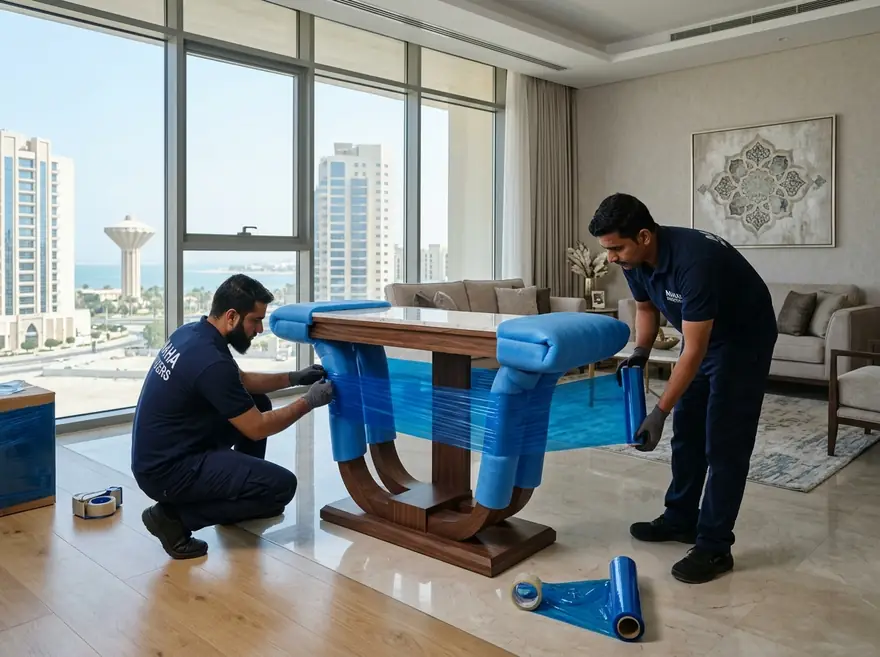
What moving with packing really means
Packing that goes with a move is more than wrapping things in plastic. It is a chain of small decisions: which piece needs foam, which is fine with thick stretch film, what goes into a reinforced carton and what is wrapped in ink-free paper so it does not mark china. When those decisions are made item by item, things reach the new home as they left the old one.
Because the crew wraps and moves on the same day, materials, skill and order come together in one coordinated process, instead of you packing in a rush and then someone else carrying boxes without knowing what is inside.
The materials we use and why
We use thick blue stretch film to bundle large items and shield furniture surfaces from dust and rubbing, bubble wrap for glass, ornaments and small devices, ink-free paper for ceramics and glassware so nothing gets stained, and reinforced cartons for small items, books and clothing. Foam and blankets go around corners and delicate surfaces such as marble and lacquered wood.
Matching the material to the object is what separates good packing from improvised packing. Plastic alone can leave a mark on lacquered wood if it presses on it, and newspaper can stain dishes.
Item and the layer that suits it
How common household items are protected.
| Item | First layer | Extra protection | How it travels |
|---|---|---|---|
| Sofas and lounges | Thick stretch film | Foam on corners | Relaxed position, not squeezed |
| Dishes and plates | Ink-free paper | Reinforced box with dividers | Small box on top of heavier ones |
| Glass and mirrors | Bubble wrap | Foam and board on edges | Upright and steady |
| Screens and devices | Protective wrap | Foam and suitable box | Vertical, never pressed |
| Clothes and linen | Sealed bags | Strong cartons | Grouped by room |
| Books and papers | Small cartons | Tightly filled | Light for their size |
These are general examples; the real method depends on the condition and size of each item.
Who packs what: sharing the work
The best approach is to keep personal and important items under your control and let the crew handle large and fragile pieces. You sort what goes and what stays, set aside what must not be touched such as official papers, jewellery, medicines and personal devices, and tell us about anything with sentimental value. The crew handles furniture, mirrors, large appliances and crockery, and uses the materials and experience to bind and secure them.
This split speeds up the work, reduces errors and makes clear who is responsible for what if something needs reviewing.
What we do not put in cartons at all
Some things never travel in the cartons with the rest: official documents, passports and ID cards, jewellery, cash and small valuables, medicines and perishable food, flammable items such as gas cylinders and solvents, and small personal devices you need daily. Carry them yourself in a dedicated bag that stays with you. It gives you peace of mind and keeps these items out of any confusion.
How moving day runs when packing is included
The sequence we follow.
Walk-through
You tour the rooms with the supervisor and point out fragile items and where each room goes in the new home.
Start with least-used rooms
Storage and spare rooms are wrapped first, living and bedrooms last, so daily life continues longer.
Wrap the furniture
Sofas, tables and cabinets are wrapped in their layers and doors and drawers secured.
Pack small items
If you have not done it already, we pack by category and number each box.
Load by weight
Heavy goes in first, then lighter pieces, and the load is strapped down.
Unload and place
Cartons and pieces are taken to the right rooms according to the labels.
The numbering and label system
Each carton carries three pieces of information: the destination room, a box number and a general description of contents, with a clear marker on the top side of fragile boxes. The supervisor keeps a short list of box counts per room, and on arrival the count is checked before and after unloading. This simple routine prevents a box going missing or ending up in the wrong room.
Kitchen and dining: crockery, glassware and small appliances
The kitchen holds the most varied mix of fragile things in any home. Plates and glasses are wrapped one by one in ink-free paper and stood on edge rather than flat, because crockery bears pressure on its rim better than on its face, with dividers between layers. Small appliances such as blenders and coffee makers go in their original boxes if you still have them, or in suitable cartons with foam inserts. Knives and sharp tools are wrapped tightly and labelled so nobody cuts a hand when unpacking.
Living room: sofas, glass tables and screens
Sofas are wrapped with moderate tension so the film does not press into leather or fabric, and their corners get foam. Glass tabletops are separated from their bases, wrapped in bubble wrap and carried upright between two stiffening boards. Screens travel vertically, wrapped and braced with foam, ideally in the middle of the load rather than against the walls. Ornaments and display items are gathered into small padded boxes and marked with the room name.
Bedrooms: mattresses, linen and clothes
Mattresses are sealed in covers that keep out dust and humidity and travel flat or upright depending on space, never folded. Clothes go into reinforced cartons or sealed bags by room, with the first days' outfits set aside in a separate bag you open on arrival. Bedding and curtains are rolled and kept away from sharp objects. These details make your first night in the new home easier.
Items with sentimental value
What matters emotionally cannot be priced. Family photos, albums and old gifts go in small, specially marked boxes that you can carry in your own car if possible. Decorative glass and ornaments are wrapped in layers of paper and bubble wrap and placed in small stiffened boxes. Tell us beforehand about anything you consider special, and we will add protection and review its condition with you at delivery.
What to do with the boxes afterwards
Once cartons arrive in their rooms, start with the essentials boxes for the kitchen, bathroom and bedroom and check the list you hold to confirm the count is complete. After emptying, keep useful cartons for future moves and discard damaged ones. Do not throw away protective wrapping until you are sure the pieces it covered are intact, since you may need to review them if you notice something later.
Dust and humidity in Khobar
The city is on the coast, with summer humidity and dusty spells that affect fabric, wood and electronics. So we wrap sofas, mattresses and curtains tightly to keep dust out and avoid leaving items uncovered during loading on dusty days. We also suggest not wrapping fabrics while they are damp so they do not go musty, and drying anything wet before it is boxed.
Towers and lifts: planning the packing
In towers that regulate lift use it is often best to finish wrapping inside the flat before the lift slot starts, so the lift is used only for moving. Boxes are lined up near the door so trips are not delayed. If the flat is on a high floor, tidy grouping of cartons by room reduces wasted trips.
A timeline for the days before the move
A week ahead: sort, discard what you do not need and request an estimate. Three days ahead: box what you do not use daily, such as books and keepsakes. The day before: prepare a bag of essentials with papers, medicines, chargers and a day or two of clothes. On moving day: the crew handles the remaining wrapping of furniture and appliances. For a large home it may be sensible to start packing a day earlier, which we agree case by case.
Packing does not replace protection for valuables
Good packing lowers the chance of damage, it does not remove it. So we recommend photographing valuable pieces beforehand, reading the written guarantee terms and agreeing in advance what happens if something is damaged. Our guarantee terms page explains what each side can expect.
Packing mistakes that keep happening
Frequent errors include putting heavy items into big boxes so they become unliftable or burst, leaving gaps in a box so dishes shift, wrapping lacquered pieces directly in plastic with no soft layer, not labelling cartons and boxing damp fabrics. Systematic packing prevents all of these, which is one reason a trained crew is quicker and safer than improvised packing.
Moving from and to Khobar with packing
For a move to Dammam, Dhahran or Jubail the longer road makes secure loading and tight wrapping more important, because vibration is greater. For a short move within Khobar, some wrapping layers on non-fragile items can be lightened by agreement with you. In both cases the decision follows the item, not a general rule.
How we start
Send photos of the rooms and large pieces, both addresses, the floor and lift details, and tell us what you want wrapped and who will handle small items. We reply with the crew, materials and schedule we suggest, and confirm the date when you decide.
Questions about moving with packing in Khobar
Short answers before you book.
Which materials do you use for packing?
Does packing include small items?
What should not go in the cartons?
Are furniture and appliances wrapped too?
How do I know where each box goes?
Does packing happen before moving day?
Does wrapping protect from dust?
How do I get an estimate?
Related pages on packing
Guides to preparing and protecting belongings.
Movers in Khobar
The main service page for the city.
Furniture packing in Khobar
Box guide and wrapping methods.
Moving with assembly and packing in Khobar
The full package in one day.
Moving with assembly in Khobar
When dismantling is added.
Our packing system
Protective layers in detail.
Furniture packing materials
What we use and why.
Moving boxes
Sizes and uses.
Protection and guarantee
What protects pieces in transit.
Request a quote
Send your move details.
Moving with packing in Qatif
Packing materials and stages in Qatif.
Moving with packing in Jubail
Moving with packing in Jubail: how each piece is wrapped, the right materials for glass, wood.
Moving prices in Khobar
Moving prices in Khobar: the factors that set the cost, including load, floor, lift, distance, packing and as…
Movers in Khobar Corniche area
Movers in the Khobar Corniche area: handling towers and flats near the waterfront, lift booking, holiday cong…
Want your furniture to arrive wrapped with care?
Send photos of the rooms and both addresses and we will reply with the packing plan, crew and materials that suit your move, without obligation.