Movers in Khobar Corniche Area: Planning Moves from Towers and Waterfront Flats
The Corniche area is one of the busiest and best-known parts of Khobar, with flats and tall buildings close to the waterfront, and people come there to walk and relax. That means a move here differs from a move in a quiet inner district: the truck needs somewhere to stop, the lift may be shared by many, and the road can fill up at holiday times. This page explains how we plan a move to or from the Corniche area and which details help you get a more accurate quote.
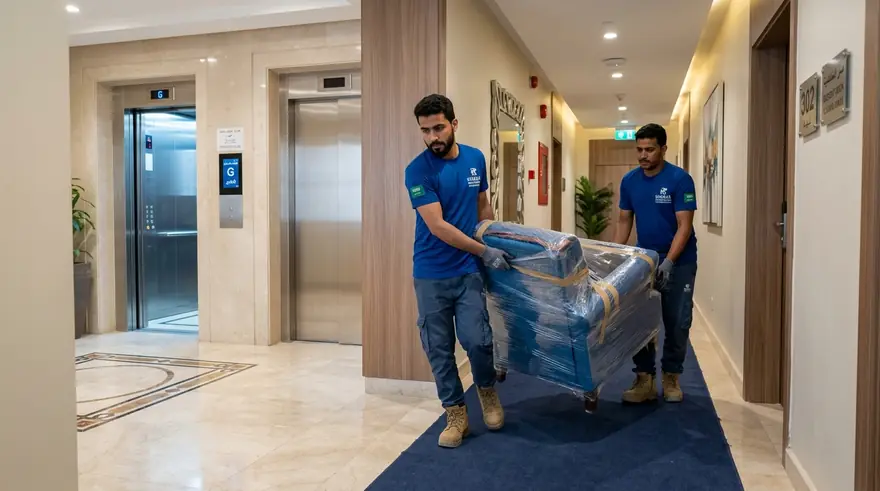
Why a waterfront-area move differs from others
The first thing you notice here is the number of multi-storey buildings and flats lived in by individuals and families. In such buildings the lift does most of the work and its use is sometimes limited by building rules, so planning starts not from the furniture but from access: when is moving allowed, where can the truck stand, and does the lift take long pieces.
The second feature is traffic. A place people visit for leisure means parking can fill up in the evening, at weekends and in holidays, and a large truck may take longer than usual to reach the entrance. So we prefer to agree on a window that avoids peak times where possible.
The third is who lives there. Many flats are rented, and moves are timed by lease dates and key handover, so we pay close attention to timing, so you neither miss handing over the old flat nor wait long at the new one.
Housing types near the Corniche and how the plan changes
The table summarises what we ask according to building type.
| Housing type | What we ask | What changes in execution |
|---|---|---|
| Flat in a tower with a lift | Lift size and operating hours | Loading in batches with the lift first |
| Flat in a small building | Whether there is a lift, and the stair width | Hand carrying and a bigger crew may be needed |
| Furnished flat or studio | How much of the furniture is yours | Light, quick move in most cases |
| Office in a commercial building | Building hours and how workers enter | Coordination with management and device handling |
| Flat with glass furniture and mirrors | Glass tables and mirror sizes | Double wrapping and separate loading |
This is not exhaustive, but it shows how the questions change with the building. The more precisely you describe the building, the easier the planning.
Lifts in towers: booking, capacity and batch order
In most towers the shared lift is the bottleneck on moving day. If the building has a service or goods lift, it is the best choice; if not we use the standard lift in coordination with management. Ask early: is there a booking, is a permit required, and are there hours when moving is not allowed?
We load in batches: we begin with wrapped boxes and small items while preparing the large pieces, then bring down the big furniture in a set slot. We cover the lift floor and walls with protective material so they are not marked, and keep the corridors clean.
If some pieces are longer than the lift we dismantle them where possible or check whether another way down is feasible. We do not wait until moving day to find out, which is why we ask for an approximate measurement or a photo of the long item beside the lift door.
Four points that recur when moving out of tall buildings
We focus on them when planning any move from a tower or high-rise.
Truck parking
Ask where the truck can stand near the entrance, even briefly, because distance lengthens carrying.
Protecting the building
Covering the lift floor, corridors and door corners protects the building and avoids complaints from management.
Preparing the flat
Gather items by room and clear the corridors so the first batches move quickly.
Coordinating with management
Tell management or the doorman the time and number of workers, which eases their entry and exit.
From the first message to receiving the new flat
The sequence we follow with someone moving from the Corniche area.
We gather building details
Floor, lift and its size, moving hours and where the truck can stand.
We review the photos
Shots of rooms, large items, glass furniture and appliances.
We set the crew and vehicle
We choose the right size for the load and the access.
We fix a date away from peak times
As far as possible, with attention to the lease and key handover.
We wrap, move and assemble
Then we check the items with you in the new place before leaving.
Packing: glass furniture, mirrors and appliances
Flats in waterfront areas often hold glass tables, large mirrors and wall-mounted screens. These need special protection: we wrap glass in protective layers and fix the edges with cardboard, move it upright and secured rather than lying flat, and carry screens in their original boxes if available or with wrapping that guards against pressure.
For tall mirrors we plan two workers and corner protection, and decide where they sit in the truck, away from heavy pieces. You can read more on our page about moving with packing in Khobar.
Dismantling furniture to get through corridors and lifts
When the lift is narrow or the corridor tight, dismantling becomes a way to ease carrying, not a luxury. Bedroom sets, desks and large beds are taken apart then reassembled in the new flat, so pieces pass safely and the chance of scratches falls. We keep screws in numbered bags for each piece so reassembly is simple.
Some flats are furnished with built-in units or fixed shelves, so we ask before the date what is yours and what belongs to the landlord, so that nothing is removed that is not yours. For details see moving with assembly in Khobar.
Example: moving from one tower flat to another in the same area
Someone moving from a high-floor flat with a shared lift to a flat in a nearby tower. We agreed a relatively quiet time and asked them to book the lift if management required it. The crew arrived, covered the lift, and brought down boxes first, then the large furniture, and moved the glass table alone with extra wrapping.
At the new building the lift could not take a long sofa lying flat, so we brought it up tilted after removing its feet. This is only an example of why we ask for lift details early, not a promise of duration or result.
When to move: busy hours and holidays
Places people visit for leisure tend to be more crowded in the evening, at weekends and at holidays. So moving on working days and in the morning is usually calmer for roads and parking, bearing in mind the lift hours in the building.
If your date is fixed by a lease or key handover, tell us and we will arrange the schedule around it and suggest the best window within the day. Some services, such as evening or same-day moves, depend on crew availability; see same-day moving in Khobar.
Moving while handing over the flat: precise coordination
Many people leaving rented flats must hand them over clean and empty on a set day while receiving the new flat at the same time. This needs coordination between the time of vacating and the time of receiving. We advise starting the move early so enough time remains to clean the old flat and hand it over.
It helps to photograph the old flat after emptying it and agree the handover time with the landlord so you do not have to rush. We take care not to leave items or rubbish behind, and agree with you what leaves and what stays.
Offices and shops in the nearby commercial areas
The area around the Corniche includes offices and shops alongside housing. Moving an office differs from moving a flat: files, devices, chairs, sometimes servers, and the business must not stop for long. We arrange the move outside working hours where possible and number the boxes by desk so rearranging is easy.
For more details see our page on office moving in Khobar.
Mistakes that repeat when moving out of tall buildings
Not asking about moving hours and lift booking, so the crew arrives and finds moving is not allowed for another hour. Hiding that the lift is narrow, not deciding where the truck will stand, leaving small items unboxed, and being late to prepare the flat so the crew waits.
Another mistake is ignoring management's remarks about protecting corridors. Our advice is to speak to management days ahead, not on the morning of the move.
What to prepare before requesting a quote
Write the building name or description and the floor, and whether the lift is shared or for service and whether it needs booking. Photograph the entrance, where the truck would stand, and any long item beside the lift door. Fix your date and backups, list the large furniture and appliances, and tell us if there is furniture you want to leave.
If you want to read about cost factors first, see moving prices in Khobar, and for direct contact there is Khobar movers phone number.
Protecting the building and the neighbours during the move
Moving in an occupied building means we are guests of the neighbours too. We keep noise down as far as possible, do not block shared corridors, clear any wrapping that falls, and close doors quietly. If a neighbour on the floor is elderly or has a special situation, it is kind to tell them the date in advance.
It is good neighbourliness that also lets you return to your old building without awkwardness, and spares management complaints that might affect its approval next time.
How we handle moving in the Corniche area
We start with the building and the access, then the load and packing, then the date. We ask for lift, parking and photo details and plan around them, taking care to protect the building and the furniture. If you have a question about a specific building, put it in your message and we will answer based on what you describe.
Frequently asked questions about moving in the Khobar Corniche area
Quick answers before you get in touch.
Do you move furniture in the Corniche area of Khobar?
Do I need to book the lift?
What if the truck cannot park near the entrance?
Do you move glass tables and mirrors?
Can the move be done in the evening?
Do you dismantle furniture to pass it through the lift?
How long does the move take?
How do I request a quote?
Related pages on moving in Khobar
Links to complete your planning.
Plan your Corniche-area move with us
Send the building description if you wish, the floor, the lift, whether the truck can park, and photos of large furniture, and we will suggest the crew and timing.