Moving With Dismantling and Assembly in Khobar: How Furniture Is Taken Apart and Rebuilt Properly
Furniture that enters a home in one piece rarely leaves in one piece. Large beds, sliding-door wardrobes, modular kitchens and TV units need orderly dismantling before the move and careful rebuilding after it, or screws get lost, doors sag and panels crack. Here is how the process runs from the first screw to the last when you ask for house shifting in Khobar with dismantling and assembly included.
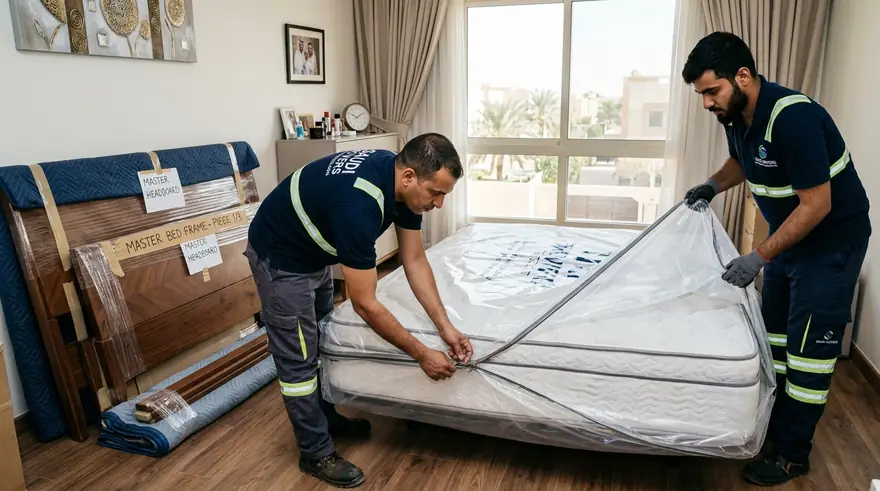
Why some furniture has to come apart before it moves
Three reasons make dismantling the right call rather than a luxury. A large piece may not pass a flat door, a lift or a stairwell turn. Taking it apart protects it from knocks and twisting while it is carried. And flat panels stack more neatly in the truck, so there is less movement and vibration on the road.
Dismantling is not risk-free, though. Furniture made of pressed board may not tolerate many cycles of assembly, so the carpenter decides what to take apart and what to move whole, and tells you before picking up a tool.
What comes apart and what stays as it is
The practical rule is to dismantle what blocks movement or exposes the piece to damage, and leave what can travel safely. Typically that means large bed frames, multi-door wardrobes, sliding wardrobes, big desks, modular kitchen units and wall-fixed shelving. Small tables, solid chairs and light chests generally go whole, with doors and drawers secured by protective wrap.
The carpenter judges by material and fixing condition. An older wardrobe that has been rebuilt several times may tolerate less than a newer one, and you are told before work starts.
Labelling and hardware bags
The part where rebuilding most often goes wrong is the small hardware: screws, bolts, hinges and brackets. So each piece of furniture gets its own sealed bag labelled with the item and room, and every panel gets a tag matching a short sketch the carpenter keeps. The bag is attached to the large piece or placed in a dedicated box that travels with you rather than with loose items.
This small discipline is what turns reassembly from a puzzle into routine work, and it is a main reason furniture goes back together as sturdy as it was.
Dismantling and rebuilding by type of piece
What gets attention in each case.
| Piece | What comes apart | What is protected | What is checked afterwards |
|---|---|---|---|
| Large bed | Frame, legs, headboard | Wood edges, hinges | Firm legs, no squeak |
| Multi-door wardrobe | Doors, shelves, base | Mirrors, fronts | Door alignment and closing |
| Sliding wardrobe | Doors off their tracks | Tracks and wheels | Smooth gliding |
| Modular kitchen | Units, doors, drawers | Worktops, handles | Units level and aligned |
| TV unit | Shelves, drawers | Glass and top | Level and stable |
| Desk and shelves | Drawers, legs | Front and edges | Stability, no wobble |
Every piece has its own details. The table shows where attention goes; the final call is made after seeing photos of your furniture.
Bedrooms: where most dismantling happens
A full bedroom set is the largest single source of assembly work in any move: a big bed, a wardrobe with sliding or hinged doors, a dresser with a mirror and side tables. Doors and mirrors come off first and are wrapped separately, then shelves and drawers, then the frame. At the new home the base is assembled before the doors, so alignment is set on the real floor.
For more on how bedrooms are protected during the carry, see our bedroom moving page for the wider Eastern Province.
Modular kitchens and wall-fixed units
Modular kitchens are taken apart unit by unit, with handles and hinges bagged and numbered and worktops wrapped in extra protection because they scratch easily. At the new address the measurements may differ slightly from the old kitchen, so it helps to show us the new layout if you have one. We take down, move and rebuild existing units; we do not custom-build new kitchens.
The process from dismantling to rebuild
An orderly sequence that protects every piece.
Photo survey
We decide which pieces need dismantling and check lift and doorway sizes at both ends.
Careful dismantling
Doors and shelves first, then frames; parts are numbered and hardware is bagged.
Protective wrapping
Panels, glass and corners are wrapped in layers and matching pieces are bundled.
Neat loading
Panels travel flat and braced, strapped away from rubbing surfaces.
Unloading to the right rooms
Parts go to their rooms according to labels.
Rebuild and check
Frame first, then doors and drawers, adjusted and reviewed with you before we leave.
Flat-pack furniture has its own rules
Pieces you bought flat and assembled yourself were often designed to be built once. Taking them apart and rebuilding them can weaken the fixing points, so we handle them carefully: dismantle only as far as needed, reuse the original fixings and tell you if a piece needs new fasteners. If the item will pass the doors, moving it whole is often the best choice.
Tools the crew brings
The team arrives with tools suited to dismantling: screwdrivers in several sizes, hex keys, cordless drivers for bigger jobs, bags and labels for numbering and blankets and foam to protect panels. This is what prevents stripped screw heads and damaged holes in the board, two common causes of wobble after reassembly.
High-rise buildings and narrow corridors in Khobar
In towers, dismantling is shaped by the lift and the corridor. Some lifts cannot take tall wardrobe panels upright, so they travel tilted or the piece is taken apart further, and some corridors need wall protection. Send door and lift measurements if you can and tell us whether the building sets hours for moving, so we can plan the work to suit.
Bunk beds and children's furniture
Bunk beds and children's room furniture carry weight and include ladders and safety rails, so extra care is needed. Rails and ladders come off first and are wrapped separately, and each part is numbered because a wrong reassembly on this kind of piece affects safety in use. After rebuilding we test that legs and joints are firm before we call the job finished, and we suggest checking the metal fittings again after a few days of use.
Setting up in the new home: level and alignment
Reassembly is more than putting screws back. We first decide where each piece sits against the floor and wall, build the frame and check it with a spirit level, then fit doors and drawers and adjust hinges until they close smoothly and the gaps between doors are even. If the floor of a room is noticeably uneven, we tell you and agree the best way to fix the piece in place rather than leaving it rocking.
What assembly does not cover
The dismantling and assembly described here applies to household furniture. Work that needs specialist technicians, such as electrical or plumbing connections, air-conditioning work or fixing complex fittings into walls, belongs to those trades, and we suggest arranging them before moving day. If something in your home needs that kind of work, tell us early so the schedule can allow for it.
What to prepare before the crew arrives
Empty wardrobes and drawers of heavy and fragile items, take down anything hanging on doors or walls and clear shelves. If you have the original assembly instructions, or photos of the furniture standing assembled, send them; they help restore the pieces as they were. If you want furniture in a specific spot at the new home, mark the wall or floor.
Mistakes to avoid
Common errors include dismantling without photographing the piece first, mixing hardware from different items in one bag, taking apart more than necessary and weakening the piece, using the wrong tool and ruining screw heads, leaving sliding doors unsecured so they jump off their tracks, and leaving the final check until after the team has gone. The cure each time is organisation and a review before the crew leaves.
How long does it take?
Time cannot be fixed without knowing the pieces. The biggest factor is how many items must come apart and what they are: one bedroom differs from a five-room home with kitchens, and a sliding wardrobe takes longer than a plain bed. Once you send photos we estimate the time and crew, and tell you if it is wiser to start dismantling the day before the move.
If a piece cannot go back together as before
If a piece will not stand being rebuilt as it was, because the board is old or the holes have widened, we tell you immediately and suggest simple fixes such as different fasteners or another fixing position. We do not hide the problem or carry on without telling you, because the decision is yours.
Questions about moving with assembly in Khobar
Short answers before you book.
Is dismantling part of the moving service?
Which pieces are usually taken apart?
How do you stop screws getting lost?
Can you take apart and rebuild my modular kitchen?
Can flat-pack furniture survive dismantling?
Do I need to empty the wardrobes?
Is dismantling a problem in apartment towers?
How do I get an estimate?
Related pages on assembly and moving
Guides on preparing and moving furniture.
Movers in Khobar
The main service page for the city.
Furniture assembly in Khobar
Assembly as a stand-alone service.
Moving with assembly and packing in Khobar
The full package in one day.
Furniture assembly service
The general service page.
Bedroom moving
Protecting beds and wardrobes.
Dismantling and reassembly guide
A regional step-by-step guide.
Carpenter for furniture assembly
The carpenter's role.
Moving with packing in Khobar
When you add the packing.
Request a quote
Send your move details.
Moving with assembly in Qatif
Dismantling and rebuilding in Qatif.
Moving with assembly in Jubail
Moving with furniture assembly in Jubail: how bedrooms, kitchens and wardrobes are dismantled a.
Moving prices in Khobar
Moving prices in Khobar: the factors that set the cost, including load, floor, lift, distance, packing and as…
Movers in Khobar Corniche area
Movers in the Khobar Corniche area: handling towers and flats near the waterfront, lift booking, holiday cong…
Does your furniture need dismantling before the move?
Send photos of the beds, wardrobes and kitchen along with both addresses, and we will tell you what comes apart and what moves whole.