Furniture Assembly in Khobar: How Pieces Are Taken Apart, Labelled and Refitted in Your New Home
A great deal of moving damage starts with one oversized piece forced through a narrow door, or with careless dismantling that scatters the screws. Planned dismantling avoids both problems: the piece comes apart in a sensible order, each part is numbered, loose hardware is bagged, and everything goes back together at the other end the way it was. This page explains, for anyone looking for furniture assembly in Khobar, what usually gets dismantled, how the parts are kept track of, what you can prepare in advance, and how to check that a refitted piece is firm and undamaged.
Why dismantling deserves proper attention
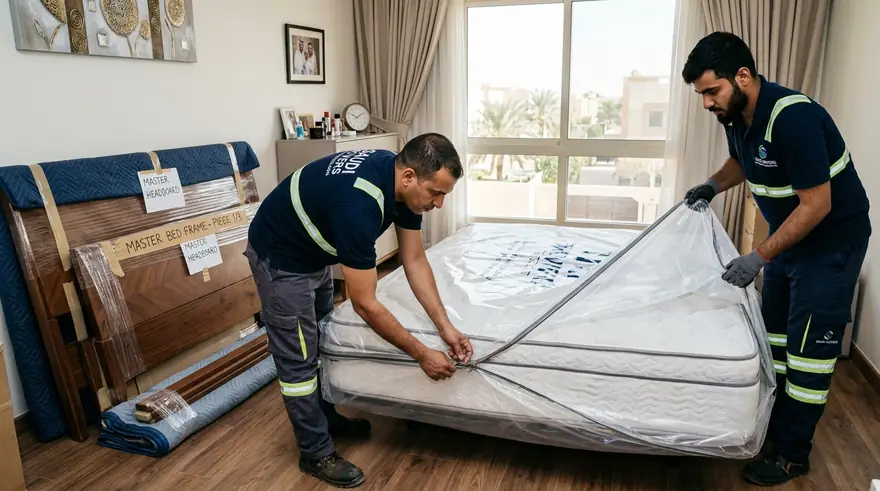
A piece that travels apart and labelled takes less room on the vehicle, passes doors and lifts without scraping, and arrives in better shape than one pushed through whole. Haphazard dismantling does the opposite: stripped holes, missing screws and mixed-up panels turn refitting into hours of guesswork.
The goal is for each item to end up as firm and as good-looking as it started. That needs someone who recognises the fixings in use and keeps every small part with the piece it belongs to.
What is usually taken apart
In most homes the list covers bed frames of every kind, large wardrobes with several doors, wall units and study desks, big dining tables, certain separate kitchen units and television stands. Sofas are often moved whole under protection, while some only have their legs removed.
There is no rule that suits every house. The decision depends on the size of the piece, how it was built, and the width of doors and corridors. That is why it helps if the supervisor sees photos or the pieces themselves before deciding what is dismantled and what travels whole.
Common pieces and how each is handled
General guidance; the real answer depends on the piece.
| Piece | What usually happens | What must be kept safe | Note |
|---|---|---|---|
| Timber bed frame | Frame, headboard and rails separated | Long bolts and fixings | Parts share one label code |
| Large wardrobe | Doors and shelves or the carcase removed | Hinges and handles | Mirrors get dedicated wrapping |
| Wall unit or bookcase | Sections separated | Wall-fixing brackets | Fixing positions are noted |
| Dining table | Legs separated from the top | Leg screws | Top is fully covered |
| Kitchen units | Each unit removed after disconnection | Doors and handles | Water and power connections are best left to a specialist |
The table is only an example. Materials and construction differ from one piece to the next, which changes the method. If an item is old, custom-made or unusual, say so in advance.
Labelling and records: the secret of easy refitting
A successful refit depends on knowing where each part belongs. Every piece gets a code, its panels carry the same code, and screws go into a small bag attached to the piece or to a part that will not get lost. Photographing the item from several angles before work begins is also very useful, because a picture settles questions about shelf order and hinge position.
For complicated items a quick sketch on paper or on a phone showing where the parts go can help. A few minutes spent on this saves hours at the destination.
What to prepare before the visit
Empty wardrobes, drawers and bookcases. A loaded piece can be damaged while it is taken apart and is much heavier for the crew. Clear small objects from tops of furniture and take down curtains or hanging lights if they are close by. Decide which pieces you would rather not dismantle, such as a fragile antique, and tell the supervisor about any piece that has already been taken apart once, because its joints may be weaker.
Keep the assembly leaflets if you still have them, or at least the product name and model; they can help with correct refitting.
Furniture that needs extra care
Glass and mirrors need special wrapping, upright loading and fixing so that they cannot slide. Old timber can be brittle at the joints, so it is either dismantled slowly or moved whole depending on its condition. Furniture made of pressed board may not survive repeated dismantling because screw holes widen, which calls for care and sometimes different fixing methods.
If a piece is valuable or has sentimental weight, tell the supervisor beforehand so one person can be assigned to it and the protection method agreed.
Refitting bedrooms in the new home
Bedrooms are the rooms most often taken apart and rebuilt, so it makes sense to begin with them on arrival. Decide where the bed goes in relation to doors, windows and sockets, then assemble and tighten the frame and place the wardrobe on the spot you chose. Having a plan for each room before arrival matters, because moving a piece after it is assembled means taking it apart again.
Once built, the bed is tested by pressing on it, doors and drawers are opened to confirm they run smoothly, and hinges are checked.
Kitchen units and fixed cabinets
Fitted kitchens need their own approach: disconnecting services, removing doors and handles, and sometimes detaching units from the wall. Because water, power and gas are involved, it is best that a qualified person handles the connections while the moving crew limits itself to light mechanical dismantling, protection and transport. Anything permanently fixed to a wall may not be removable without damage, so agree in advance what travels and what stays.
This page does not promise bespoke kitchen work or anything that has not been confirmed; it only describes the general approach.
Firmness and safety after refitting
After each refit, rock the piece gently, confirm the main screws are tight, and check that doors close and open without rubbing. Tall items such as wardrobes and bookcases should be fixed to a wall wherever possible, especially in homes with children, since tipping causes accidents. Do not load heavy items onto a piece until you are sure it is stable.
If you notice wobble or a missing screw, tell the supervisor straight away, before the crew leaves.
Mistakes worth avoiding
Common errors include telling the crew about dismantling only when they arrive, throwing the screws of several pieces into one bag, skipping the photographs, and emptying wardrobes at the last minute. Another is insisting that a large piece goes through a tight entrance whole, damaging both the door frame and the piece. Agreeing in advance what is dismantled and what is not avoids most of this.
Another frequent mistake is deciding where a piece goes after it is assembled instead of before, which forces a second dismantling and wastes effort.
How the plan changes with the type of home
In upper-floor flats without a wide lift, dismantling is relied on more, since stairs and lifts are tight and large pieces are separated to pass safely. In villas, corridors may be wide, so there is less dismantling and more protecting and carrying. In offices, desks and partitions come in large numbers and need more careful numbering because they repeat.
So the dismantling and assembly plan is adjusted to the building; a single rule is never applied to everything.
Combining assembly with packing and moving
This service works best when it is planned together with packing and transport: the piece is dismantled, its parts are wrapped and loaded in the order that suits unloading, and then it is refitted starting with the most important rooms. That reduces wasted time and repeated lifting. If you want the services together, see the Khobar pages for moving with assembly and moving with packing.
It helps if one supervisor is responsible for all three stages, so that coordination stays clear.
How to compare offers for this service
Ask each company whether dismantling and assembly is included or an extra, who carries it out, how screws are kept, what happens if a piece is damaged in the process, and how long it is expected to take. Clear written answers are worth more than general promises. Avoid comparing on price alone, because the cheapest quote may leave out dismantling and you pay later or carry the damage.
You can also ask to see a sample of the labelling system they use, to judge how seriously the process is taken.
The assembly process step by step
The order we usually follow.
Survey and photos
Pieces are reviewed and photographed, and what will be dismantled is agreed.
Preparation
Furniture is emptied, floors are protected and a working area is set up.
Dismantle and label
Parts come apart in order, each is coded and hardware is bagged.
Wrap and load
Parts are wrapped and loaded in an order that suits unloading.
Refit
Pieces are rebuilt in their rooms from the plan and tightened.
Check and hand over
Doors and drawers are tested, stability is confirmed and you sign off.
Furniture assembly in Khobar: common questions
Short answers.
Does all furniture need dismantling?
How do I avoid losing screws?
Can pieces be refitted the same day?
What about the kitchen?
Does dismantling harm timber furniture?
Do I need my own tools?
How should I plan rooms before refitting?
How do I request the service?
Related pages on assembly
Guides linked to this service.
Movers in Khobar
The main service page for the city.
Moving with assembly in Khobar
The service combined with the move.
Moving with packing in Khobar
Wrapping before loading.
Assembly and packing in Khobar
All three services together.
Furniture packing in Khobar
How pieces are protected.
Furniture assembly service
The general guide.
Bedroom moving
Handling bedrooms.
Packing system
How belongings are protected.
Request a quote
Send photos of your pieces.
Need your furniture taken apart and refitted?
Send photos of the pieces involved and we will explain the steps, no commitment.