Moving With Assembly in Jubail: How Your Furniture Leaves Dismantled in Order and Returns Assembled as It Was
What worries people most about moving is not the truck or the road, it is a small question: who will take my bed and wardrobe apart, who will put them together again, and will the doors go back where they were and the drawers slide as before? Dismantling and assembly is its own skill, and when one crew handles both, the biggest source of delay and dispute disappears. On this page we explain how we work on bedrooms, wardrobes, kitchens and office furniture in Jubail, and what you need to prepare.
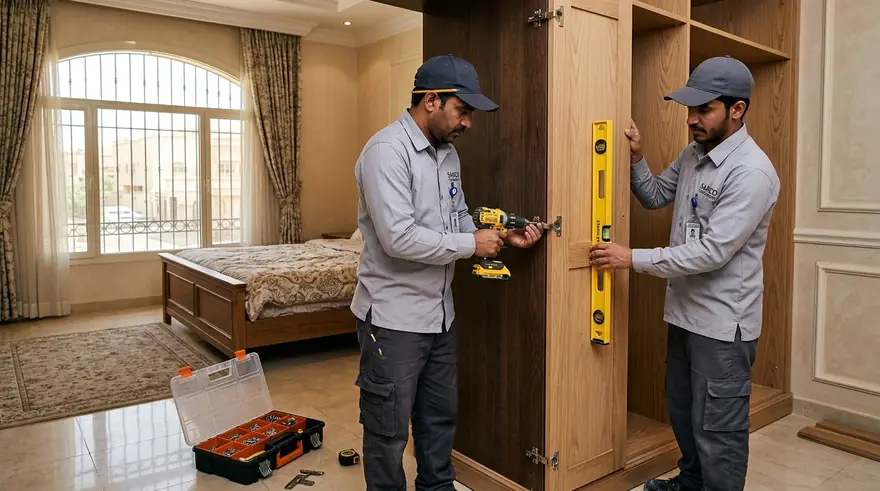
What happens when furniture is moved whole without being taken apart
Many large pieces will not pass through flat doors or turn on narrow stairs if they stay assembled, and if a crew is forced to push them through, joints crack, doors warp and corners break. Proper dismantling turns a large piece into parts that are easy to carry and protect, then returns it to its original form in the same sequence.
The difference between organised and careless dismantling is not only speed but what follows: were parts numbered, were screws collected in bags tied to each piece, was the original assembly photographed? Those details decide whether assembly in the new home takes an hour or a whole night looking for a lost screw.
What we dismantle and what we leave assembled
General guidance that depends on the condition and age of each piece.
| Piece | Dismantled? | How we work | What matters to you |
|---|---|---|---|
| Wooden bed | Usually yes | Remove posts and frame, number the screws | Have the mattress in its cover |
| Large wardrobe | Yes when needed | Empty it, remove doors and shelves | Leave no clothes inside |
| Dining table | Depends on leg type | Remove legs or protect them | Keep chairs together |
| Fitted kitchen | Depends on system | Doors first, then units in sequence | Needs coordination with the plumber |
| Desks and bookcases | Yes | Remove shelves and glass fronts | Part numbers matter |
| Children furniture | Yes | Dismantle beds and gather small parts | Keep small parts in one bag |
Not all furniture can be dismantled, and some old or glued pieces need a technician judgement after inspection.
How dismantling and assembly runs from the first piece to the last
A practical sequence we follow in most homes.
Inspection
We decide which pieces are dismantled and which move assembled, by size, age and the entrances of both homes.
Photograph and number
We photograph the piece before dismantling and number its parts, marking where each screw belongs.
Dismantle with the right tools
We use tools suited to the type of joint, such as screws, nails and metal fittings, and avoid breakage and excess force.
Wrap
Dismantled parts are wrapped and screws go into bags tied to each piece.
Load and unload
Parts are loaded in an order that makes unloading room by room easier.
Reassemble
We assemble in the set places by the part numbers, adjust doors and drawers and test stability.
The bedroom in detail: bed, wardrobe and dressing table
A bedroom starts with the bed: posts, frame and base are taken apart, the wooden parts get a soft protective layer, and the screws go into a bag labelled with the name of the piece. Then the wardrobe: it is emptied, its doors and shelves are removed, attached mirrors are separated and wrapped alone, and the frame is dismantled if built for it. Last come the dressing table and bedside units, usually moved assembled after drawers are secured and surfaces protected.
At assembly we reverse the process: we start with the biggest pieces in their place, fix the frame to the wall if the family wants that, then put back doors and drawers and adjust them. It is normal for doors to need a small adjustment after a move, and that is part of correct assembly, not a fault.
- Bed: posts, frame and base numbered
- Wardrobe: empty, then remove doors and shelves
- Dressing table: secure drawers and protect glass
- Children furniture: separate bag for small parts
Kitchens and offices: when jobs overlap
A fitted kitchen needs special attention because dismantling connects to appliances and fittings. Doors and shelves can be removed and moved, but wall-fixed units must be taken down in sequence, and coordination with a water and electricity technician may be needed before dismantling and after assembly. We agree with you from the start what we do and what other technicians handle.
Offices and bookcases have shelves, glass fronts, locked drawers, and equipment and cables. We number the parts and photograph cable connections before disconnecting, and label each cable, so the office returns to work quickly. In office moves in particular it helps to agree the timing so work is not interrupted more than necessary.
Your preparation before the dismantling crew arrives
Simple preparation that saves hours of work.
Empty the pieces
Empty wardrobes, drawers and bookcases, since extra weight can damage the frame during dismantling and lifting.
Decide where each piece goes
Decide in advance where each piece will stand in the new home, so there is less moving and adjusting after assembly.
Check dimensions
Make sure the large wardrobe fits the new room and the bed suits its space before the move.
Prepare power points
Make sure sockets and power points in the new place suit the positions of appliances and lights.
What is specific to Jubail in assembly work
Jubail has a mix of housing: flats in apartment blocks, houses and villas, compound housing and company accommodation in the industrial city. Some buildings require lift booking or set working hours, and some do not allow noisy work at certain times. This affects the scheduling of dismantling and assembly, so we coordinate with you early according to the building rules.
Older furniture that has spent years in a humid climate may have more fragile wood at the joints, so we work carefully and say from the start what may not survive dismantling. Honest assessment early is better than promising to take everything apart and later apologising for a damaged piece.
Mistakes that make assembly in the new home longer and harder
The first is leaving dismantling to moving day without telling the crew, so the schedule slips. The second is taking pieces apart with unsuitable tools and stripping screw heads. The third is mixing screws from different pieces in one bag. The fourth is forgetting to photograph the original assembly of complex pieces such as kitchens. The fifth is leaving drawers full while carrying, so they slide and get damaged.
The fix for all of it is simple: a fixed system, clear numbering, suitable tools and one crew that dismantles and assembles. That is what we aim for when you choose moving with assembly with us.
Simple tests to run after reassembly
When the crew finishes, try the doors and drawers: do they open and close smoothly? Is the wardrobe steady and not wobbling under a light push? Is the bed firm and free of creaks? Are the shelves fixed evenly, and are the mirrors in place without tilt? These checks take minutes, and if you notice anything, tell the crew before they leave so it can be adjusted on the spot.
What if you only need a piece dismantled or assembled
You may not need a full move, only a bed taken apart, a new wardrobe built or pieces moved within the same home. We handle these requests according to size, so state exactly what you need and send photos of the pieces, and we will explain the expected time and what to prepare. If your request is part of a larger move it goes into one offer.
To ask about dismantling and assembly or request an offer, contact us on 0566300558.
Common questions about assembly with moving in Jubail
General answers; details depend on the state of your furniture.
Is assembly included in the moving offer?
Does the moving crew do the assembly?
Can any furniture be dismantled?
What if screws go missing?
Do you handle fitted kitchens?
How long does assembly take?
Do I need to be present during dismantling?
Do you offer dismantling without moving?
How do I request an offer?
Services that complement assembly
Pages related to Jubail.
Movers in Jubail
Main page
Moving with packing in Jubail
Layered protection
Furniture assembly
Service across the region
Bedroom moving
Bedroom details
Moving company in Jubail
Our service
Moving companies in Jubail
Comparing offers
Moving company number in Jubail
Ways to reach us
Request a quote
Send your details
Want an offer that includes assembly?
Send photos of bedrooms, wardrobes and the kitchen, the number of rooms and the floor, and the offer will set out what is dismantled and rebuilt, with no obligation.