Moving With Packing in Jubail: How Each Piece of Your Furniture Is Protected in Calculated Layers
Most scratches and broken glass do not happen on the road. They happen in the first minutes of carrying and unloading, when pieces rub against each other or knock into doors and drawers. So packing is not an extra cost, it is the difference between furniture that arrives as it left and furniture that arrives with remarks. Here we explain how we wrap each kind of piece, which materials suit it, and how to prepare your home in Jubail in the last week before the move.
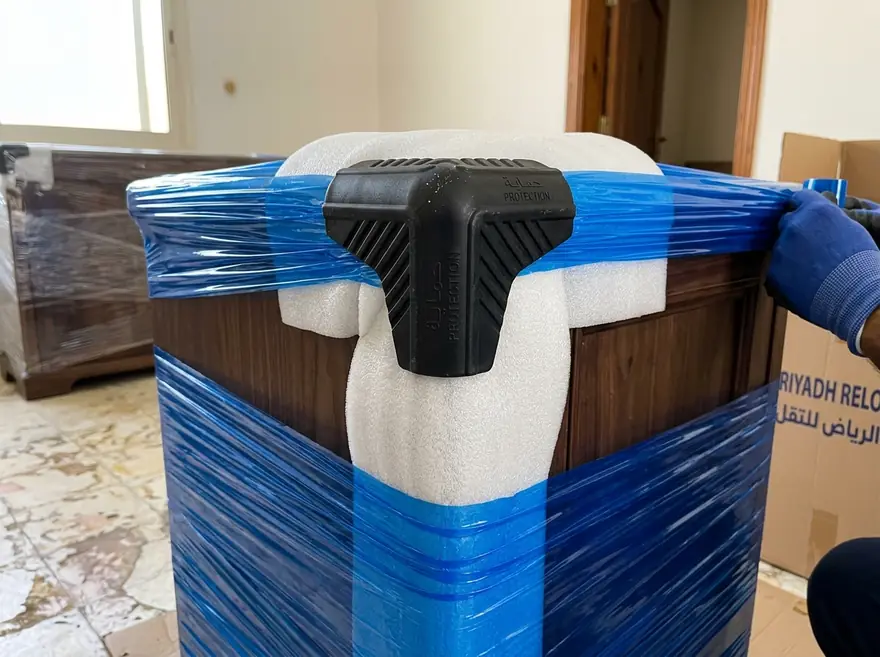
Why several layers and not one cover
A single cover protects against dust and light scratching but not against impact or long friction. So we use layers that each do a job: a soft layer in contact that prevents scratching, a middle layer that absorbs shock, and an outer layer that holds parts together and stops doors and drawers from opening, then extra guards for corners and edges, which are the weakest points of furniture.
In Jubail there is also humidity and heat to consider. Wooden furniture left wrapped in a material that does not breathe inside a hot vehicle can suffer, so the contact material and the time a piece stays wrapped are chosen with care, especially in summer.
What we use for each kind of furniture
General guidance on protection methods; materials may vary with the condition of the piece.
| Piece | Protection method | What we avoid | Note |
|---|---|---|---|
| Wooden tables | Soft cover, shock layer and edge guards | Tape straight onto the surface | Legs are protected or removed |
| Mirrors and glass | Face and edge protection with a rigid backing | Laying them flat under loads | Carried upright, away from friction |
| Wardrobes and cabinets | Doors secured, corners guarded, full cover | Carrying them loaded | Emptied before lifting |
| Mattresses | Clean covers and no bending | Tying them hard so they deform | Carried flat or upright depending on type |
| Screens and appliances | Dedicated wrapping with shock absorbers, no pressure | Heavy items on top | Moved in a position suited to the type |
| Dishes and glassware | Individual wrapping and dividers in cartons | Cramming without dividers | Heavy ones at the bottom |
This table shows the principle, not the complete list, and details are set once we see photos of your pieces.
How a home is packed room by room
We usually start with rooms that are not in daily use, like the guest room and the store, then move to the living areas. In a bedroom the bed is dismantled if needed and its parts wrapped, with screws collected in a numbered bag, the mattress is protected by its cover, and the wardrobe is emptied of heavy contents and wrapped entirely. In the living room sofas get thick covers, tables and shelves are wrapped and glass pieces are separated.
The kitchen is the most delicate, because it holds dishes, glassware and appliances. Each fragile piece is wrapped alone and then arranged in cartons by weight, and the boxes are labelled with their contents and destination room. That order is what makes unpacking in the new home fast, so you find the dishes in the kitchen and clothes in the bedrooms.
- Bedrooms: dismantle the bed, number the screws, protect the mattress
- Living room: thick covers for sofas, separate the glass
- Kitchen: individual wrapping and cartons by weight
- Office: protect equipment and label the cables
A seven-day preparation plan before the move
A practical order that eases the pressure of the final days.
One week before
Sort belongings and get rid of what you do not need, and set aside valuables and documents to carry yourself.
Five days before
Pack what you do not use daily: books, ornaments and seasonal dishes, in numbered cartons.
Three days before
Send us the final list and photos so we confirm the offer, and arrange access with the building management.
One day before
Empty the fridge and washing machine, disconnect appliances and prepare an essentials bag for the first night.
Moving day
We arrive and wrap the large furniture, and review condition with you before loading.
After unloading
We unwrap in the places you set, check condition and arrange pieces according to your plan.
Packing materials: what each one does and why we choose it
Thick fabric covers protect furniture from scratches and dust and absorb some impact, and they are used a lot on sofas and wardrobes. Bubble wrap suits glass, screens and ornaments because it absorbs fine shocks. Corrugated board protects flat surfaces such as mirrors and table tops. Stretch film holds parts together and stops drawers opening, but it is not placed directly on sensitive wood for a long time.
Corner protection is a small detail with a big effect, since most breakage starts at a corner. We also keep the quantity of materials in proportion to need, neither over-wrapping a piece nor under-protecting it, because excess costs and shortage hurts.
Jubail conditions we take into account
Local points that influence the choice of packing.
Humidity near the coast
Parts of Jubail are close to the sea, so humidity is higher. We avoid leaving wood wrapped for long in materials that trap moisture, and we dry surfaces before wrapping.
Summer heat
A closed vehicle heats up, so we reduce the time sensitive pieces spend in it and arrange the load so electronics are not exposed to direct heat.
Dust and wind
Dusty days call for an extra outer cover on upholstered furniture while it moves between the truck and the building.
Distance between areas
A move between the town and the industrial city means longer time on the road, so securing the load and the wrapping matters more.
Things you carry yourself and that are not for packing
Some items should not be handed to any moving team as part of the general load, however professional: official documents, cash and jewellery, medicines, small valuable devices such as a laptop, and the keys to both homes. Carry them with you in one separate bag, which gives you peace of mind and avoids any confusion.
Items that need special conditions, like plants, chilled food and household chemicals, are arranged before the day, since some are not suited to travel with furniture at all.
Unwrapping and review: the step not to postpone
On arrival at the new home we place pieces in the rooms you set, then unwrap the large furniture and review the condition of each piece with you. This direct review lets you record any remark at the time instead of discovering it days later when the cause is hard to pin down.
We recommend not throwing the packing materials away at once. Wait until you have checked every piece and opened the main boxes, and only then remove or recycle the materials. Pieces that need assembly should be put together before their covers come off, so they are not scratched during assembly.
Packing mistakes common among people who pack by themselves
One mistake is stuffing boxes with more than they can bear so they split open, or putting heavy things on top of light ones so they crush. Another is sticking tape directly on polished surfaces and leaving a mark, or wrapping mattresses in something that traps humidity. Another is leaving glass shelves inside cabinets without fixing them, so they move while being carried.
There is one mistake many overlook: not numbering boxes and marking their room, so unpacking turns into a long search. Simple labelling on each box saves hours in the new home.
Common questions about moving with packing in Jubail
General answers; details are set once we know your load.
What does your packing include?
Does packing raise the cost a lot?
Can I pack some things and leave the rest to you?
How do you protect mirrors and glass?
Do you pack appliances and screens?
How long does packing take?
What if I have no cartons?
Does packing include dismantling and assembly?
How do I book?
Related services
Learn what complements packing.
Movers in Jubail
Main page
Furniture packing in Jubail
Packing service in Jubail
Moving companies in Jubail
Comparing offers
Moving company in Jubail
Our service
Furniture packing
Multi-layer packing method
Packing system
Protection system details
Moving company number in Jubail
Ways to reach us
Request a quote
Send your details
Want an offer that includes packing?
Send photos of the rooms and fragile pieces, the number of rooms and the floor, and the offer will show what packing covers for your load, with no obligation.