Furniture Moving in Jubail: How Each Type of Furniture Is Protected from Loading to Final Placement
Furniture is not one single mass. A fabric sofa needs something different from a marble table, and a polished wardrobe needs something different from a large mirror. Anyone moving furniture in Jubail also faces two extra factors, coastal humidity and wind-blown dust, which act on wood, leather and upholstery during loading and unloading. This page goes through the types of furniture common in Jubail homes and explains how each is protected, how the load is arranged in the vehicle and what you should do before the crew arrives and after.
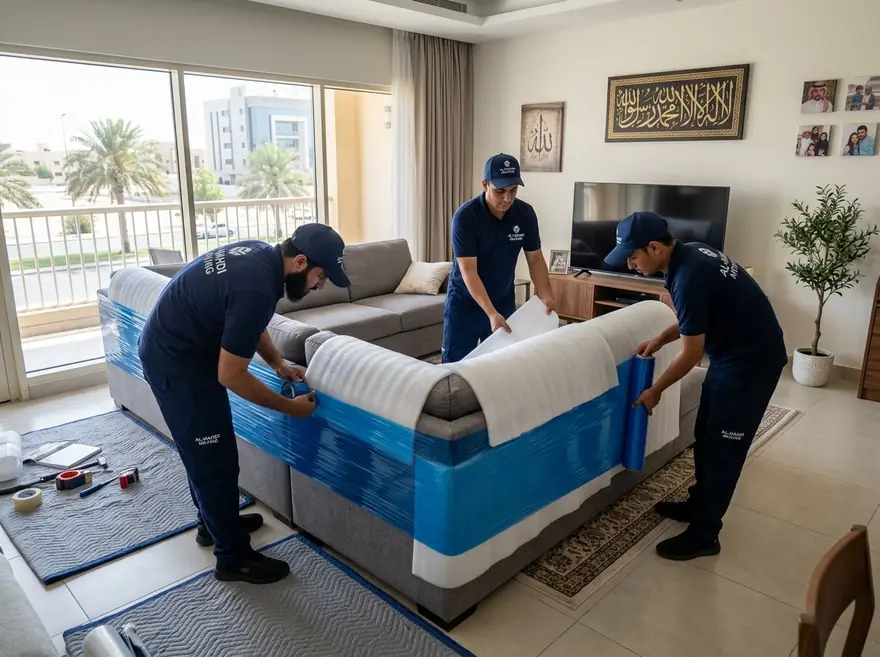
Furniture comes in types, and so does protection
Correct furniture moving starts with a simple question: what is the piece made of? Solid wood scratches, painted wood suffers from rubbing, fabric absorbs dust, leather cracks if trapped with moisture, glass and mirrors break under pressure and marble chips at its edge.
That is why one wrap does not suit everything. The crew must know what it is carrying and use the right cover and method for lifting and securing each material.
Painted and polished wood
Modern bedroom sets, bookcases and polished wooden tables mark with the lightest rubbing. They get soft layers first and a stronger layer over those, corners and edges are guarded with reinforced cardboard or foam, and a strap is never tied directly onto the shiny surface but over the cover. Big pieces are lifted upright or flat according to their design, not according to what is easiest to carry.
If a piece has protruding parts such as handles and feet, they are removed or wrapped separately so they cannot catch or break.
Sofas, majlis seating and upholstered chairs
Fabric and leather are the materials most affected by dust and rubbing. The piece is covered with a wrap that keeps dust out and guards against scuffs, feet and corners are protected, and enough workers lift it because a large sofa tears if dragged. Straps do not go straight onto the fabric and nothing heavy sits on the seat.
In Jubail, where humidity is high, upholstery should not stay wrapped in airtight plastic for days, because trapped moisture causes odour and harms leather.
Furniture type and its protection
General guidance, settled by the piece itself.
| Type | Main risk | Suitable protection | Note |
|---|---|---|---|
| Painted wood | Scratches and rubbing | Soft covers and reinforced corners | No strap on the surface |
| Fabric and leather | Dust and humidity | Protective wrap, not sealed for long | Lift with enough people |
| Marble and glass | Breakage and pressure | Bubble wrap and upright carry | Moved supported |
| Appliances and screens | Shocks and tilting | Box or foam and securing | Emptied and secured |
| Dismantled parts | Lost pieces | Numbering and screw bags | Taped to the piece |
The table is general and is settled by the piece and a survey.
Marble, glass and mirrors
Marble tops are heavy and fragile at once, and the edge is their weakest point. Where possible they are detached from the base, wrapped in thick layers and carried upright supported on the long side, never flat, and kept away from traffic. Mirrors and glass fronts get a clear cross of tape, bubble wrap and cardboard, and travel separately.
The weight of the piece and the carrying route are checked before starting; marble is never lifted by one person or dragged along the floor.
Appliances and screens
The fridge, washing machine, oven, air conditioners and screens are not carried like ordinary furniture. The fridge is emptied and left to dry, washer doors and hoses are secured, appliances travel upright where possible, screens are wrapped in their original box or foam protection, and air conditioners are left to a technician to disconnect and refit. Heavy appliances get a specific crew number.
Cables and remote controls are bagged and labelled with the appliance so they do not get lost among other belongings.
Bedrooms and dismantled wardrobes
Beds and big wardrobes are dismantled and numbered, screws and hinges are bagged and taped to the piece itself, long panels have edge protection and stand upright in the vehicle so they do not warp. Mattresses are bagged and carried upright or flat according to type.
For more detail see our pages on furniture assembly and on bedroom moving in the Eastern Province to see how the work runs step by step.
Outdoor furniture and yard pieces
Garden seating, shades and toys face sun, dust and humidity and may have rusty metal bases. They are cleaned before loading, lightly wrapped, anything that can be taken apart is, and they go in the far end of the vehicle to come off first or last as planned. Dirty pieces are not placed against clean upholstery.
Small tools are gathered in separate boxes and not left loose in the vehicle.
Arranging the load in the vehicle
An organised load protects furniture. Heavy, flat pieces go at the bottom near the front and are strapped; lighter pieces go on top; glass surfaces stand upright between blankets and boxes are stacked by weight. Unloading order matters too: what is needed first at the new home is loaded last.
Separators matter: blankets or foam between touching pieces stop them rubbing on the road.
Humidity and dust in Jubail
Jubail is on the coast, and the wind carries dust and moisture to furniture while it is being carried. Ask for an enclosed, clean vehicle, pick a time that lowers exposure to sun and dust and do not leave pieces in the open. If unloading is on a later day, ask about a dry covered place for the night.
Covers that let upholstery breathe are better than airtight plastic if the wait is long.
Furniture in the old town and the Industrial City
In old Jubail the entrances can be narrower and parking scarcer, so large pieces are measured at doors and stairs and anything that will not pass is dismantled. In the Industrial City many homes are compounds with lifts and entry rules, so the time is coordinated and the furniture prepared in advance. In both cases the district, floor and type of entrance are asked before the crew is set.
For more see our page on moving in the Jubail Industrial City.
Measuring before lifting
There is nothing worse than a sofa that will not fit the door after it has been carried to the fourth floor. Before starting, the supervisor measures the largest pieces against the doors of both homes, the stairs and their turns and the size of the lift, and decides what is dismantled or lowered by the balcony. That decision saves hours and prevents damage to walls and pieces.
It helps to send the measurements of big furniture and photos of the doors when you ask.
Unloading and rebuilding at the new home
When the load arrives each piece should go to its own room, not to the lounge. Rooms are marked with paper on the door. Beds and wardrobes are rebuilt first, then sofas and tables are placed, then boxes are opened. Pieces are checked against your list and each one is inspected at unloading before the crew leaves.
Do not throw away protective material until you are sure everything is complete and sound.
Valuables and ornaments
Paintings, ornaments, antique clocks and valuable crockery are wrapped separately in layers, placed in rigid boxes, carried in a safe part of the vehicle and each one is listed. Official papers, jewellery and cash stay with you. The list is checked at unloading.
If you own something irreplaceable, ask to wrap it yourself under the crew's supervision.
How to compare offers for furniture moves
Do not compare on price alone. Ask about protection materials for each type, dismantling and assembly, the number of workers, the type of vehicle and how any damage is handled. Ask for the offer in writing. Be wary of offers that never ask what kind of furniture you have or about the building.
A company that knows marble differs from wood asks about both; one that does not ask promises without knowing.
Common mistakes in furniture moving
Mistakes include tying a strap straight onto a shiny surface, wrapping leather in airtight plastic for days, carrying marble flat, dragging furniture across floors, not numbering dismantled parts, not measuring doors and stairs and loading heavy pieces on top of light ones.
The fix is usually simple: planning and knowing the type of each piece.
How a furniture move runs in Jubail
A general sequence adapted to each home.
List furniture and types
Large and delicate pieces are recorded and measured.
Decide protection
The right cover is chosen for each material and the pieces to dismantle are marked.
Dismantle and wrap
Wardrobes and beds are dismantled and numbered; pieces are wrapped by type.
Carry and load
Pieces are carried by enough people and arranged by weight and unloading order.
Road and unloading
The load is secured and delivered, then each piece goes to its room.
Rebuild and review
Pieces are rebuilt and checked with the supervisor before he leaves.
Frequently asked questions about furniture moving in Jubail
Short answers to what people ask when moving furniture.
How is painted wood protected during a move?
Do dust and humidity harm furniture?
How is a marble table moved?
Are appliances moved with the furniture?
What if a piece will not fit through the door?
Is dismantling and assembly included?
How do I move ornaments and paintings?
How do I get an estimate for my furniture?
Related pages for furniture moving
Learn more about our services in Jubail and what connects to them.
Movers in Jubail
Main page for moving services across Jubail
Moving company in Jubail
What to ask before hiring
Furniture packing in Jubail
Materials and wrapping method
Jubail Industrial City moving
Moving inside the Industrial City
Furniture moving in Dammam
Moving furniture in Dammam
Furniture moving in Khobar
Moving furniture in Khobar
Furniture assembly
Dismantling and assembly service
Request a written quote
Send your details for a clear estimate
Cheapest moving company in Dhahran
Cheapest moving company in Dhahran: how to compare moving quotes item by item, spot what is missing
Moving with assembly in Dhahran
Moving with furniture assembly in Dhahran: what gets dismantled, how parts are numbered and screws b
Moving with packing in Dhahran
Moving with packing in Dhahran: which materials suit each piece, the order of work from room to truc
Full-service moving in Dhahran
Full-service moving in Dhahran with packing, dismantling and reassembly: how a complete move day is
Furniture moving in Qatif
Protecting each type of furniture in Qatif.
Moving with packing in Jubail
Moving with packing in Jubail: how each piece is wrapped, the right materials for glass, wood.
Villa movers in Jubail
Villa moving in Jubail: how a two or three storey home with majlis, bedrooms and yard is moved.
Moving workers in Jubail
Moving workers in Jubail: how a moving crew is formed, roles, safe handling of heavy pieces, ho.
Moving your home furniture in Jubail?
Send photos of the large and delicate pieces and details of both homes, and we will suggest a protection plan and written estimate with no obligation.