Moving with Furniture Assembly in Dhahran: Dismantled and Rebuilt Without Breakage or Missing Parts
Dismantling and reassembly is the half of a move that people forget. The large wardrobe may not fit through the lift door, the bed with an upholstered headboard cannot travel assembled, and a kitchen does not move as it stands. If pieces are taken apart without numbering or the right tools, your furniture arrives as loose panels and scattered screws, and you face an extra day of work. This page explains how a move with assembly works in Dhahran: what is taken apart and what is left, how parts are kept, when furniture is rebuilt, and what you can do to help.
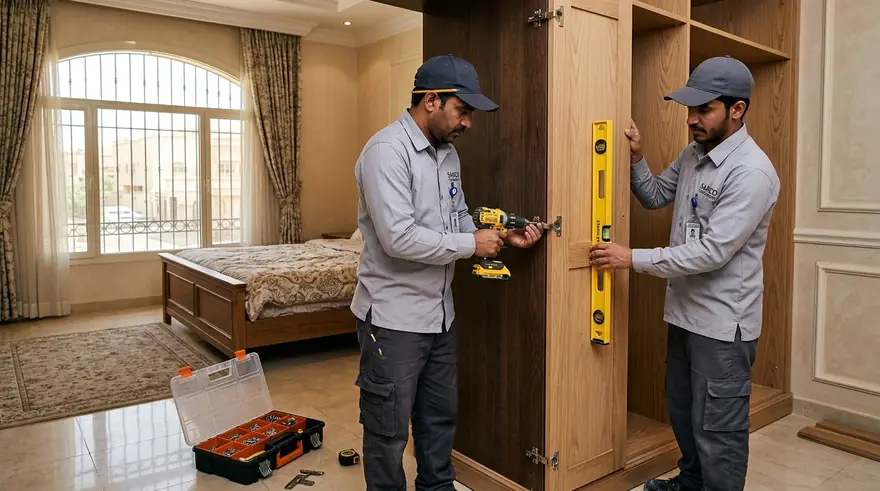
Why furniture is dismantled at all
Furniture is dismantled for three reasons: to pass through doors, corridors and lifts, to be carried safely without joints and legs bearing the full weight, and to be packed in a truck without wasting space. A dismantled piece is lighter, less fragile and easier to carry. But the benefit turns into harm if it is done with no plan, since every missing screw or scratched panel is charged to you.
In Dhahran, where some homes are spacious villas and others flats in buildings with limited lifts, dismantling is decided piece by piece.
What is usually taken apart and what is not
Usually dismantled: wooden and metal beds, wardrobes made from panels, large desks, dining tables with detachable legs, wall shelves and kitchen wall units that can come apart. Usually left assembled: anything that keeps its strength and fits through the route, such as a small cabinet, a side table or a chair.
The principle is to dismantle what makes the piece safer and easier to move, and not to dismantle what could be weakened by being taken apart and rebuilt, like glued furniture or old brittle wood.
Numbering parts and keeping screws
When a bed or wardrobe is dismantled, each panel gets a number matching its position, and screws, bolts and hinges go into a small bag taped to one of the parts or kept in a labelled box for that room. The piece is photographed assembled before it comes apart, as a reference. This small habit is the difference between rebuilding in an hour and rebuilding in three.
Ask that screws are kept per piece, not in one big bag; wardrobe screws differ from bed screws.
Approximate time for typical jobs
A general guide that varies with the piece, its condition and the tools.
| Piece | What is done | What changes the time | Note |
|---|---|---|---|
| Standard bed | Frame and headboard dismantled and rebuilt | Built-in drawers or lighting | Panels numbered |
| Sliding wardrobe | Doors, panels and runners | Size and number of doors | Runners adjusted after rebuilding |
| Fitted kitchen | Cabinets and drawers dismantled | Wall fixings and appliances | Needs a carpenter and a technician for connections |
| Large desk | Drawers and tops | Glass parts | Surfaces protected |
| Wall shelves | Taken down from the wall | Type of fixing | Holes may need filling |
| Dining table | Legs separated | Weight of the top | Top carried by two people |
Times are general references; a written estimate for your case gives a closer figure after we see photos.
The tools you should see
Dismantling is not done by bare hand. Ask whether the team brings assorted screwdrivers, Allen keys, a small power drill, a rubber mallet, tape, bags and panel covers, and whether someone understands different joints such as wooden dowels and concealed screws. A crew that brings its tools knows what it is going to do; one that asks to borrow a screwdriver has not prepared.
You can read a general description of the work on our furniture assembly page.
Bedrooms: details that get forgotten
A bedroom has many parts: the bed with frame, head and base, the wardrobe with doors and runners, the dressing table with mirror and drawers, bedside tables, sometimes built-in lights. All are numbered, shiny surfaces are protected with boards and covers, and sliding doors are taped so they cannot swing free. Mattresses travel in clean covers and are loaded last. In the new home the main bedroom is rebuilt first so that it is ready to sleep in.
More is on our page about bedroom moving.
Kitchens: take apart carefully, rebuild carefully
Fitted and ready-made kitchens need appliances disconnected from power, water and gas by someone competent, then doors come off, drawers are emptied and upper and lower cabinets are dismantled. Cabinets are numbered by position and photographed beforehand. Rebuilding may involve adjusting doors and drawers and fixing units to the wall. We do not promise specialist plumbing or electrical work, but we coordinate with you for it.
Tell us the kitchen type and send photos before the date so that we can estimate time and crew.
Pieces fixed to the wall
Shelves, hanging cabinets, heavy mirrors and fixed bookcases must be taken off the wall carefully to avoid pulling paint or breaking plaster. Fixings are kept and their positions recorded. After removal there may be holes needing repair, which we agree with you or the landlord before dismantling starts, so it is not a surprise.
In rented homes, ask the landlord or management about the conditions for leaving walls.
Rebuilding at the new home
Reassembly starts with what you will live in first: the main bedroom, then the kitchen, then other rooms. Numbered parts go in their positions, photos are checked, levels adjusted, doors and runners fixed and drawers tested. Pieces are handed over ready and any comment is noted before the crew leaves. It helps if you decide the positions in advance with floor markers or a simple plan.
If the new home is not fully ready, agree what is rebuilt now and what is kept dismantled.
How you can help the assembly crew
Empty wardrobes and drawers, clear shelves of heavy items, photograph pieces before the date, say which pieces should not be dismantled because they are fragile, and tell the crew about anything dismantled earlier and where its parts are. Appoint someone to manage the new home and mark positions. Clear a work space near the bedroom. Every minute saved here shortens the last hour.
Do not try to take furniture apart yourself before the date unless you are sure; screws may be lost or the structure weakened.
Common mistakes
Typical mistakes are not numbering panels, putting all screws in one bag, dismantling a wardrobe that did not need it so it loses strength, moving furniture without reassembly so you cannot use it, rebuilding in a hurry without adjusting doors, leaving glass parts unprotected while dismantling, and stacking flat panels on each other so surfaces scratch.
A skilled crew avoids them with a simple routine: photograph, number, wrap, store.
Assembly and packing together
The two jobs overlap: a piece is dismantled, then its panels are wrapped, edges and hinges protected, and the panels are arranged in the truck so they do not press on each other. We cover both in the page on Dhahran moving with assembly and packing for those who want the two services together.
If you take only one of them, agree what remains your responsibility.
Planning the day
The day divides into dismantling, wrapping, loading, the road, unloading and rebuilding. If you have a lot of furniture to dismantle, it is better for the crew to start early, for the new home keys to be ready and for arrival to leave enough time for rebuilding before evening. Do not book access to the new home late if you intend to sleep there that night.
If time is short, agree what is rebuilt tonight and what is left for tomorrow.
Moves between Dhahran, Khobar and Dammam
If you are moving to Al Khobar or Dammam, the distance is short and the challenge is coordinating arrival and rebuilding. The crew that dismantled should rebuild what it can, following the pieces from door to door. Dismantled furniture should not be unloaded at another place before it reaches your home.
If the new home is on a high floor, tell us, because rebuilding then requires carrying panels upstairs.
Flat-pack and ready-made furniture
Much ready-to-assemble furniture is designed to be built once, and repeated dismantling weakens the joints. Ask the crew about the condition of your piece and whether it can survive another dismantling. For furniture with special joints it can be better to move it assembled if possible. For exceptional items such as heavy classic pieces, agree a special plan.
Do not hesitate to send close-up photos of the joints to get precise advice.
Checks after assembly
After everything is rebuilt, open doors and drawers, move beds slightly and check they are level. If a part is missing or screws are left over, tell the supervisor straight away. If you notice anything in the next days, contact us with photos. Good assembly proves itself in daily use, not just in the first minute. You can read about protection and guarantee on the site.
This final check is a normal part of the job.
Glass doors and mirrors on wardrobes
Many modern wardrobes have mirrored or glass doors. They come off first, are covered in protective layers and marked, and travel upright between soft pieces. They are never left leaning on a corridor wall because a small knock can push them over. At the new home they are refitted last, so there is less risk of breakage while the frame is being adjusted.
Large mirrors need at least two people, and the route to the truck must be clear.
What to tell us before you call
For an accurate estimate, say how many bedrooms you have and whether wardrobes are sliding or built in, whether the kitchen is fitted or ready-made, whether shelves are fixed to walls, the floors and lift details, and whether any pieces were dismantled earlier. Send a photo of each large piece from the front and side. This information changes the crew size and the time.
The clearer the photos, the fewer surprises.
Receiving dismantled furniture at the new home
Set aside an assembly area near the entrance where numbered panels can be laid out, cover the floor to protect it and keep corridors clear. If you plan to install curtains or lighting, organise the order so it does not clash with fitting cabinets. Make sure there is good light and power for the drill. This small preparation saves a lot of time.
If the new home is still being finished, agree a date after painting and tiling are done so floors are not damaged.
From photos to final rebuild
Six stages the work passes through.
Photos and inventory
We decide what is dismantled and estimate time.
Numbering and photographing
Each panel is numbered and the piece photographed first.
Dismantling and wrapping
With proper tools and covering of panels and edges.
Loading and transport
Panels arranged and secured in a closed truck.
Unloading and rebuilding
Parts placed, rebuilt and adjusted.
Check
Doors and drawers tested and any comment noted with you.
Questions about moving with assembly in Dhahran
Short answers about how the work is done.
Who does the dismantling and assembly?
How long does a bedroom take?
Do you dismantle kitchens?
Is furniture rebuilt at the new home?
Can I dismantle things before the date?
Will holes be left in walls?
Do I need everything dismantled?
How do I get a written estimate?
Related pages on assembly
More about moving in Dhahran.
Movers in Dhahran
Our main page for moving inside Dhahran
Dhahran moving with packing
Wrapping materials and order of work
Moving with assembly and packing in Dhahran
Both services together
Furniture moving in Dhahran
Protecting each type of furniture
Moving with assembly in Al Khobar
Assembly in Khobar
Moving with assembly in Dammam
Assembly in Dammam
Furniture assembly
Service details
Request a written quote
Send your details for a clear estimate
Furniture assembly in Dhahran
Furniture dismantling and assembly in Dhahran: what can be taken apart, numbering parts and scr
Moving truck in Dhahran
Moving truck in Dhahran: truck types, a quick inspection checklist, loading order, gated compou
Moving with assembly in Qatif
Dismantling and rebuilding in Qatif.
Moving prices in Dhahran
Moving prices in Dhahran: how gated compounds, entry permits, short distances, housing handover dates and uni…
Want an assembly move without surprises?
Send photos of bedrooms, kitchen and large cabinets. We decide what to dismantle, estimate the time and give a written quote, no obligation.