Moving Truck in Dhahran: Truck Types and What to Inspect Before Loading Starts
Searching for a moving truck in Dhahran usually means one thing: you need a vehicle that carries your home safely from one door to another. The quality of that vehicle shows in a clean body, sensible padding, proper straps, and a size that fits both your load and the gate you will pass through. This page walks through the truck types you will meet in the Eastern Province, gives you a five-minute inspection routine, explains loading order, and covers what is specific to Dhahran: gated compounds, strong summer heat, and dust.
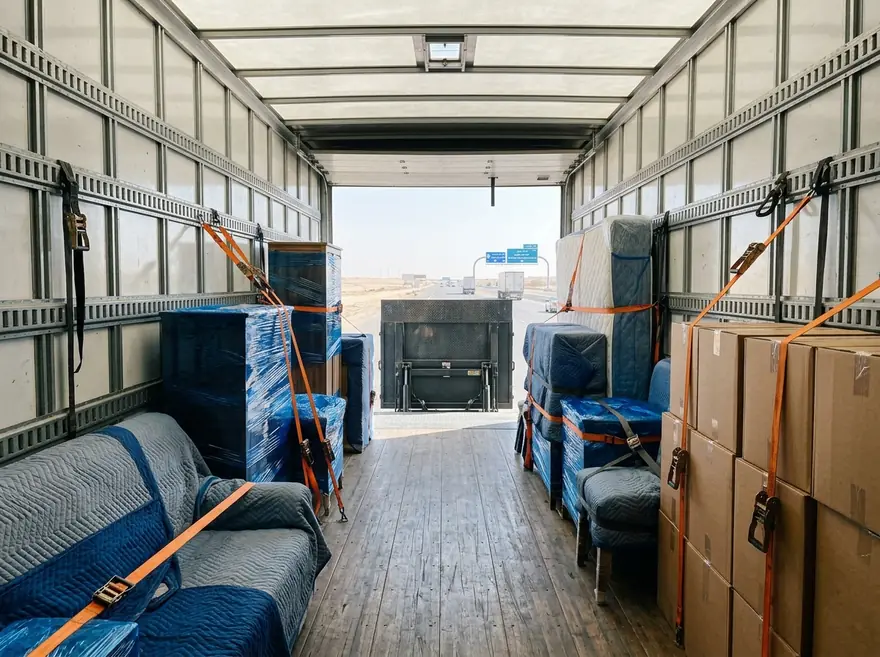
The truck is one part of the service, not the whole service
People who search for a moving truck often want a full service: a vehicle, a driver, and loaders. Yet the difference between a smooth move and a stressful one often starts with the vehicle. An old truck with bare metal walls and a dirty floor can scratch a good table in a ten-minute drive, and a truck that is too small for the load turns one trip into two.
For the wider picture of how moving works in the city, start with movers in Dhahran. This page narrows the focus to the vehicle itself: which kinds exist, what to expect from each, and how to check one before the first box goes in.
The kinds of trucks used for household moves
Households in the Eastern Province usually meet four kinds of vehicles. A small open pickup suits a few items over a short distance. A medium truck with a rear body is the everyday choice for family homes. A large truck serves big villas and moves between cities. A closed, padded van is preferred for upholstery and electronics. None is best in every case; each is best for a certain load and a certain doorway.
What changes between them is interior space, the height of the loading edge, whether the body can be fully closed, and whether the vehicle can physically reach your building. Ask about those four points rather than accepting the words big or small, which mean different things to different people.
Which vehicle fits which load
A rough guide only. The final recommendation depends on your largest pieces and your access.
| Load | Usual vehicle | What to watch |
|---|---|---|
| One or two rooms, little furniture | Small or medium vehicle | Cover or close the load properly |
| Three-bedroom apartment | Medium truck with closed body | Loading order and number of trips |
| Large villa or lots of furniture | Large truck or two vehicles | Coordinating arrival times |
| Electronics and upholstered pieces | Closed padded body | Protection from dust and sun |
| Office with files and desks | Medium truck with trolleys | Labelling boxes for unloading |
If your load is not in the table, describe it and we will suggest the closest match. Estimates come from your biggest pieces and your doorway, not from the number of rooms alone.
A five-minute inspection before loading
Give the truck the attention you would give a car you are buying. Open the body and look at the floor and walls: is it clean, free of oil and grit, and free of sharp bolts or protruding metal? Does the door close tightly and stay closed while moving? Are there moving blankets, straps, and a hand truck on board?
Then glance at the vehicle itself: tyres that look sound, no obvious leaks, working lights. You are not expected to be a mechanic, but a watchful eye catches visible neglect. If something troubles you, say so before loading begins. Fixing a problem before the first item goes in is far easier than discovering it with a full truck.
What you should find inside the vehicle
Clean moving blankets
They wrap wooden and upholstered pieces and stop contact with the walls.
Straps and ropes
They hold large items against the wall so they cannot slide when the truck brakes or turns.
Hand truck and lifting belts
They reduce manual lifting and protect both the crew and your floors.
Protection boards
They go over glass, mirrors, and marble tops before strapping.
Dust covers
They protect electronics and upholstery when the body is open or partly open.
Ramp or skids where needed
They help heavy items up into the body without lifting them vertically.
Why padding matters more than most people expect
Furniture is rarely wrecked by one dramatic fall. It is worn down by small repeated rubbing. Twenty minutes of road vibration can turn a glossy table edge into a scuffed surface if it touches the wall or another piece without a layer between. Good padding is not one blanket thrown on the pile; it is a layer between every two items, corners protected, and glass covered with boards that absorb shock.
Blankets should be secured so they do not slide. Thin plastic wrap is acceptable for upholstery in dry weather, but on humid days breathable cloth is safer because plastic traps moisture and can leave odour. These small choices separate a casual transport from a careful move.
How items are arranged inside the body
Good order reduces movement inside the truck and speeds unloading, because what comes out first goes in last.
Heavy base layer
Fridge, washer, and large wardrobes sit against the front wall at floor level. Low, forward weight keeps the load stable.
Middle layer
Tables, chairs, and dismantled beds are stacked on edge and strapped, with a blanket between each piece.
Light top layer
Wrapped boxes, pillows, and curtains go on top so nothing heavy presses on a fragile box.
Fragile pieces
Mirrors, screens, and frames stand upright between two solid items and are never laid flat under weight.
Last in, first out
Things you need first in the new home, such as children’s beds and an essentials bag, are loaded last.
Access to neighbourhoods and gated compounds in Dhahran
Dhahran mixes open residential districts with gated compounds that have their own gates and management offices, plus a large university campus and major company sites. For a truck, that can mean an entry permit, an appointment with the compound office, and sometimes limited hours for heavy vehicles. Ask your management early: are trucks allowed, at what hours, is there a deposit, and what is the height limit at the gate or under covered parking?
In open districts the street layout matters. Some inner lanes are too narrow for a large truck, and many fill with residents’ cars in the evening. If the big truck cannot reach your door, the move may be split: a smaller vehicle shuttles from the main road. Agree that in advance rather than discovering it at the door. For more on streets and parking, see Dyna truck moving in Dhahran.
Heat and dust and what they do to a load
Summer in Dhahran is long and hot, with dusty days and humidity near the coast. A metal body baking in the sun can soften certain adhesives, stress sensitive electronics, and dull glossy finishes if the load waits for hours. Loading in cooler parts of the day helps, and so does not leaving a loaded truck parked in full sun without need.
Dust gets into everything in an open body, so upholstery and appliances should be covered, and appliance openings taped or wrapped. On very dusty days it may be better to postpone, or to use a fully closed body.
Who arrives first, the truck or the crew
It is usually best for the loading crew to arrive with the truck, or slightly before, so wrapping and dismantling begin before the vehicle waits at the kerb. A big truck parked at a building entrance has consequences: it can block residents and may need permission from building management. Timing the truck so the first items are ready at the door saves real time.
In a multi-storey building, the crew on the upper floor needs a clear path. Decide beforehand which lift is used and whether it can be reserved, and whether stairs are available for long items. A few minutes of planning here removes hours from the day.
When an outside lift is better than the stairwell
If a piece is wider than the stairwell or lift, or the floor is high and the entrance narrow, hoisting from outside may be safer than forcing it inside. That option depends on the site, the building openings, and availability, so contact us for your request and we will explain what suits your location before promising anything. Whatever the method, protecting the item and keeping the crew safe come before speed.
When the load turns out larger than the vehicle
Owners are often surprised that not everything was in the photos: a storeroom nobody photographed, a balcony full of items, a child’s bicycle in the yard. A clear agreement at the start says what happens if the load grows: another trip with the same vehicle, or a second vehicle, and how any addition is counted and recorded. The more accurate your description, the fewer surprises.
Our advice is to mentally add a margin to any volume estimate, since belongings multiply once cupboards are opened, and to tell the coordinator everything you know about storerooms, roofs, and gardens.
Protecting fragile pieces during transport
Mirrors, screens, frames, and delicate electronics tolerate far less than a wooden wardrobe. Screens are wrapped in absorbent material and boxed or stood upright between two solid items; mirrors get boards and a fragile label with only light items above. Appliances should be drained, and doors secured before lifting. A fridge is best kept upright and then left to settle after unloading before it is switched on, following the manufacturer’s guidance.
Unloading and getting items into the building
Unloading mirrors loading in logic if not in effort: last in is first out, so essentials come off first, then boxes, then heavy furniture. Decide the receiving room for each item beforehand so pieces are not placed where they will be hard to move later. On receipt, check each item one by one and note any concern before the crew leaves, not afterwards.
Questions to ask about the vehicle before you book
Ask whether the body is closed or open and whether it is padded. Ask whether blankets and straps are supplied, and how many trips the coordinator expects. Ask whether the driver works with the loading crew or separately, and whether the vehicle can enter your compound or street. These questions reveal seriousness better than any advert, and a serious provider answers them clearly and without irritation.
Summary before you decide
Choose by load and doorway, not by advertised size. Inspect the body, padding, and straps; ask about compound access; allow for a second trip; and order the load from heavy to light. For an estimate based on your description, use the quote page and attach photos, or compare vehicle types on the moving trucks page.
Moving truck in Dhahran: common questions
Short answers before you book.
Which truck suits a three-bedroom apartment in Dhahran?
Can I choose the type of vehicle?
Do trucks enter gated compounds?
How do I know the truck body is suitable?
What if my load exceeds the vehicle?
Does heat affect furniture inside the truck?
Can large items be lifted from a balcony?
How do I request a moving truck in Dhahran?
Related pages about moving trucks
More material to read before you book.
Movers in Dhahran
The main city service page.
Dyna truck moving in Dhahran
Choosing a dyna and counting trips.
Moving with packing in Dhahran
How wrapping is done before loading.
Moving with assembly in Dhahran
Dismantling and refitting beds and kitchens.
Moving trucks in the Eastern Province
Truck types and suitability.
Request a quote
Describe your home and get an estimate.
Want the right truck for your load?
Send a description of your home with photos of the furniture and the entrance, and we will recommend the vehicle and crew that fit.