Furniture Packing Company in the Eastern Province: When to Use One, What It Really Does and How to Pick the Right Fit
Packing is the stage that largely decides the condition of your furniture on arrival: a piece wrapped well arrives intact, while one wrapped in a hurry may arrive scratched or broken. This page helps you decide when to use a furniture packing company in the Eastern Province, what packers do from start to finish, and which questions to ask before you agree.
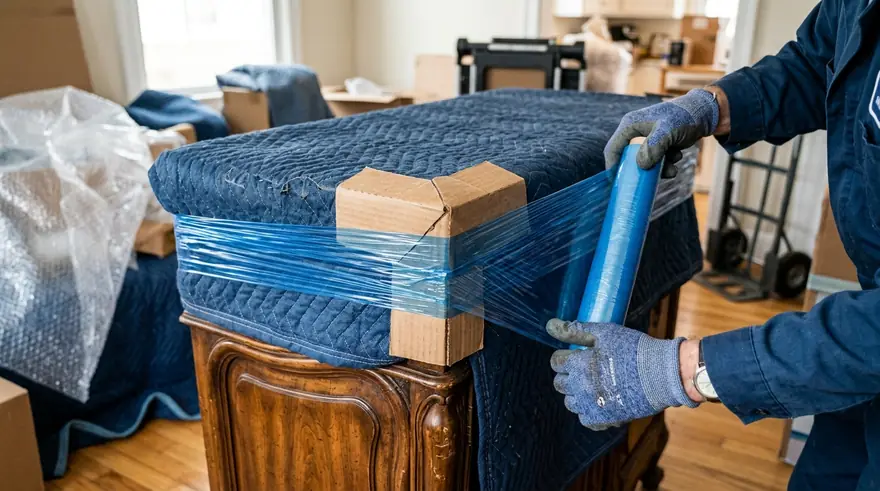
What does a furniture packing company actually do?
A packing company does not just put plastic around things. It studies each item: material, size, fragility and weak points, then chooses the right layer. A wooden wardrobe needs protected corners and doors, a sofa needs a cover against dust and rubbing, glass needs special padding and boxes need filling so contents cannot move.
The work usually runs in stages: assessing what is needed, preparing materials, wrapping large furniture, packing small items, numbering and recording the boxes and then handing everything to the moving crew. The service may be packing only or part of a complete moving service.
To learn about the materials and how they are used read furniture packing materials and our multi-layer packing system. Here the focus is on the service and how to choose it.
Pack it yourself or use a company? How to decide
There is no single answer for everyone. If you have little furniture, it is simple, you have free time and patience to learn the method, packing yourself is possible, especially books, clothes and ordinary kitchenware. If you own glass, mirrors, screens, valuable furniture and large wardrobes and your time is short, hiring specialists protects you from a loss that could exceed the cost of the service.
The middle path is common: pack the light, non-fragile things yourself and leave the large, delicate or complicated items to the company. This is what we usually suggest, because it lowers cost without sacrificing protection for the pieces that matter.
Example: how a three-bedroom flat is packed
The work usually begins in the living room: sofas and tables are covered and moving parts secured while ornaments and pictures go into dedicated boxes. Next comes the kitchen, whose crockery needs careful packing, then the bedrooms, where wardrobes, beds, headboards and mattresses are protected separately and clothes go into wardrobe boxes.
Finally the boxes are gathered into rooms or corners according to destination, numbered and arranged so the heavy ones load first. With this order the wrapped and unwrapped never mix and nothing gets lost. This is a general picture and the real sequence changes with the volume of your furniture and the service you want.
What professionals pack and what you can pack
A guide that changes with your situation and experience.
| Item | Best handled by | Reason |
|---|---|---|
| Books and clothes | Usually yourself | Light, not fragile, just need suitable boxes |
| Crockery and plates | Yourself with care, or a professional | Needs paper, padding and correct stacking |
| Glass and mirrors | A professional | Fragile and affected by slight pressure or rubbing |
| Screens and sensitive devices | A professional or the original box | Need special protection for screen and connectors |
| Sofas and mattresses | A professional or suitable covers | Large and affected by dust and rubbing |
| Wardrobes and bedroom sets | A professional | Need corner and door protection and sometimes dismantling |
| Pictures and ornaments | A professional | Value and fragility call for materials and experience |
| Large appliances | A professional | Weight and sensitivity need preparation before moving |
The short rule: the more valuable, fragile or large the item, the more worthwhile a professional becomes. More detail is in packing by furniture material.
How a packing company works, step by step
Stages that repeat even though the details vary from case to case.
Assess the need
Read the item list and photos to decide what needs special packing and what just needs a simple cover, and estimate the materials.
Prepare materials
Choose suitable layers such as thick stretch film, bubble wrap, ink-free paper and boxes of the right size.
Wrap large furniture
Protect corners, surfaces and doors, cover sofas and mattresses and secure moving parts.
Pack small items
Arrange crockery, books and glassware in boxes with padding that stops movement.
Number and record
Mark the room and contents on each box and flag fragile items so unpacking is simple.
Hand over to the moving crew
Arrange boxes and wrapped pieces for loading in a way that keeps protection during the drive.
Common materials and why they are used
Thick stretch film wraps large pieces, holds covers and blankets in place and keeps off dust and scratches. Bubble wrap absorbs shocks and suits glass, devices and delicate surfaces. Ink-free paper wraps crockery and ornaments without leaving print on them. Boxes group small items in sizes that match their weight.
Each material has its place, and a common error is to use a single material for everything. Ask which materials will be used for each kind of furniture you own. The moving boxes guide covers sizes and usage.
Wrapping wardrobes, beds and sofas
A large wardrobe needs protection at its corners and doors, and the doors and drawers are usually secured so they do not open in transit, sometimes after dismantling. A bed needs protection for the frame, headboard and mattress, each handled separately. A sofa is covered with a wrap that keeps out dust and reduces rubbing, with attention to the legs and arms.
If a piece is heavy, protection alone is not enough, because it must also be carried in the right way. Details on dismantling are in moving with assembly.
Glass, mirrors, screens and ornaments
Glass and mirrors need padding on both sides and, where possible, upright positioning, and should never be stacked on top of each other. Screens are best moved in their original box if you still have it, and otherwise with suitable protection for the panel and edges. Ornaments and pictures are wrapped in several layers, placed in suitable boxes and clearly labelled.
These items are the most exposed to damage and the ones most worth leaving to specialists. Read the TV and screen moving guide to see how they are prepared before the move.
Numbering and records: why they save you time
A box with no label means opening boxes at random after arrival. A simple system, the room name, a box number and a note on fragile contents, makes unpacking orderly and lowers the chance of loss. It also helps to keep a short list of what is in the important boxes.
You can photograph the boxes and large pieces before loading, since those pictures help when reviewing condition after arrival. Good records are not bureaucracy, they simply leave you something to refer back to.
What to prepare before the packers arrive
- Sort what you will move and what you will throw away so you do not pack things you do not need.
- Separate personal items, documents and medicines in a bag you carry yourself.
- Empty drawers that will be moved separately or agree to keep them filled safely.
- Defrost the fridge, dry the washing machine and disconnect electrical appliances.
- Identify fragile or precious pieces and tell the team about them.
- Clear working space in each room for the packing.
The sooner you do these, the more time you save the crew and the fewer mistakes occur, leaving your time free for supervision.
When should the packing take place?
In small moves packing can happen on the morning of the move itself, but for large moves it is better done the day before or in stages so that loading does not collide with boxing. That is why it matters to state in your request the date and when you want packing to start.
If you will keep living in the home during packing, leave daily essentials until last: basic cooking tools, everyday clothes and medicines. Read the moving timeline to organise tasks before the date.
Packing without moving: when does it help?
Sometimes you do not need a move but packing only, for example to protect furniture inside the home during maintenance, painting or renovation, or to prepare belongings well before a move date. In that case items are wrapped and left in place or gathered in one room.
State in your request that you want packing only, list the items and say whether they will stay in the house. For longer projects ask about materials suited to the length of time, because some materials are not meant to stay long in humid air.
Handling unusual items
Many homes contain things that fit no usual category: bicycles and exercise machines, heavy bookcases full of books, musical instruments, indoor plants and hobby equipment. These need a question in advance about how they are wrapped and carried, and some may need partial dismantling.
Tell the company about them in your request with photos and rough dimensions rather than leaving them for the day. It is also important to know whether the service is available for a particular item before relying on it, so do not assume it is automatically included.
What differs when packing a flat, a villa or an office
The method is the same but the scale and challenges change.
A flat
Tight spaces, corridors and high floors, so good wrapping makes carrying easier. See apartment moving.
A villa
Several floors and many large pieces call for planning and a team. Read villa moving.
An office
Equipment, files and office furniture need careful numbering and order. Read office moving.
A move between towns
A longer journey and longer loading time need a more stable load. See moving within the Eastern Province.
Humidity and dust in the Eastern Province
The coast has high humidity at some times of year and dust at others, which affects the choice of wrapping materials. Dust calls for good covering of large pieces and upholstery. Humidity means caution about wrapping wood and leather very tightly for a long time, because trapped moisture can harm them.
For a short move this is usually no problem, but if items will stay wrapped for days or weeks, ask about the method that allows ventilation or guards against moisture. It is a good example of why consulting before packing matters.
Questions to ask before agreeing to a packing service
- How do you assess items before packing and do you need photos or a visit?
- Which materials are used for each type of furniture?
- Are the materials included in the quote or a separate line?
- Does the quote include filling and numbering boxes?
- How do you treat fragile and valuable pieces?
- Is it packing only or packing with moving?
- What is the expected date and how long will the work take?
- How do I report a concern after delivery?
Clear answers are a good sign and help you compare. See comparing moving quotes.
Signs that call for caution
- A promise of full packing before anyone has asked for your item list.
- No mention of the materials to be used.
- A single thin layer for everything.
- Reluctance to put what the quote covers in writing.
- Rushed packing with no order or numbering.
A sign calls for questions rather than instant judgement, and the guide to choosing a moving company may help.
After the furniture arrives: unwrapping and clearing packaging
On arrival open the important boxes first and check fragile items before disposing of any wrapping. Ask whether the company will collect the packaging waste or leave it to you, since this detail is stated in the quote. If some materials can be reused, keep them.
Do not throw away the original boxes of valuable devices, as you may need them for a later move or for servicing.
Can packing materials be reused?
Some materials, such as sturdy boxes, sofa covers and blankets, can be reused in a later move or for storage, whereas stretch film is hard to reuse once cut. Ask what happens to these materials after the work and do not discard strong boxes at once. This reduces waste and saves you buying new materials later.
Mistakes that keep happening when packing
- Using weak or worn boxes for heavy things.
- Leaving gaps inside boxes with no padding.
- Placing heavy items on top of fragile ones.
- Wrapping furniture very tightly for a long time in humid conditions.
- Skipping numbering and records.
- Leaving the packing until a few hours before loading.
- Not telling the company about sensitive items.
Avoiding these mistakes protects your furniture and saves you time and money.
Frequently asked questions about a furniture packing company
Short answers to what people ask before agreeing.
What does a furniture packing company provide?
Can I pack some things myself?
Which materials are used?
Can I order packing without moving?
Are materials included in the quote?
When should packing take place?
Does humidity affect the materials?
How do I request packing?
Pages related to packing
Topics that complete what you read.
Furniture packing materials
Types of materials and their uses.
Packing by furniture material
Wood, leather, glass and devices.
Moving boxes
Sizes and how to fill them.
Boxes and small items
Packing crockery and books.
Multi-layer packing system
How we protect pieces.
Moving with packing
Moving and packing together.
Furniture packing service
The main service page.
Requesting a quote
How to ask for an accurate quote.
IKEA furniture moving
Dismantling, moving and rebuilding flat-pack pieces.
Need packing that protects your furniture?
Send photos of your rooms and mark the items you want packed on WhatsApp or call 0566300558, and we will suggest what suits your move in the Eastern Province.