Reliable Movers in the Eastern Province: What Makes a Move Trustworthy?
When people look for «guaranteed» movers in the Eastern Province they mean something simple: I want my furniture to arrive intact and I want to know what happens at each stage. Because nobody can honestly promise protection against every possible accident, the truthful answer is a clear process that lowers risk, records the condition of your things and keeps a line of communication open. This page explains that process and how to check it before you hand over your furniture to any crew.
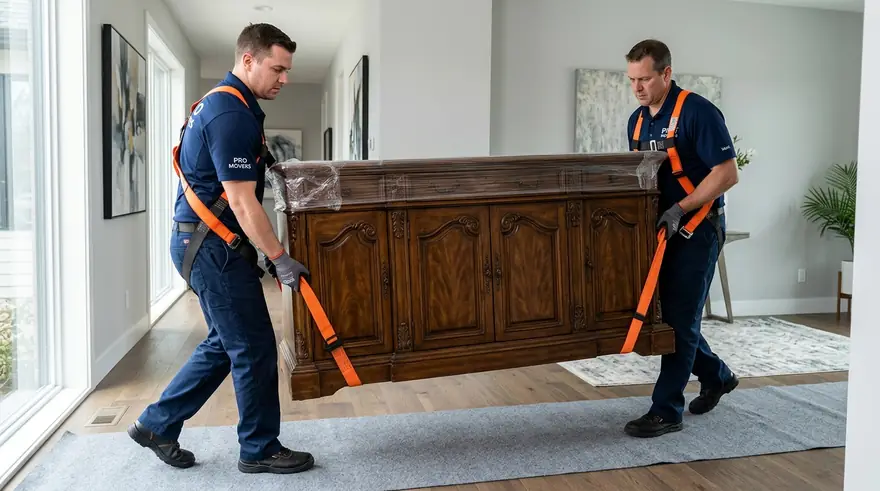
What do people want when they search for «guaranteed» movers?
Behind the phrase is an understandable worry: furniture that took years to buy might be scratched, broken, or lose a screw that stops a whole bedroom from being rebuilt. What people really need is three things: a process that lowers the chance of damage, a record of condition that prevents disputes, and a company they can actually reach.
That is why we do not offer the absolute guarantee nobody can truly give. We explain instead what we do to get as close as we can: inspecting before anything moves, wrapping by type of piece, securing the load in the truck, unloading straight into the right rooms, and a joint check at handover.
What makes any moving operation dependable?
If one pillar is missing, the others weaken.
Clarity
Knowing before the day what will be done, in what order and by whom, with no surprises on site.
Prevention
Protecting each kind of piece in the way it needs: polished wood is not screens and screens are not mirrors.
Records
Noting the condition of delicate items before loading, so you can compare on arrival.
Communication
Knowing whom to call during the work and afterwards if a note arises.
Six stages that reduce the chance of damage
This is the order we follow in apartments and villas, adjusted for the building.
Inspection and route measuring
We plan the exit route for large pieces and measure doors, corridors and lifts before anything is moved.
Wrapping by type
Protective layers are chosen for wood, glass, fabric or electronics.
Dismantling where needed
Pieces that will not pass safely are taken apart, panels numbered and screws bagged.
Loading and securing
Heavy furniture goes first and is strapped inside the closed truck body.
Direct unloading
Each item goes to its assigned room instead of piling up at the door.
Joint check
Items are reviewed with the customer and any note is recorded on the spot.
What the inspection does before loading starts
The inspection is not a formality. It is where you discover that the big sofa will only pass the flat door at an angle, that the stair edge is tight for the wardrobe, or that the lift will not take a certain piece. Finding this before lifting means the decision is made calmly: take the piece apart, change the route or bring extra straps.
You can help by sending photos of entrances, lifts and stairs before the date and telling us if the building has special rules. The earlier we know, the less is improvised on the day, and improvisation is the most dangerous source of damage.
Records: why photograph your pieces before they are loaded?
Take pictures of the important pieces from several angles before wrapping, especially glossy surfaces, glass, screens and wooden legs. These photos are not an accusation; they are a shared reference that prevents the argument of «that scratch was already there» against «no, it is new».
If there are earlier flaws, tell the person in charge before starting so they can see and note them. Candour here builds trust both ways, and it means any later remark can be inspected and settled calmly.
Risk points in a move and the matching safeguard
A simple table linking each risk to a precaution and to your part.
| Risk point | Safeguard | Your part |
|---|---|---|
| A big piece hitting a door frame | Measuring the route and removing protruding parts | Send door and lift dimensions |
| Scratches on polished wood | A soft contact layer before any stretch film | Tell us which pieces are most valuable |
| Items shifting inside the truck | Balanced loading and strapping | Empty drawers of heavy things |
| Broken glass and mirrors | Boxes, protective blocks and upright transport | Keep fragile ornaments in separate boxes |
| Lost screws and fittings | Numbered bags attached to each piece | Do not remove the assembly bags |
| Pile-ups on arrival | Direct unloading room by room | Name the rooms and clear the corridors |
Loading and securing: what the customer does not see but safety depends on
Heavy pieces go first near the front of the body and low down, light and delicate pieces higher up in places that will not be crushed. Between groups, blankets or boards act as dividers, and straps are tensioned to the wall rails so nothing moves under braking or on bumps.
A closed body protects furniture from dust and from passers-by and reduces the effect of wind on wrapped pieces. The longer the road, as between Dammam and Jubail, the more important double securing and careful weight distribution become.
Unloading and the joint check
On arrival pieces are not set down on the ground in front of the door but carried one by one into their rooms. That protects furniture from being stepped on or scraped, makes your check easier and stops boxes mixing with large items.
After the wrapping comes off, we suggest walking through the important pieces with the crew lead. If you see something, say so at that moment, because inspection is easier and more accurate then than days later. The lead notes it and contacts you to discuss a suitable solution.
Why we do not promise an absolute guarantee
Because the road can bring the unexpected, and because an unconditional promise leads to an argument at the first incident. We prefer to explain what we do to lower risk and what we do when a note appears, and let you judge. Our protection policy sets this out plainly.
A company that promises «nothing will ever happen» is not giving real security, only words. Real security comes from processes you can review: what did you do before loading? how did you secure? how did you record? and how will you act if something is noted?
Five things that make your move safer from your side
The process is shared, and what you do before the date affects the result.
Sort items in advance
A lighter, tidier load means less chance of damage.
Empty drawers and cabinets
Full drawers add weight and put pieces at risk when lifted.
Disconnect appliances early
Switch off the fridge and drain the washer some hours before.
Prepare the corridors
Clear obstacles and slippery rugs and leave space for the truck to stop.
Be there or name someone
A person who knows the home helps with quick decisions.
Screens and appliances: pieces that deserve separate care
Large screens need protection that does not press on the display panel: corner foam blocks, an upright box and upright transport. Fridges are never laid down; they stay upright, with doors held shut by tape that leaves no mark, after being emptied and switched off some hours before.
If you still have the original boxes, keep them and tell us, since they are among the best protection. If not, we prepare a suitable alternative by size and review with you how it sits in the truck.
What should you carry yourself?
We advise carrying identity papers, tenancy contracts, passports, jewellery, cash, medicines and personal devices such as laptops yourself. Put them in a bag in your own car and keep it with you all day.
This is not a doubt about anyone; it is a sound habit in any move: what cannot be replaced, or whose delay would disrupt your life, stays in your hands. Let the crew concentrate on furniture and household items that need handling and wrapping.
Communication during and after the job
One of the things that reassures customers most is knowing whom to call on moving day and getting a quick answer. So before the date we tell you who the crew lead is, and you can contact them directly if you need a change in order or want to know the arrival time.
After the move, if you notice something that did not show at handover, contact us with photos as soon as you can. Early records make inspection easier, and we make a point of looking into every note and agreeing a fitting solution.
Questions to ask any crew before you hand over your furniture
Ask: will the route be inspected before loading? what materials are used for delicate pieces? how is the load secured in the truck? is furniture unloaded straight into rooms? who is the crew lead and how do I reach them? and how are notes recorded at handover?
Specific answers that name procedures are a good sign. General replies such as «don't worry, everything is guaranteed» call for a follow-up question. Someone who welcomes your questions and answers calmly is usually working to a clear method.
How we work to get close to a move without surprises
We begin with questions about both addresses, floors, lifts and delicate items, and ask for photos so we can prepare the right crew and materials. On the day we inspect the route, wrap by type of piece, secure the load, unload directly and check with you.
We do not promise what we cannot control and we explain what the estimate covers before starting. If you want to confirm any stage, ask us on WhatsApp and we will explain how it works in your particular case.
Frequently asked questions about safe moving in the Eastern Province
Straight answers on prevention, records and responsibility.
Is moving fully guaranteed?
How can I be sure the crew will protect my furniture?
Should I photograph items before moving?
What if I see a scratch at delivery?
Do you move screens and appliances safely?
Should I move papers and gold with the furniture?
Will what we agree be written down?
How do I reach the crew on moving day?
Pages that explain protection and procedure
Other references that detail how we work and protect furniture.
Protection policy
How we prevent scratches and damage
How the move works
Moving day stages
Packing system
Protection levels for each piece
Moving trucks and loading
Securing inside a closed body
Moving day crew
What each member does
Cheap moving
Cost factors and safe savings
House moving
House moving in the Eastern Province: a practical family guide from deciding what moves and what stays to switching on utilities, handing back the old
Bedroom moving
Bedroom moving in the Eastern Province: how to dismantle beds and wardrobes, protect mattresses and mirrors and move clothing and bedding so you sleep
Kitchen moving
Kitchen moving in the Eastern Province: how to wrap dishes and glass, prepare the fridge, oven and washer, move pantry stock and what to do about gas
Appliance moving
Appliance moving in the Eastern Province: how to prepare a fridge, washer, air conditioner and water heater, when you need a technician and how to con
TV and screen moving
TV and screen moving in the Eastern Province: how large TVs, monitors and office displays are wrapped and carried upright, when a technician is needed
Scratch-free moving
Where marks come from and how to limit them.
Luxury furniture moving
Protecting valuable wood, marble and chandeliers.
Want to know exactly how we would protect your furniture?
Send photos of your rooms on WhatsApp or call us, and we will explain the steps that suit your pieces.