Movers in Qatif: How the Crew Works and How Many Movers Your Move Needs
A house move depends on hands as much as on the truck, and whoever carries your wardrobe up the stairs decides whether it arrives intact or not. This page therefore looks at movers in Qatif from the inside: how many movers your move needs, how they share the roles, which tools they use, how to work with them before and during the day and which questions reveal how serious a crew is. We stay clear about estimates and scope, so we do not promise fixed figures before we know your load and your location.
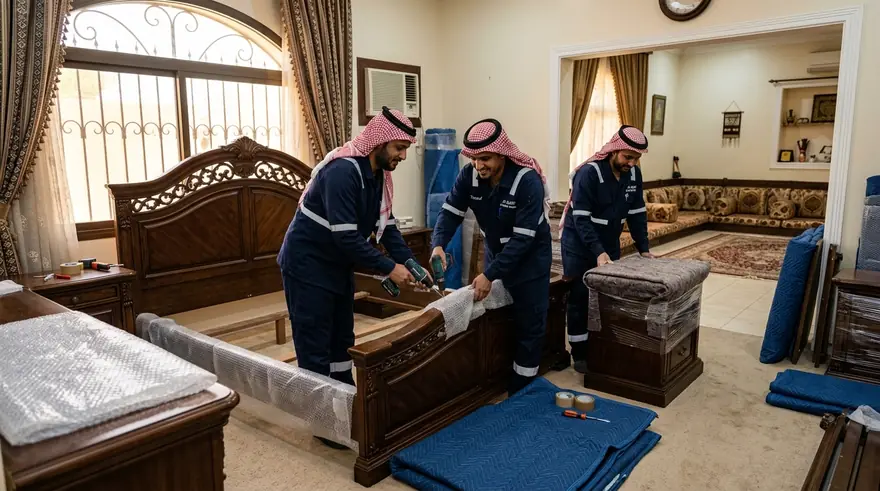
Movers in Qatif: who actually carries your home and how do they work?
When you search for movers in Qatif you are really looking for the hands that will touch your furniture from the first piece to the last. The truck may be excellent, but the wardrobe lifted the wrong way or the sofa dragged along a staircase is what separates a smooth move from one full of scratches. That is why this page looks at the crew itself: how many movers your move needs, how they split the roles, what tools they rely on and what you should know before the day.
We also explain what is rarely explained: the number of movers is not a figure that rises without calculation, and a good mover is not only the strongest person but the most organised one, who understands how to shift large pieces safely and without chaos.
How the crew divides the work
In an organised move not everyone does the same job. One person supervises the order of work, talks to the homeowner and decides what goes out first; others handle the heavy pieces such as wardrobes and fridges; someone looks after wrapping and protection; and someone loads the truck and arranges the cargo so it does not shift on the road. This division reduces collisions and makes sure each piece passes through the right hands.
In a small home several roles may sit with one person, but in a multi-room villa it matters to have one person responsible for the upper floor, another for the ground floor and a third for the truck. The more organised the crew, the less time is wasted.
How many movers does your move need?
A rough estimate that changes with the load and the site.
A small ground-floor flat
Usually a small crew of two or three movers is enough if the furniture is light and access is easy.
A medium home with several bedrooms
Normally needs more hands to speed loading and manage the wardrobes, with a clear split between floors.
A villa or multi-storey house
Needs a larger crew and tighter organisation, because carrying pieces on stairs takes time and effort.
A partial move
One or two heavy pieces may need only two movers, with the emphasis on lifting technique rather than head count.
What the crew carries besides their hands
Good work relies on simple but decisive tools: blankets and covers to protect pieces, straps to secure the load, hand trolleys that spare the back, boards or guards to protect floors and walls in narrow passages, and tools to take apart and rebuild wardrobes and beds. Having these tools lowers the chance of scratches and shortens the job.
One good sign is when the crew asks about your floors and puts protection on doors and walls before lifting begins. These small details point to professionalism.
How a crew lifts a heavy piece without harm
Basic steps that a good crew follows.
Measure the route before lifting
The door, corridor and stairs are measured to confirm the piece will pass. If it will not, it is dismantled or turned.
Cover and secure the piece
The piece is wrapped in a blanket and its moving parts, such as doors and drawers, are fixed with a strap or tape.
Lift in coordination
The movers agree a single signal and move together, so nobody carries more weight than they should.
Use a trolley where possible
On level floors a trolley reduces fatigue and protects the piece from friction.
Load and secure in the truck
Heavy pieces go at the bottom and are fixed so they do not move on the road.
How the crew handles fridges and large wardrobes
Fridges, washing machines and large wooden wardrobes are the pieces that most need planning before a lift. A fridge is emptied and its doors closed firmly and it is moved upright as far as possible; a washing machine is drained and its internal moving parts secured; a large wardrobe is emptied and its route measured, and if it will not pass it is taken apart into numbered panels. Ignoring these steps causes most of the breakage and dents.
The best thing you can do is tell the crew in advance about these pieces, their positions and their floors, because lifting a fridge from the second floor differs from lifting one from the ground floor, and the number of movers needed may change accordingly.
Moving through stairs and upper floors
Stairs are the slowest part of any move. Long pieces need a proper tilt, corner sofas may not pass without turning, and a heavy piece on a staircase is handled by at least two movers with a third guiding. The staircase is kept clear of obstacles and children are kept away. If the building has no lift, the estimate of time and numbers must take that into account from the moment you request.
It also helps to measure the width of the staircase and the ceiling height at the turns, as this information decides whether pieces pass whole or must be dismantled.
What affects the crew in Qatif
Qatif is a governorate with several towns and cities, and in some of its older neighbourhoods the streets and lanes are narrow and a large truck may not enter, so the movers carry pieces a longer distance to a truck parked slightly away. In contrast, there are newer neighbourhoods with wider streets and detached homes where access is easy. If your home is near a farm or inside a large walled plot, mention it, because it changes the time and the head count.
Humidity and dust on some days of the year mean the crew should be aware of covering fabrics and mattresses while they move between the house and the truck. For details of the service in the city, see moving in Qatif.
Working in hot and humid weather
In the hot months a move needs special organisation: early morning or late afternoon slots are preferred when possible, the crew should have enough water and short rest breaks, and electronics and wooden furniture should be protected from extreme heat inside the truck as far as possible. This is not a luxury, because fatigue raises the chance of mistakes and slows the work.
You can help by providing a shaded or cool path for sensitive items and cold water for the crew. Cooperation raises performance.
Questions to ask the crew before the day
Ask how many movers are expected for your move and why, whether a supervisor will come with them to talk to you, whether they have protection tools and dismantling tools, and what they do if a piece does not pass through the door. Ask how they treat floors and walls, and about the approximate arrival time. These questions embarrass nobody. They show that both sides are serious.
What you can do to make the crew's work easier
A good crew needs an organised environment. Clear the corridors of shoes and small items, move valuables and papers away, leave the main door open and choose one room where boxes are gathered. If you have children or pets, keep them away from the carrying path for their safety and the movers'.
Be present, or send someone on your behalf, to answer any question about where pieces go in the new home. This saves a lot of time.
The safety of the crew and your own
Work with heavy loads carries a risk of injury if lifting technique is ignored. That is why we stress coordinated lifting, no single person lifting a piece heavier than they should, and suitable gloves and shoes. If a piece seems too heavy or unstable, it is better to dismantle it or bring extra hands than to take a risk.
Why asking only for a number of movers is not enough
Some people ask for a number of movers without describing the load, so the crew arrives either too large or too small. It is better to describe your move: the number of rooms, the floor, the large pieces and the access, and then the right number is set. Other mistakes include not agreeing who loads and who unloads, or assuming that dismantling and assembly are included.
What the crew service includes and what it does not
The scope of the service differs depending on what you request. Some requests need the full move with a truck, some need a crew for loading and unloading only, and some include packing and dismantling. To make sure what you need is available for your request, contact us and give the details. See also moving with packing in Qatif and moving with assembly to learn what could be added.
How the move ends in an orderly way
After unloading, pieces should be put in their places and checked, the agreed pieces assembled, and wrapping waste gathered if that was part of the agreement. Then you go over the large pieces, confirm they are in good condition and note any comment at the time. Before the crew leaves, make sure no item was left behind in the old home.
A quick comparison between an organised crew and an improvised one
The difference is in the small details.
| Item | Organised crew | Improvised crew |
|---|---|---|
| Roles | Clearly divided | Everyone does everything |
| Protection | Blankets, straps and covers | Exposed pieces |
| Lifting | Coordinated by signal | Random |
| Communication | A supervisor who talks to you | Nobody answers |
| Result | Intact pieces and less time | Scratches and delay |
Whichever crew you deal with, watch these indicators from the first minutes after arrival. They reveal a lot.
What the work looks like in a two-storey villa in Qatif
Picture a two-storey villa with five bedrooms, a lounge, a majlis and a kitchen. A suitable crew often consists of a supervisor and several movers split up: two for the upper floor, two for the ground floor and one or two for the truck. Work begins by covering the floors at passages, then wardrobes and beds are brought down from above in turn and loaded, while the ground-floor team handles the majlis and the kitchen.
At the new home the process is reversed: heavy pieces are brought into their rooms first according to the marks, then beds and wardrobes are assembled, then boxes are emptied. The split may differ for your home, but it shows that clear roles are the secret of speed.
How to deal with any comment during the work
If you notice a scratch or behaviour that bothers you, tell the crew supervisor immediately, calmly and clearly, as this is the fastest way to put it right. Do not wait until the end of the day, and do not talk to each mover separately but to the person coordinating. If a piece is affected, photograph it where it stands and note the details so it can be handled clearly.
Frequently asked questions about movers in Qatif
Short answers about crews, numbers and tools.
How many movers do I need to move my home in Qatif?
Does a supervisor come with the movers?
Does the crew bring protection tools?
What if a piece will not fit through the door?
Are the old neighbourhoods of Qatif hard to reach?
Can I ask for movers for loading only?
Is dismantling and assembly included?
How do I request a quote?
Related pages
Links that help you understand neighbouring services.
Moving in Qatif
The service in Qatif
Moving company in Qatif
How to choose a company
Moving with packing in Qatif
Graded protection
Moving with assembly in Qatif
Dismantling and assembly
Villa moving in Qatif
Villa scenarios
Apartment moving in Qatif
Apartment scenarios
Cheap moving in Qatif
Cost factors
Moving workers in Dammam
The crew in Dammam
Moving workers in Jubail
The crew in Jubail
Moving checklist
What to prepare
Furniture movers in Safwa
How each type of furniture is protected
Cheap movers in Ras Tanura
Safe savings and cost factors
Movers in Tarout
Moving guide for Tarout island
Request the right crew for your move in Qatif
Send the home details and photos of large pieces and we will set the suitable number with you.