What a Professional Moving Service Looks Like in Dammam, Khobar and Beyond
Anyone can print the word professional on a truck. What matters is what you can observe: a clear brief, a written inventory, packing that suits each item, defined roles, calm loading, careful delivery and a signed handover. This page walks through how our movers and packers work, stage by stage, across the Eastern Province.
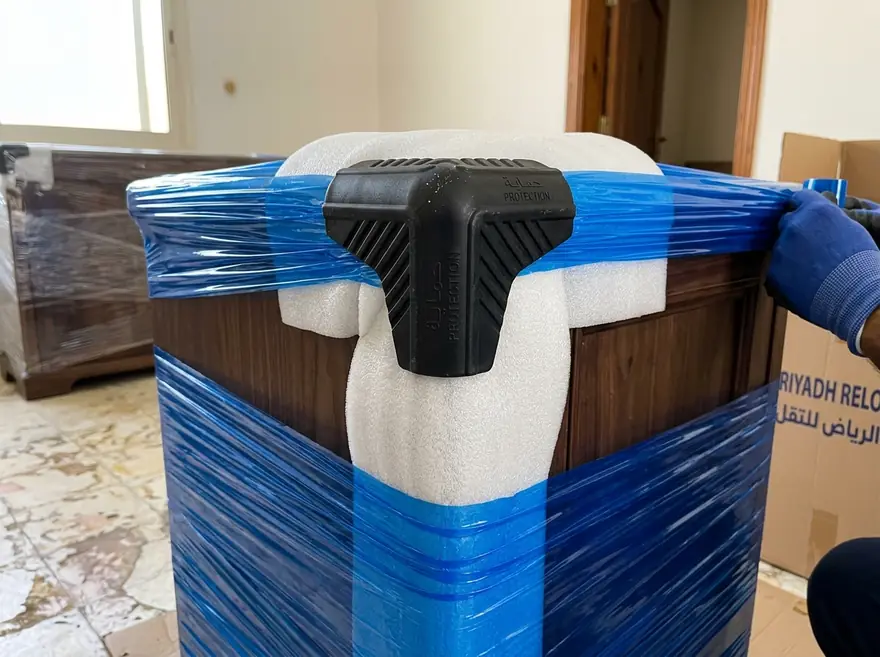
Professional means you can see it happening
If you are new to Saudi Arabia, or simply new to this part of it, you will quickly notice that every moving company calls itself professional. The word costs nothing, so it tells you very little. A more useful approach is to define it by behaviour. Did the mover ask sensible questions before the day? Was there a written list of what is being moved? Does each person on site have a clear task? Is the wrapping matched to the furniture? Do you sign something at the end that records what arrived?
Below we describe how we run each stage in the Eastern Province. Use it as a yardstick for us or for any other mover you are comparing. If a company cannot explain these basics in plain language, that is useful information too.
The brief: what we ask before we come
A good move begins with questions, not a truck. For a small flat in Dammam or Khobar, a message with a few photos and a short description is often enough. For a villa, an office, or a home with a piano, heavy cabinets or glass-topped tables, we prefer a survey or a video call so we can see doorways, stairs and the place where the vehicle will stand.
We also ask things newcomers do not think about. Is there a lift, and does the building allow it for moving? Can a closed truck park near the entrance? Does any piece need to be taken apart to leave the room? The answers decide how many people we send and which materials we bring, so there are fewer surprises at your front door.
The quickest way to start is to share these details through our quote request page.
The inventory: one sheet that protects both sides
Before anything is lifted, we write down what is being moved. Large pieces, the number of boxes, and the condition of anything already marked or chipped all go on the sheet. A faint scratch on a dining table or a chipped marble edge is noted with a short description. This is not suspicion. It simply means any later conversation rests on a record rather than on memory.
At the new address the same sheet works in reverse. We check items off as they come down from the truck and place each one in the room written on its label. If something is missing or confused with another item, we find out within minutes rather than days.
- Room name written clearly on every carton
- Reference marks on large and dismantled pieces
- Fragile items flagged separately
- One labelled bag for screws, keys and fittings
- Condition notes recorded before loading
From wrapping to reassembly in six stages
We keep a fixed order because most damage happens when stages are mixed up or rushed.
Wrapping
Small and breakable items go first, then larger furniture receives layers suited to its surface.
Dismantling
Beds, wardrobes and tables that cannot pass through doorways intact are taken apart, with fittings bagged and named.
Loading
The vehicle is built from heavy to light, with each layer secured so nothing shifts on the road.
Driving
The load travels at a steady pace and you receive updates on where the truck is.
Unloading
Pieces are checked against the inventory and carried to the labelled rooms with floors and doorframes protected.
Reassembly
Carpenters rebuild what was dismantled and test doors and drawers before leaving.
How the crew divides the work
A team without roles ends up crowding the doorway. Everyone on our crew knows their task from the moment they arrive.
Day coordinator
Speaks with you, walks through the inventory and sets the order of work. You will always know whom to ask, and our page on the moving day crew explains more.
Packers
Handle household items and delicate pieces so the heavy lifters are not distracted.
Carpenters
Take apart and rebuild wooden furniture with the right tools, as explained in the carpenter assembly service page.
Carriers
Move wrapped pieces between rooms and the vehicle using lifting methods that match the weight.
Driver and loader
Arranges and secures the cargo space, then drives with care.
Layered packing: the right cover for each surface
No single wrap suits everything. Polished wood needs a soft first layer that leaves no mark. Glass and mirrors need protected edges and corners. Upholstery needs a cover against dust and humidity. So we combine materials: ink-free paper for delicate objects, bubble wrap around corners and fragile faces, thick stretch film to hold the layers and keep drawers and doors closed, and cartons sized to their contents.
The professional part is the judgement, not the roll of plastic. It is knowing where bubble wrap is needed and where film is enough, and how to stop fine dust from grinding against a surface under tension. If you would like to see the differences, read our guide to packing by material.
- Ink-free paper for glassware and ornaments
- Bubble layer for corners and edges
- Stretch film to bind the layers
- Cartons filled sensibly, never overloaded
Lifting and carrying tools that reduce risk
Carrying heavy furniture on muscle alone ends in injuries or breakages. We use wheeled trolleys, carrying straps, sliding blankets under heavy pieces, and boards to protect doors and corners. Where a building cannot take a large item through the stairwell, a winch or crane may be needed, arranged by request and coordination, which we describe on the winch lifting page.
For special items such as a piano or an oversized cabinet, we decide the method before the day: how many people, which route, and whether the floor needs extra protection.
Quality signs you can check yourself
Treat this table as a checklist for any mover. Each standard has a visible sign that is worth more than a promise.
| Standard | What you should notice | Why it matters |
|---|---|---|
| Clear brief | Specific questions about the building, access and bulky items | Right crew and equipment from the start |
| Inventory | A written sheet listing rooms and key pieces | A reference when unloading |
| Packing | Different materials for different surfaces | Protection from scratches and breakage |
| Roles | Everyone has a known task | Speed, calm and safety |
| Communication | Updates on truck movement and arrival | Reassurance and building coordination |
| Handover | A signed record of what was received and its condition | Clarity on any later question |
A move does not have to score perfectly on every line. But if none of these signs appear, the word professional is only marketing.
Communication from the first message to the last box
What frustrates people most on moving day is silence. Where is the truck? When will they arrive? Why did they stop? So we confirm before the appointment, tell you when we set off and when we are close, and let you know straight away if something changes, such as a closed road or a lift that is out of service.
In apartment blocks and towers we speak with the security desk or building management to book the lift and agree where the vehicle stands, so the move does not become a burden on your neighbours. If you have special instructions, such as a room nobody should enter or an item to be carried last, tell the coordinator and the whole crew will follow them.
The signed record and how small accidents are handled
At the end of the day we walk through the rooms with you, match the pieces to the sheet, and both sides sign a handover note showing what was received and its condition. This closes the door on confusion, and any remark is written down while you are present rather than after everything has been spread around the house.
Even with careful preparation, small accidents can happen: a mark on a door frame, a missing screw, a loose handle. The professional response is not to hide it. We tell you immediately, record it, and discuss a practical solution that suits both sides. For the general framework, see our guarantee terms.
Respect for your home and your neighbours
Your home is not an open worksite. We lay protection on floors, rugs and walls along narrow corridors, wear shoe covers or remove shoes if you ask, and lift furniture instead of dragging it. Noise matters too: no shouting in stairwells, and no continuous hammering during rest hours unless it is unavoidable.
In residential compounds and buildings we keep neighbours entrances clear, remove wrapping and empty cartons before we leave, and try to return lifts and corridors clean. These details never appear in a written quotation, yet they are the first thing a neighbour or a building manager notices.
What to prepare before the crew arrives
However organised the team is, your preparation saves hours. Good preparation means working time goes into moving rather than searching for a key or emptying a drawer.
- Keep valuables, passports and documents with you
- Empty cabinets of liquids and anything that could spill
- Switch off and empty appliances well before the appointment and let the fridge dry
- Confirm parking and building permission for the lift
- Clear the space in front of doors and corridors
- Sketch where large furniture should go in the new home
For help with timing, see the moving timeline before the day.
Common mistakes that weaken any move
We see these again and again. Knowing them protects you whichever mover you choose.
A vague description
Saying only an ordinary flat hides heavy pieces and tight entrances that change the whole plan.
Overfilled cartons
A bulging box collapses onto what is inside it; lighter and more numerous is safer.
Mixing fragile and heavy
Each category needs its own box and its own label.
Losing the small parts
A missing bag of screws delays assembly, so keep it somewhere you can find.
Ignoring the building
Not agreeing the lift with the security desk can waste hours, and a short call avoids it.
Moving in the Eastern Province: climate, buildings and distance
The coast is hot and humid for much of the year, with seasonal dust. That is why we protect wood and upholstery with covers that keep out dust and moisture while items wait outside, and avoid leaving pieces exposed to strong sun for long periods.
Homes here range from villas to apartment blocks, towers and gated compounds, and each has its own rules. Towers often need a booked lift, compounds may control vehicle entry, and multi-storey villas mean carrying furniture on stairs. We coordinate with these conditions in Dammam, Khobar, Dhahran, Jubail, Qatif and Al-Ahsa, as described in our page on moving within the Eastern Province.
If you are moving to another city such as Riyadh or Jeddah, we use stronger securing methods because the journey is longer and there is more vibration on the road.
How to judge the service once the day is over
The real verdict comes when the boxes are quiet. Ask yourself: did every piece arrive? Is the rebuilt furniture firm? Did you receive the handover note? Was packaging cleared away? Did the crew treat your home and neighbours calmly? If the answers are yes, the service was well organised. If something is missing, report it as soon as you notice.
You can compare the steps yourself through our how it works page and weigh your options with the guide to choosing a moving company before you decide.
Questions expats often ask about professional movers
Short answers to what people ask before booking.
Do you always need to visit before the move?
Why does the inventory sheet matter to me?
Is packing included in the service?
Who dismantles and rebuilds furniture?
What happens if an item is damaged?
Can you move at night or on Fridays?
How do you handle towers with limited lift access?
Do you move to other cities in Saudi Arabia?
Related pages
Keep reading on topics close to an organised moving service.
Best moving company criteria
How to compare movers fairly
The moving day crew
Who arrives and what each person does
Trusted movers
Trust signs and warning signs
Packing by material
Protection suited to each surface
Furniture dismantling and rebuilding
How assembly is handled
Secure moving
Keeping belongings safe on the road
Moving service packages
Service options for your needs
Moving checklist
Preparing before the big day
Ready for a move with clear stages?
Send us the list of items and both addresses, and we will arrange the survey, inventory and a suitable date with you.