Moving Crew in Dhahran: How to Prepare Your Home and What the Day Looks Like
People who search for a moving crew in Dhahran often think about headcount, but what truly shapes the day is how well you prepare the home, how clearly the work is defined, how access to the building or compound is arranged, and how heat and time are managed. This page is written for the person who will receive the crew at the door: what to prepare, how to communicate, where the workers’ role ends, how crew size is estimated, and how to review everything before they leave.
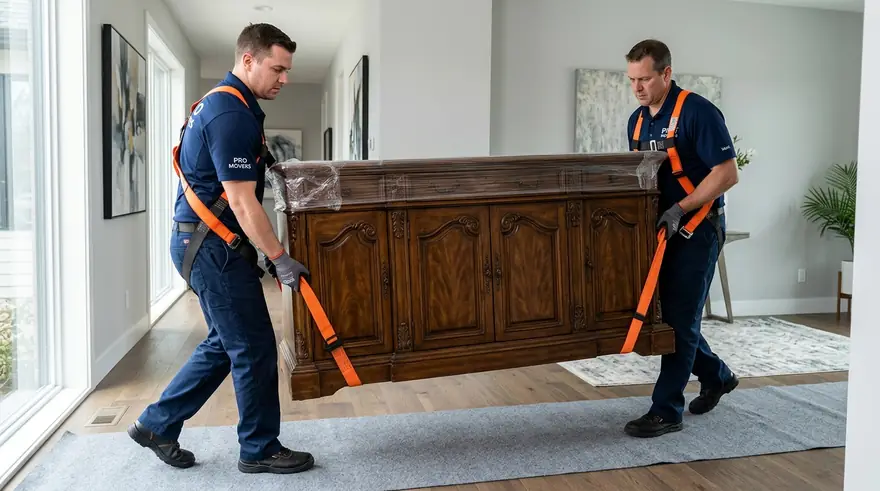
Most of the day is decided before the crew walks in
Some people assume their job starts when payment is due. In fact, the owner’s most useful work comes earlier: clear hallways, emptied fragile drawers, valuables set apart, and keys and entrances ready. A great crew in a cluttered home loses half its time shifting obstacles, while an average crew in a prepared home gets far more done than you would expect.
For the broader picture of moving in the city, see movers in Dhahran. Here we focus on the workers themselves, their day, and how they work with you and your home.
What the crew does and what is outside their job
Crew members dismantle, wrap, carry, load, unload, and refit the basics as agreed. Sorting your belongings, emptying drawers, and deciding what stays or goes are your decisions. Do not expect the crew to judge the sentimental value of items, and do not assume they will dismantle everything unless it is written into the agreement.
State clearly what you expect: does the job include taking down curtains and air-conditioner units? Fitting wall shelves? Do the workers fill boxes, or only carry them? Every vague point today is a possible disagreement tomorrow.
How crew size is estimated for your home
There is no fixed number for every home. The need depends on the count of large pieces rather than rooms, the number of floors and whether a lift exists, the distance from truck to door, the time window you have, and whether wrapping happens the same day or earlier. A ground-floor apartment with little furniture may suit a small team; a two-storey villa with heavy pieces needs a larger team and more hours.
That is why we ask for a description and photos instead of accepting only “three bedrooms”. On very hot days we also suggest a small margin in crew size, because workers need short breaks and the rhythm slows slightly through no fault of theirs.
How home type relates to crew needs
A broad guide that does not replace a description and photos.
| Home type | Where the effort goes | What matters in the crew |
|---|---|---|
| Low-floor apartment | Wrapping and direct loading | Speed and coordination |
| High-floor apartment | Vertical transport by lift or stairs | Scheduling the lift |
| Two-storey villa | Dismantling and carrying between floors | Strength and lifting equipment |
| Gated compound | Gate entry, appointments, rules | Following management instructions |
| Office or clinic | Files, devices, and order | Discretion and precise labelling |
If your situation differs, describe it as it is and we adapt the estimate to the site.
What to prepare before the crew arrives
Hallways
Remove shoes, small rugs, and clutter, and prop doors open.
Personal items
Keep documents, jewellery, cash, and medicines in a bag that travels with you, not on the truck.
Drawers and cabinets
Empty fragile drawers, liquids, and anything that could spill or break.
Lift and parking
Reserve the lift if possible and confirm a spot and permission for the truck.
Children and pets
Arrange a safe place away from hallways so they stay safe and traffic flows.
Your list
Write what moves and what stays, and label items that must not be touched.
Crews and compound access in Dhahran
Many residential compounds in Dhahran have management offices and gates that ask for the names and IDs of workers before entry, and may set days and hours for moving work. That is the management’s right and not an obstacle if arranged ahead. Send us whatever your compound requests and we will coordinate with the crew so entry is smooth.
It also helps to know where the truck may park temporarily and whether there is a separate service lift for furniture, as some buildings reserve one lift for that purpose and restrict main lifts at peak times. These details reduce delays and protect your relationship with neighbours.
How a typical working day unfolds
A common sequence for a mid-sized home. Yours may differ.
Arrival and walk-through
The coordinator tours the home with you and confirms what moves, risk points, and where the truck will stand.
Protection
Floors and walls at entrances are covered and corners and delicate surfaces are wrapped.
Dismantling and wrapping
Beds and wardrobes that come apart are dismantled, items are wrapped, and boxes are labelled by room.
Carrying and loading
Pieces are carried and loaded in a planned order, heavy to light, and secured.
Transport and unloading
The truck moves the load and the crew unloads into the rooms chosen beforehand.
Refit and review
Key pieces are reassembled and everything is reviewed with you item by item before the crew leaves.
Crew safety in hot weather
In hot months crews work hard in high temperatures. It is sensible to provide cold water, ventilate the hallways, and allow short breaks. Rushing in heat raises the risk of accidents, and exhaustion lowers attention when lifting heavy items. If you can, book an early start; working in the cooler morning is safer and often faster.
This is not a luxury. A rested crew works with more focus, and focus is what protects your floors, your furniture, and the workers themselves.
How to communicate with the crew during the job
Name one person on your side as the decision-maker and give them a copy of the list. When several family members instruct the workers at once, directions clash and movement stalls. If you want to change something, such as keeping a piece or adding one, tell the coordinator directly rather than giving separate instructions to each worker.
If you see an item being handled in a way that worries you, say so calmly and right away, not after loading. Professional crews welcome that and correct course at once.
Pieces that need extra attention from the crew
Large wardrobes, majlis sets, marble tops, glass cabinets, and heavy appliances are not carried like boxes of books. They usually need more than one worker, lifting straps, a planned route, and measurement of doors and corners beforehand. If a piece will not fit through the usual entrance, it is far better to learn that before lifting than halfway down the stairs.
Reviewing the work and the handover
Before the crew leaves the old home, open drawers and cupboards and look at each room, the balcony, and the storeroom, because something is often left in a corner. In the new home, inspect pieces after unloading and note any scratch or damage immediately, since recording while the crew is present is easier than doing so days later. Take photos and have the coordinator pass your note to the person in charge.
Common mistakes that are easy to avoid
Frequent mistakes include leaving small items unpacked, not naming receiving rooms, not telling the crew about a valuable or fragile piece, booking one day for a job that needs two, booking the truck before confirming parking, and forgetting to reserve the lift. Each costs hours, and a short list and one phone call before the day avoids almost all of them.
Choosing a day and time that suit the crew and the building
Choosing the day matters as much as choosing the crew. Weekends tend to be busier in buildings, with more residents and visitors and more lift bookings, while midweek is often calmer. In compounds that restrict heavy work to certain hours, start early so loading finishes before the permitted period ends. Ask about restricted times rather than assuming the whole day is open.
If you have a key handover or vacating deadline, build a safety margin into the schedule. A move that finishes at the last possible minute cannot absorb a single surprise. Aim to be done hours before the deadline, not minutes.
Safety rules that protect everyone in the home
Safety starts with simple things: suitable footwear for the crew, gloves for rough pieces, non-slip hallways, and children kept away from carrying routes. When a heavy item goes down stairs, workers agree clear signals to start and stop, and nobody lifts what they cannot control alone. Glass shelves and large doors should never be carried without protection boards.
If someone in the home is ill or elderly, arrange a quiet space away from noise and movement, and set up their room and belongings first in the new home so they settle quickly.
Handling appliances before they are lifted
Heavy appliances need preparation: empty and defrost the fridge well before moving day, disconnect washer hoses and secure the drum if it has transit bolts, and have a qualified technician disconnect cookers and hobs from gas supply rather than leaving that to the crew. Photograph the connections before disconnecting to make reconnection easier, and put screws in labelled bags attached to the appliance or furniture they belong to.
If you still have the original appliance boxes, keep them for the move; they are the best protection. If not, good wrapping with shock-absorbing material is an acceptable alternative.
Respecting the household’s privacy
Letting a team into your home calls for clear boundaries. Decide in advance which rooms may be entered, ask that private rooms be handled with care, and ask the crew to keep to agreed times. If women or children are at home, you can set aside a closed room for them or agree times for moving between rooms. You are entitled to ask for an introduction to the team and for a single coordinator as your point of contact.
The same applies to photographs and phones: workers should not photograph inside the home beyond what the job needs, and it is reasonable to mention this politely at the start of the day.
What should be left behind when the crew departs
When the crew finishes, the home should be cleaner than they found it with respect to the waste they created: wrap, cartons, and tape. Agree in advance whether the crew takes away empty cartons or you keep them, and who disposes of waste. Make sure you hold all keys, that the old home is locked, and that meters and services are ready for handover. In the new home, confirm that moved appliances are connected in the right places before the workers leave.
Summary
The crew is the hands, and you are the organiser: prepare hallways and sort belongings, coordinate building access, agree where the work starts and ends, and review everything before departure. For an estimate based on your crew and home, use the quote page, or read about moving with packing to see what happens before loading day.
Moving crew in Dhahran: common questions
Answers that help before you book.
How many workers do I need for my apartment?
Do workers dismantle and refit furniture?
Do I need permission to enter my compound?
What should I prepare before the crew arrives?
Does work stop in the heat?
Who carries heavy pieces?
What if I notice a scratch?
How do I request a moving crew in Dhahran?
Related pages about the crew
More reading to complete the picture of moving day.
Movers in Dhahran
The main city service page.
Moving with packing in Dhahran
What is done before loading day.
Moving with assembly in Dhahran
Dismantling and refitting beds and kitchens.
Moving truck in Dhahran
Choosing and inspecting the vehicle.
Moving day crew in the Eastern Province
How the day is organised.
Request a quote
Describe your home and get an estimate.
Want to know the right crew for your home?
Send a description of your home with photos of the rooms and the entrance, and we will suggest the crew and services that fit.