Moving in a Closed Truck in Saudi Arabia: Your Eastern Province Guide
If you have just arrived in Dammam, Khobar or Jubail and are comparing trucks, this guide explains what an enclosed box really does for your belongings in the Gulf climate, what it cannot do alone, and how we load, tie down and unload so your furniture arrives in the condition it left.
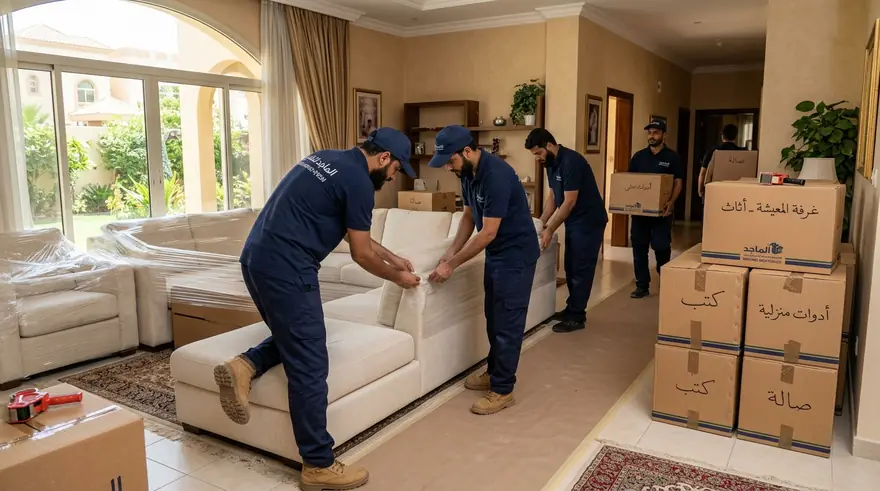
What an enclosed truck gives you, and what it does not
An enclosed moving truck carries your belongings in a box with solid walls, a roof and a lockable rear door. Nothing rides in the open air. For a family relocating to the Eastern Province from abroad, that single difference changes how the first week in the new home feels: sofas arrive without a film of sand, mattresses are not warm from hours in the sun, and neighbours do not watch your wardrobes go by.
We arrange covered trucks, including enclosed Dyna units, subject to request and availability. The box is the outer shell, though. Protecting each piece from scratches and knocks is a separate job done with wrapping, dividers and straps, and this page explains how the two layers work together.
Why Gulf dust is the real reason to choose a covered truck
Anyone who has left a car window open in the Eastern Province knows how fine the dust is. In the dry seasons, wind lifts it from the desert and carries it into the cities, and it settles in upholstery stitching, on screens and inside vents. An open pickup or flatbed collects it for the entire drive.
An enclosed box blocks most of that airflow, so fabric and electronics reach the destination far cleaner. Some dust still enters when the rear door opens at both ends, so we also wrap soft furniture in stretch film and cover appliances on the ground before they step into the box.
Windy days are worth planning around. If a strong dust day is forecast, tell us and we can look at shifting the time or keeping the door shut for as long as possible between the doorway and the truck. Our packing system describes the wrapping layers used for upholstery and electronics.
Heat inside a metal box: plan around it
A truck box is metal, and metal warms under a summer sun. We do not offer air conditioning or cooling inside the box, and we would rather say so plainly than let you assume. What we can do is shorten the time the truck sits waiting in direct sunlight, and plan loading for cooler hours.
Several household items dislike heat: candles, perfumes, cosmetics, medicines, chocolate and pantry goods, hard drives, cameras and freshly painted frames. Carry them in your own air-conditioned car. Solid wood and heavy appliances are generally fine for a normal day of moving, while thin veneers and glued joints deserve extra care in the hottest months.
If your schedule allows, consider an early start, a late afternoon load or an evening move. Our night moving option is arranged on request and suits people with heat-sensitive goods who can unload after sunset.
- Candles, perfumes and oils
- Medicines and supplements
- Chocolate and sealed foods
- Hard drives, cameras and discs
- Recently painted artwork
Coastal humidity, and the odd rainy day
Along the coast of Dammam, Khobar and Jubail, humid air hangs around for long stretches, and moisture is hard on unfinished wood, leather, paper, mirrors with exposed backs and metal tools. A closed box keeps dew and spray off your goods, but it does not dry anything out; a damp item sealed in plastic stays damp.
So we ask that everything be fully dry before wrapping. Empty the fridge a day early, let the washing machine drain, and keep damp towels out of wardrobes. After arrival, unwrap furniture promptly so it can breathe, rather than leaving it in film for days.
Rain is rare in the region, yet when it does arrive it surprises everyone and turns a loading bay into a puddle. A covered truck removes the scramble for tarpaulins and lets crews keep working with less risk to your furniture.
Keeping your belongings out of sight
Many families prefer that passers-by do not see mattresses, clothing and personal items travelling down the road. An enclosed box keeps all of it hidden, without loose sheets flapping in the wind.
Privacy also has a practical side. A locked rear door lowers the chance of small items shifting out of reach or going missing when the truck stops for a break on a long trip. This matters if you are moving a small office or shop contents between cities. For wider precautions, see our page on secure moving.
What a closed truck cannot protect on its own
The walls keep out the weather. They do not keep your furniture from moving around inside. These risks remain:
Rubbing between items
Two pieces touching will wear each other down over many small vibrations. Individual wrapping and dividers prevent it, as described in our packing guide by material.
Jolts and bumps
Speed bumps and braking send shocks through the load. Heavy items placed low and snug against the front bulkhead calm the movement.
Loose loads
An unstrapped enclosed load turns into a rolling room. Straps are what make the load safe, not the roof.
Unbalanced weight
Piling weight to one side affects handling and pressure points on the furniture, so we spread it deliberately.
Stacking pressure
Light items under heavy ones crack and crush. Space inside the box does not mean everything should be stacked.
How we arrange a load so it travels still
Think of the box as a small room that has to be designed before it moves. We build a floor of flat, heavy items such as refrigerators, washers and wardrobe panels, then layer lighter pieces above, and keep boxes meant for first unloading near the door.
Between neighbouring items we place thick cardboard, foam and furniture covers. Drawers and doors are secured with tape suitable for finished surfaces, and straps run through the box anchor points so whole rows are held together instead of single pieces. We try to leave no wide gaps in which things could slide when the truck brakes.
Some furniture is easier and safer in parts. We can coordinate a carpenter for disassembly and reassembly with your move, so beds and wardrobes occupy less space and take fewer knocks.
- Heavy at the bottom, light on top
- Pieces of similar height in the same row
- Appliances upright in their normal position
- Mirrors and glass standing between foam sheets
- Numbered boxes near the door, ordered by room
Which belongings suffer most in an enclosed truck?
This is general guidance. We look at your actual items during coordination.
| Belonging | Main risk | What we do in the box |
|---|---|---|
| Sofas and mattresses | Dust and damp | Full stretch-film wrap, nothing stacked on top |
| TVs and screens | Vibration and warmth | Padded wrap, upright, away from sun-heated walls |
| Wooden wardrobes | Rubbing and humidity | Covers, dividers, secured doors and drawers |
| Mirrors and glass | Breakage from shocks | Standing upright between foam and corrugated board |
| Metal tools | Rust in humid air | Dry first, then wrap against condensation |
| Small appliances | Fine dust | Closed, numbered cartons |
Passports, residence documents, jewellery and sentimental items should stay with you personally, however tight the truck box is.
From your door to the locked box: the sequence
This is the usual order of work, adjusted to your building and schedule:
Check access and parking
We ask about the floor, lift and where the truck can stand, and whether wide items fit through the door.
Wrap outside the box
Wrapping takes place indoors or at the doorway so furniture is covered before it meets outdoor air.
Load the heavy base first
Refrigerators, washers and wardrobe panels go in first near the front and are strapped.
Build middle layers
Sofas, disassembled beds and tables go in with dividers, with soft items filling gaps.
Place light items last
Small boxes and daily-use bags go in at the end so they come out first.
Strap check and lock
We walk the rows, tighten the straps and close the door securely before the truck leaves.
Unloading where a tall box cannot reach
Older parts of Qatif, Khobar, Dammam and Al-Ahsa can have narrow lanes, low gates and overhead cables that a tall enclosed truck cannot pass. Tell us the real parking position, and send a photo of the street if you can.
We may stop at the nearest suitable point and carry items by hand or on trolleys, or arrange a smaller vehicle for the last stretch. In tall buildings where a lift cannot take a large piece, a winch lift can be coordinated.
It also helps to reserve a short parking space in front of the building beforehand when the community allows it, because the box needs clearance behind it to open the door and set up a ramp.
Between cities: intercity moves and the Saudi highway
A move from Dammam to Al-Ahsa or Jubail keeps your goods in the box for hours, so strapping and closure matter more. Heading to Riyadh, Jeddah, Makkah or Madinah, the load meets very different weather between the coast and the interior, and a covered truck is clearly the better option than a bare flatbed.
For longer drives we wrap more thoroughly, check the straps at any long stop where possible, and avoid starting at midday in summer. Details on this are found on our long distance moving page, arranged on request and subject to availability.
If your load is small, ask us before reserving a whole truck. A sensible arrangement may save you from booking more vehicle than you need.
What to prepare before the truck arrives
A little preparation saves hours and prevents mistakes:
Dry and empty
Defrost the fridge, drain the washer, dry mattresses and take liquids out of cabinets.
Set aside personal items
Keep medicines, documents, perfumes and small electronics in a bag that stays with you.
Label boxes by room
Write the room name on the top and one side of each carton so unloading goes quickly.
Confirm parking and permits
Ask your landlord or compound office about truck access and any lift booking, and tell us roughly how tall your entrance is.
Request early
Send your list of large items through our quote request page so we can suggest the right box and crew.
Mistakes newcomers make with covered trucks
The first is believing a closed box replaces packing, so items travel bare and arrive scuffed. The second is leaving heat-sensitive goods in the box through a whole afternoon, as if closed meant cool. The third is overfilling until there is no room to run straps, so furniture ends up jammed against furniture.
Others forget to measure the doorway or mention a narrow staircase until the crew has arrived. Telling us about a piano, a safe or any heavy piece early lets us choose the right vehicle and number of workers.
Another recurring slip is leaving the rear door open for long stretches between trips from the house, which lets in dust and warm air. It works better to stage everything at the door and load in one continuous run.
Questions we hear from people settling in the Eastern Province
Newcomers often ask when to move in summer. Early morning or late afternoon is easier on goods and crews, and weekends can be busy. We offer weekend and Friday moves on request.
Residents of villas, apartment buildings, towers and compounds ask about access. Villas often make truck parking simple, while towers and compounds may require coordination with management about lifts and moving hours. Our pages on villa and apartment moving explain those differences.
Expatriates also ask whether paperwork or gate passes are needed in a compound. Ask the community office in advance so the truck is not held at the gate.
How we arrange an enclosed truck for you
Message us on WhatsApp or call, and tell us the city, the type of home or office, and any heavy or delicate pieces. We suggest a suitable box, crew and time, always based on request and availability.
We avoid promising details before we know your building. We explain the steps and the factors that shape the job, and the final terms are agreed with you directly. You may also wish to read our safe handling guidance to see what to expect from the crew.
Closed truck moving: frequently asked questions
Short answers to what customers moving in Saudi Arabia usually want to know:
Does a closed truck keep out all the dust?
Does the inside of the truck get hot in summer?
What should I not leave in the moving truck?
Is a closed truck enough without wrapping?
Can an enclosed truck get into narrow streets?
Do you move between cities in closed trucks?
Can I book a closed truck for a small move?
How is this different from a padded truck?
Related pages
Keep reading about vehicles, wrapping and planning:
Padded truck moving
Lined truck walls to reduce contact
Professional moving service
How crews and communication are organised
Trusted moving in the Eastern Province
What to look for in a mover
Moving vehicle types
Overview of truck types
Dyna truck moving
General uses of Dyna trucks
Long distance moving
Intercity relocation planning
Furniture packing by material
Wrapping wood, glass and fabric
Moving checklist
A step-by-step preparation list
Ready to move in an enclosed truck?
Send us your city and the large items, and we will coordinate the right truck, wrapping and straps with you.