Movers in Safwa with Furniture Dismantling and Reassembly
When you hire movers in Safwa with dismantling and reassembly, one crew handles the whole chain: large pieces come apart at the old home, every part is labelled, everything travels protected, and the furniture is rebuilt and checked with you at the new address. This page explains how that works and what to prepare.
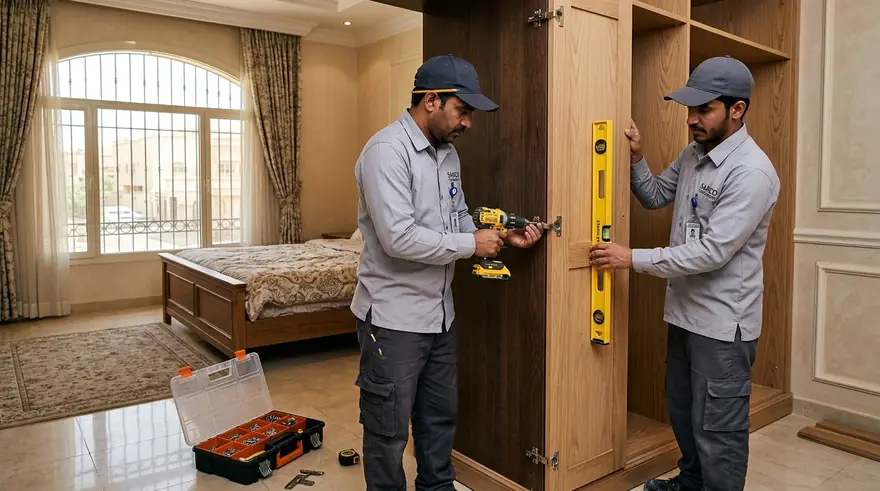
Why combine dismantling and reassembly with the move?
A lot of furniture will not pass through doors and stairwells when assembled, so taking it apart is a necessity, not a luxury. When one crew dismantles, moves and rebuilds, there is less argument about who lost a screw or cracked a panel, because responsibility is clear from start to finish.
The person who took a piece apart is also the best person to put it back together. They know the order of the parts and where each fixing goes, which saves time and keeps the furniture sturdy after reassembly.
Six kinds of furniture that usually need dismantling
Every home is different, but these come up most often.
Large beds
Frames, slats and legs are separated and the small fixings go into numbered bags.
Wardrobes
Doors and sometimes shelves come off and the panels travel wrapped.
Dressing tables and mirrors
The mirror is separated from the base and each is wrapped on its own.
Storage beds
Drawers are pulled, secured and moved apart from the frame.
Desks and bookcases
Shelves and drawers come out and small parts are kept together.
Dining tables
Legs are removed where the design allows and the top is protected.
How careful dismantling is done
Dismantling starts with a look at the piece and a decision about the order of its parts. Outer parts come off first, then inner ones, and complicated pieces are photographed beforehand to serve as a reference during reassembly. The right tool for each fixing prevents stripped heads and split boards.
The aim is not to take things apart more than necessary. Some pieces travel in one part if they clear the entrances safely, and over-dismantling only adds time and room for error. The decision depends on the piece and the entrance.
Labelling parts and bagging hardware
Each part gets a number or name on a removable label, and screws, bolts and hinges go into small bags that are taped to the piece itself or collected in one box marked with the room name. This simple habit is what prevents lost parts.
Loose small parts are behind most delays at reassembly. Tidy bags let the new-home build run in the same sequence as the dismantling, only in reverse.
What happens to each piece before loading and after unloading
A summary of preparation steps.
| Piece | Before loading | After unloading |
|---|---|---|
| Large bed | Remove frame, wrap boards | Rebuild frame, check stability |
| Wardrobe | Empty and remove doors | Refit and adjust doors |
| Dressing table | Detach and wrap the mirror | Remount and secure the mirror |
| Desk | Pull drawers, remove shelves | Return drawers and shelves |
| Dining table | Take off legs | Refit legs, check balance |
Steps can vary with the design and fixing method of each piece.
How a move with assembly runs
Five stages to picture the day.
Describe the pieces
Send photos of beds, wardrobes and other big items, the room count and the floor.
Dismantle
Pieces are taken apart, labelled and the hardware is bagged.
Wrap and load
Parts are wrapped, arranged in the truck and secured.
Unload
Parts go to the right rooms according to your placement plan.
Rebuild and check
Furniture is reassembled and checked with you for stability, hinges and drawers.
What matters when moving within Safwa
Safwa has a mix of older homes, newer buildings, villas and apartments, and some older streets are fairly narrow. That is why we ask about street width, where the truck can park and the width of the front door, since these decide what can be carried assembled and what must be taken apart.
Safwa is also close to Qatif, Dammam and Ras Tanura, so plenty of moves start or finish there. Give us the other address when you ask for a quote so travel time is part of the day plan.
Furniture that should not be dismantled
Some pieces are better left alone, such as furniture whose construction does not allow a firm rebuild, or old pieces that could crack when their joints are opened. These travel in one part after the entrances are checked, with extra protection.
If you are unsure, send a photo and note the age and fixing method of the piece. The right advice protects the item better than insisting on taking it apart.
Kitchens, wall shelves and wall-mounted items
Wall shelves, curtains and wall-fixed mirrors may need removing before the move, but the work depends on how each is fixed. Mention them in your description and say what you want taken down and what you plan to leave.
Fitted kitchens are a different case that needs an inspection, and should not be assumed to come apart like loose furniture. Ask about this before agreeing.
Getting the new home ready for reassembly
Before the build starts, clear the floor and decide where each bed and wardrobe goes. If a room has many pieces, set priorities: what should be rebuilt first so the family can settle in?
Check that a power point is nearby if electric tools are needed and that corridors are clear. This preparation saves crew time and brings the work to a faster finish.
Common mistakes in dismantling and reassembly
Frequent mistakes include forgetting to empty a wardrobe before taking it apart, mixing the screws of two pieces in a single bag, or rushing with the wrong tools. All of these lead to damaged or missing parts.
Avoid them with one bag per piece labelled with its name and the right tools for the job. If you took some pieces apart yourself, tell the crew so they know what is done and what remains.
Checking the assembled furniture
After reassembly test every piece. Is the bed stable? Do the wardrobe doors close properly? Do drawers slide smoothly? Is the mirror secure? Record any remark at the time, in photos or writing.
A quick check with the crew still present lets faults be fixed on the spot, while delay complicates things. Set aside enough minutes before the crew leaves.
Tools used for dismantling and reassembly
Careful dismantling relies on suitable tools: screwdrivers of several sizes and heads, hex keys, rubber mallets and, where needed, a drill at low speed. The wrong tool can strip a screw head or split the wood, which makes a firm rebuild harder later.
Helpers such as small bags, labels, low-residue tape and foam pieces to guard edges are prepared too. Having them ready before work starts cuts down stoppages and keeps parts in order.
Complete bedroom suites
A full bedroom suite has a bed, wardrobe, dressing table and bedside units, often from one range with similar-looking parts. Numbering by piece and by room together matters, so wardrobe panels are never mixed with dressing-table panels.
A whole room can be dismantled, wrapped and bundled by piece. On arrival the suite is rebuilt in your order of priority, usually starting with the bed so the household can settle first.
Manuals, warranty papers and photos
Some furniture arrives with assembly leaflets or warranty papers. Keep them in one envelope and hand them to the crew if you have them. A leaflet speeds up reassembly, especially on imported pieces with fine details.
If there is no leaflet, photograph the piece from several angles before it comes apart. Those photos become the reference for reassembly and replace guesswork when parts go back into place.
Moves with assembly between Safwa and other cities
If the drop-off is in Qatif, Dammam, Ras Tanura or another Eastern Province city, mention it when you ask for a quote. With dismantling and reassembly the working time changes, and scheduling must allow for taking apart at one address and rebuilding at the other.
You can see the assembly service in neighbouring places through the related pages below, or send your move details directly on WhatsApp.
When is the assembly service worth requesting?
It is worth it when the home has big beds, large wardrobes, office furniture or complicated children’s rooms, and when you would rather not spend your day among screws and tools. It helps most when the move coincides with work, travel or other commitments.
If your furniture is simple and light you may not need a separate service. Tell us what you have and we will say whether it is necessary for your move.
Moving with assembly in Safwa: common questions
Short answers before you ask for a quote.
Is dismantling part of the move?
How do you avoid losing screws?
Does every piece get dismantled?
Does assembly include wall shelves?
Can I take some pieces apart myself?
What should I send for a clear quote?
Is reassembly done the same day?
How do I get in touch?
Related pages
Links that continue from assembly to other Safwa services.
Movers in Safwa
The main service page
Moving company in Safwa
Choosing a company and what to ask
Furniture moving in Safwa
How each furniture type is protected
Affordable moving in Safwa
Cost factors and safe savings
Moving with assembly in Qatif
The service in Qatif
Moving with assembly in Saihat
The service in Saihat
Furniture assembly in Dammam
The service in Dammam
Furniture assembly
Taking apart and rebuilding large pieces
Request a quote
Send your move details
Send photos of your furniture and get a quote with assembly
Tell us the rooms and the large pieces and send photos. We will explain what gets dismantled, what travels whole and how it is rebuilt at your new home.