Moving With Furniture Assembly in Saihat: How Your Pieces Arrive Complete and Go Back Together Properly
What worries people most about a house move is often not the truck but what happens to furniture that is bolted together: the wardrobe that will not leave the doorway, the bed with its many panels and screws, the fitted units. Dismantling and reassembly is the link that decides whether these pieces arrive as they were or turn into loose boards and missing hardware. This page explains how that process is run in detail, which tools and records matter, what you can prepare yourself, and how to request the service in Saihat while making sure your quote really includes reassembly.
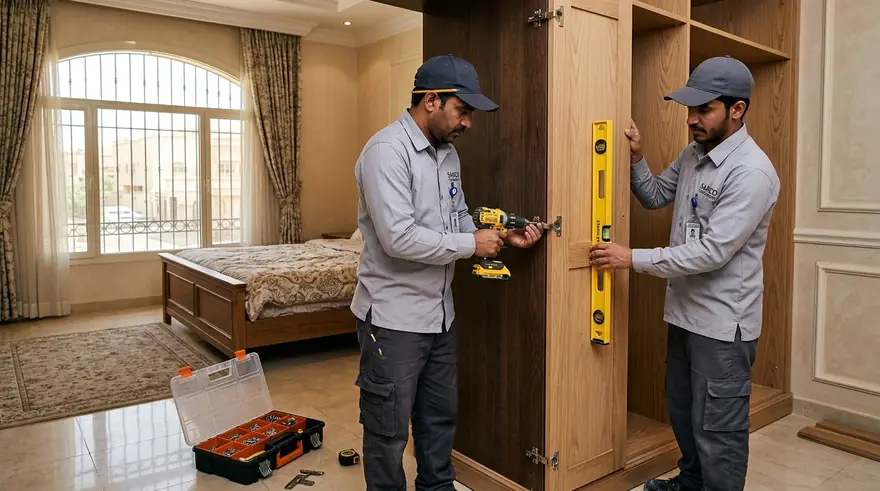
A well dismantled piece travels lighter and arrives safer
Taking large furniture apart is not a luxury but a necessity in many homes. A tall wardrobe may not pass through an apartment door or a narrow stairwell fully assembled, and a wooden bed takes up huge space in a truck. When it is dismantled correctly the risks drop: no scraping on walls, no strain on joints, and the parts pack into the vehicle far more cleverly.
But dismantling is only half the job. The other half is documentation: which panel belongs to which door, which screw to which hinge, and the order of the drawers. Without that, rebuilding at the new home becomes guesswork that ends with a crooked unit or a door that will not close properly.
Pieces that usually need taking apart before a move
The most common are large wardrobes and bedroom sets with bed frames and headboards, TV units and bookcases, dining tables with removable legs, and desks and shelving. Fitted kitchens are a special category that needs study before anything is touched and may not be part of the standard service.
Some items are never taken apart and are moved whole with special protection, such as sofas, mattresses and fridges. Deciding what to dismantle and what to leave is a technical judgement made after seeing the piece, which is why we ask for photos before agreeing the quote lines.
How dismantling and reassembly runs, step by step
These steps repeat for every piece, even though details differ between a wardrobe and a bed:
Photograph the piece and record its condition
Before anything is loosened, photos are taken from several angles as a reference for the original layout and pre-move condition.
Empty it and detach moving parts
Drawers and shelves are removed and doors taken off where needed, which lightens the load and protects hinges.
Dismantle panels and joints with the right tools
The correct driver is used for each screw type so heads are not stripped and holes in wood are not widened.
Number the parts and collect the hardware
A code goes on each panel and the screws go in a bag named for that piece.
Wrap the panels with suitable protection
Edges, corners and glossy faces are covered with materials that prevent scratching on the road.
Reassemble and check alignment
At the new home pieces are rebuilt in reverse order and doors, drawers and levels are checked.
Dismantling and assembly details by furniture type
Each type of furniture has its own points:
Wardrobes
Large panels, heavy doors and hinges; doors are numbered and hinges kept with their own wardrobe.
Beds
Side rails, headboard and legs; frame parts are grouped together and headboard corners get extra padding.
TV units and bookcases
Thin panels that damage easily; they need wrapping that protects edges and any glass.
Tables
Removable legs and a top that may be marble or glass; the top is separated from the base and each part protected on its own.
Desks and shelving
Fairly light but full of screws; each group of fittings is kept in a labelled bag.
What affects dismantling and assembly time
Time varies with the piece and its circumstances:
| Factor | Shortens time | Lengthens time |
|---|---|---|
| Condition of the piece | Newer piece, sound screws | Old screws or strong adhesive |
| Original manual | Manual or photos available | No assembly reference |
| Workspace | Roomy area | Tight room and narrow hall |
| Number of pieces | A few items | Whole rooms and several units |
| Access | Ground floor or lift | Upper floor, no lift |
These are the factors we ask about when estimating time, which is why we request a description and photos rather than quoting a rough figure. An honest estimate protects you from surprises on the day.
The numbering system that stops parts going missing
Good numbering starts with a simple key: a room code, then the piece name, then the part number. For example master bedroom, wardrobe, right panel three. It is written on removable tape on a hidden face so no mark is left behind. Screws and fittings go into a bag with the same code, fixed to the piece or kept in a dedicated box.
This habit alone saves hours at the new home, because whoever assembles does not waste time hunting for a screw or matching a panel. It also separates organised work from improvised work, which is exactly what to look for when you compare dismantling quotes.
The tools a dismantling and assembly crew needs
Good work needs a range of tools: drivers in several sizes and head types, hex keys, a rubber mallet, a cordless drill with adjustable speed and a spirit level to check straightness. With the tools come protection materials: covers, blankets, suitable tape and small bags for hardware.
The wrong tool is what damages furniture most at the dismantling stage; a rounded screw head or an enlarged hole in a wooden panel never goes back to how it was. That is why we stress that this is a skill, not brute force, and that experience and equipment are what protect a piece.
Moving fitted kitchens: a special case that needs study
Custom kitchens are not ordinary furniture. They are fixed to walls, connected to water and electricity and sometimes made to measure for a specific space. Taking one out and refitting it elsewhere can require plumbing and electrical specialists, and its dimensions may not match the new kitchen.
So we ask for photos and information about the kitchen before making any promise, and to confirm that this service is available for your request please contact us. Many people choose to move only appliances and utensils and leave the fixed units, which is sensible in some cases.
The full bedroom: the most common request
A bedroom gathers many pieces: bed, headboard, side tables, a large wardrobe and a dresser. It is among the most requested for dismantling because the wardrobe and bed take up large space and are hard to carry out whole. Organisation is the key: the wardrobe is dismantled first, then the bed, and parts are grouped by room so they unload in reverse order.
At the new home the bed and wardrobe are rebuilt first so the family can sleep the first night, then the remaining pieces follow. This practical order eases pressure on moving day.
What you can do before the crew arrives
You can speed up the work with simple preparation: empty wardrobes and drawers completely, take down hanging clothes and clear small items from the tops of furniture. If you have the original assembly manual or photos of how the piece was built, bring them; they are a valuable reference.
If you have pieces built in a complicated way, such as well-known flat-pack furniture with many panels and screws, tell us the model if you know it. And avoid dismantling anything yourself unless you are confident, since a wrong dismantling can damage panels before the crew even arrives.
- Empty wardrobes and drawers fully
- Find any original assembly manual
- Photograph pieces and send them in advance
- Do not dismantle complex pieces without experience
Protecting panels and glass in transit
Dismantled panels are more exposed to scratches than assembled pieces because their edges are bare. So edges and corners are wrapped in soft materials and panels are stacked upright and supported, not stacked flat where they press on each other. Glossy surfaces are separated by layers that prevent rubbing.
Glass and mirrors get their own protection and travel in a safe position. The better the protection, the lower the chance of damage that would force you to buy a replacement.
How to check a quote really includes reassembly
Many quotes mention dismantling and assembly in the headline but exclude reassembly in the details or limit the number of pieces. Ask directly: is reassembly at the new home inside the price? How many pieces does it cover? Are any pieces excluded, such as fixed kitchens?
And ask for it in writing. Avoid agreements that say we will sort it out on arrival, since that phrase causes most disputes. Clarity on what is covered keeps comparison fair and protects you from a surprise charge.
How floors and lifts affect dismantling
On upper floors with no lift dismantling matters even more, because large assembled pieces rarely pass narrow stairs. In buildings with small lifts the lift dimensions decide what can travel assembled.
So tell us the floor, the lift size and the width of doors and stairs. This information changes the dismantling plan and the number of workers needed, and makes the quote more accurate.
Mistakes that repeat when dismantling and assembling
The first is dismantling without documentation, so panel order is lost. The second is mixing all screws in one large bag, which makes assembly slow as everything must be matched. The third is using the wrong tool, which strips screw heads. The fourth is stacking panels on top of each other without protection, scratching surfaces.
The fifth is postponing assembly at the new home without setting priorities, leaving large pieces piled in hallways for days. Avoid these by agreeing the plan and order in advance.
What is specific about dismantling in Saihat homes
Homes in Saihat vary between apartments, villas and multi-storey buildings, which shapes the way work is done: villas with wide entrances may allow larger pieces to travel whole, while apartments in older buildings may force most pieces to be taken apart. Because Saihat sits between Dammam and Qatif, many moves run between these cities.
For a general introduction to our service in Saihat see the page on moving in Saihat, and for details on protecting furniture see the furniture moving page. Here we focus specifically on dismantling and assembly.
Check after assembly before the crew leaves
Once assembly is done open every door and drawer and check they move smoothly with no unusual gaps. Check straightness with a level and make sure the piece is stable and does not wobble. If you find spare screws, ask the crew where they belong before they leave.
Record any comment immediately with photos. Reporting at once is far easier than discovering a week later that a door will not close properly. A good crew welcomes this check.
In short: tidy dismantling and accurate assembly protect your furniture
Dismantling and assembly is a core part of moving in many homes, and its quality depends on documentation, tools, experience and panel protection. Make sure your quote says in detail what it includes, prepare what you can, and send photos in advance.
You are welcome to contact us by phone or WhatsApp, and we will reply with a clear outline of the service suited to your case, without promises your details do not support.
Frequently asked questions about assembly movers in Saihat
Short answers to what people ask before ordering:
Is dismantling and assembly included in moving?
Does dismantling damage furniture?
Do you move fitted kitchens?
How long does a bedroom take?
Do I need the assembly manual?
Can I dismantle furniture myself?
What if a screw goes missing?
How do I request the service?
Related pages
Keep reading about dismantling, assembly and moving:
Moving in Saihat
Service guide for Saihat
Furniture moving in Saihat
Protecting each furniture type
Cheap movers in Saihat
How to lower cost
Villa moving in Saihat
Villa scenarios
Furniture assembly service
Provincial overview
Moving with assembly in Dammam
The same service in Dammam
Moving with assembly in Qatif
The service in Qatif
How it works
Steps of the service
Safwa movers with assembly
Dismantling and rebuilding furniture
Send photos of the pieces to be dismantled so we can plan crew and time
Tell us the number of wardrobes, beds and fitted units, and whether any are flat-pack store furniture. We will reply with a dismantling and assembly plan and what the service covers.