Moving Truck in Khobar: How Your Building and Your Load Decide the Right Vehicle
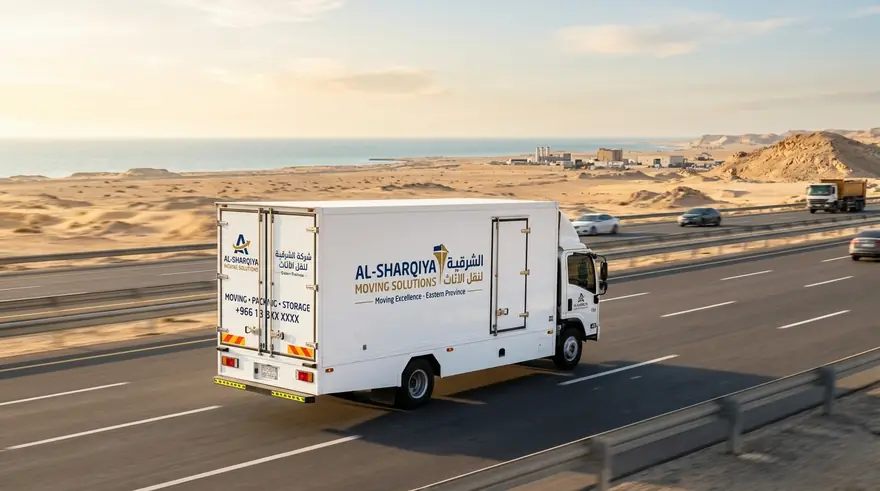
Choosing a moving truck does not start with its size but with where it will park, the route it will take and what it will carry. A truck that suits a villa in a wide district may get stuck outside an apartment block on a narrow street, and a small one that handles a flat may not hold a whole house. Here are the kinds of moving truck used in Khobar, how to decide between closed, open and padded bodies, and what to ask and check before the first piece goes on.
Three questions that decide the right truck
First: what am I moving? A whole home with furniture and appliances, part of it, or a few single pieces? Second: where will it be loaded? Is the street wide and parking available, or is the entrance narrow or the basement low? Third: what will the journey be? A short hop within the district or a run to another city on a fast road?
Answering these three points narrows down the type, capacity and number of trips, and saves you from picking by name or price alone.
The usual types of moving truck
Four types come up most often: a small vehicle for a few pieces or a partial move, a medium truck known as a dyna for flats and small to medium homes, a larger closed truck for whole houses and villas and a padded-interior vehicle that adds protection for delicate furniture. The choice depends on the load and the site, and two types are sometimes combined in one move.
A quick selection table
General guidance, confirmed after seeing photos.
| Vehicle | Suits | Main advantage | Watch out for |
|---|---|---|---|
| Small | A few items or a partial move | Easy movement and parking | Very limited space |
| Medium dyna | Flats and small homes | Balance of capacity and flexibility | May need two trips for a bigger home |
| Large closed truck | Whole house or villa | One well-ordered load | Hard to enter narrow streets |
| Padded interior | Delicate and upscale furniture | Less rubbing, more protection | Capacity depends on fit-out |
These are general pointers. We confirm the type once we know the building and the load.
Closed or open: protection from dust and sun
Household furniture should not travel exposed. Dust in Khobar and nearby cities finds its way into fabric and wood, sun and humidity affect colours, lacquer and leather, and a passing shower can ruin upholstery. So we prefer a closed body for furniture and appliances, and reserve open bodies for special cases involving items that tolerate the outdoors, well covered and tied down.
Padded vehicles: when they are worth it
Interior padding reduces rubbing between pieces and the walls and adds a layer that absorbs light shocks. It helps when you move upscale furniture, lacquered wood or many glass and marble pieces. For ordinary moves the blankets and dividers we place ourselves may be enough. It depends on your furniture and the level of protection you want, and we explain the difference and suggest what suits you.
Steps for choosing and preparing the truck
From estimate to departure.
Describe the site
Tell us the building, street, floor, whether there is a lift and any dedicated parking.
Estimate the load
Send photos of rooms and large pieces so we can judge volume and trips.
Pick the type
We settle on small, dyna, large or padded according to your case.
Inspect and equip
We check the body is clean and that anchor points, blankets and straps are ready.
Load and secure
We arrange by weight, strap down and test stability.
Depart and arrive
We take a suitable route and call you so the unloading spot is ready.
Street width and parking: the first limit on any truck
Before thinking about capacity ask where the truck will stand. On narrow streets with parked cars a big lorry may not get close, which forces a dyna or extra trips. In wider districts a larger truck can work easily. When you photograph the entrance and street for us we offer the best solution, and sometimes ask for a picture of the likely stopping point.
Towers and low entrances
In many towers the covered entrance or ground parking is low, and some have a service gate with fixed hours. Find out the permitted entry height before you book and ask building management whether a moving truck may stop and for how long. If a large truck cannot enter, it may park outside and the load is carried over by trolleys or a smaller shuttle vehicle, which takes time we work out with you.
What to check in the truck before loading
Three things are easy to see: that the body is clean and free of oil and dirt, that there are anchor points or rails for straps and that blankets and dividers are ready. Watch the driver too: does he ask about the route and the lift? Does he explain how the load will be arranged? A truck alone carries nothing safely. What matters is who runs it and how its load is arranged.
Loading and securing: what makes a load safe
Heavy appliances and wardrobes go at the front of the body, then mid-weight pieces, with lighter items on top. The load is tied to anchor points with taut straps, dividers and blankets go between touching surfaces and gaps are filled with light cartons. Before leaving, a worker tests it by shaking. That way the cargo moves as one block, with nothing shifting over bumps or when braking.
Roads and timing: avoiding congestion
Main roads in Khobar and nearby cities are busy at peak hours, which lengthens the trip and increases vibration and stop-start movement. So we prefer an early start when your circumstances allow and choose a route to suit the destination. On very hot days we avoid leaving a loaded body closed in the sun for long before departure.
One truck or more
Sometimes the best option is two vehicles: a large truck for furniture and a smaller one for cartons and delicate belongings you prefer to carry separately. Or a single truck making two trips if the distance is short. The yardstick is your available time, the crew size and whether two vehicles can park together, and we price both options so you can compare.
The vehicle and the cost: what changes with the type
When you ask about the cost of a moving truck, do not reduce it to the price of the vehicle alone. The real cost is shaped by the number of trips you need, how long the truck and crew stay at the building, waiting costs if parking is hard and the time a better-fitting size saves. A truck that looks cheaper may cost more if two trips are needed, and a larger one may be the cheaper option if the work is done in one go. So we estimate the vehicle together with the load and the site.
A backup plan if the truck cannot stop
Parked cars, roadworks or a temporarily closed entrance can surprise you on moving day. So we ask in advance for an alternative place nearby where the truck can stop and identify the closest possible unloading point. If we have to park further away we use trolleys to reduce the carrying effort and tell you how it affects the timing. Having a fallback ready prevents confusion on the day and protects the schedule.
The truck and the crew go together
The size of the crew follows the size of the truck and the nature of the floor: a big truck needs more workers for fast loading, and a small one may need a smaller team. The number also changes with a lift, or without one, and with dismantling. So we never estimate the truck apart from the crew, and you will find details on our page about moving workers in Khobar.
Common mistakes when choosing a truck
Booking a large truck for a narrow street so it cannot stop, booking a small one for a big load so trips multiply, ignoring the height of a parking entrance, choosing an open body for delicate furniture, not asking about securing and agreeing to a truck without asking how clean and equipped it is. Avoiding these starts with describing the site and load accurately.
How we help you choose
We ask about the building, street and floor, request photos of rooms and large pieces and then suggest the type and number of vehicles with the reason, instead of just naming a truck. If we find your first estimate does not match reality we tell you plainly. The aim is for your load to arrive in good order at a sensible cost.
Questions about moving trucks in Khobar
Short answers before you book.
What kinds of moving truck are available?
Is a closed or open body better?
When do I need a padded truck?
What if my street is narrow?
Does the parking entrance height matter?
What do you check in the truck?
Do I need more than one truck?
How do I know which vehicle I need?
Related pages on moving vehicles
Guides to choosing a truck and crew.
Movers in Khobar
The main service page for the city.
Dyna moving in Khobar
When a dyna is enough.
Moving workers in Khobar
The crew that rides with the truck.
Closed moving trucks
Protecting loads from sun and dust.
Moving vehicle types
A regional comparison.
Padded moving trucks
Protection for delicate furniture.
Large trucks
For whole houses and villas.
Apartment movers in Khobar
Moving from flats and towers.
Request a quote
Send your move details.
Want a truck that fits your site and load?
Send photos of the rooms, the entrance and both addresses and we will pick the vehicle type and number of trips, without obligation.