Movers and Packers in Hafar Al-Batin: How Your Furniture Survives a Long Road
Hafar Al-Batin sits well away from the main Eastern Province hubs such as Dammam and Khobar, so a move to or from the city is a different job from shifting across a neighbourhood. The distance is longer, the vibration is stronger and the load spends more hours on the truck. That makes packing your first line of defence. This page explains how furniture is packed before a Hafar Al-Batin move, which layers suit which items, and how to prepare your home before the crew arrives. The information is general and non-binding; final details depend on the size and route of your move.
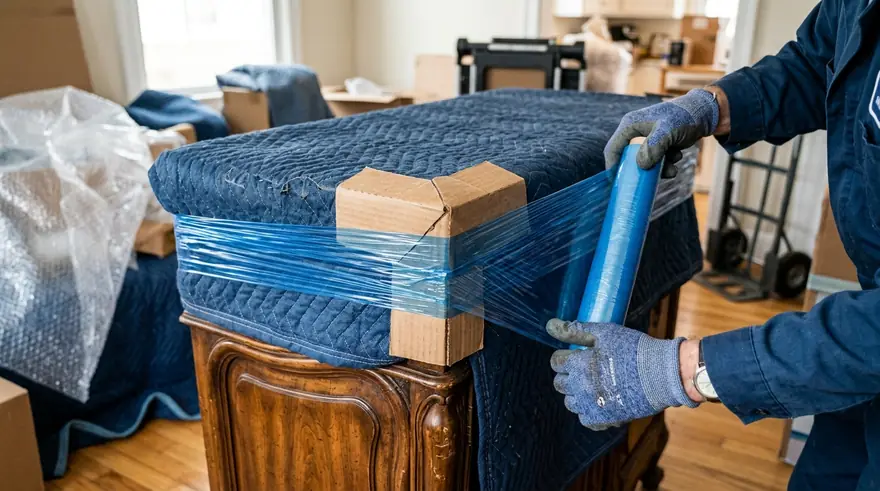
On long hauls, packing is not optional
On a short trip a simple cover may be enough, but on a long road the load is exposed to hours of continuous vibration and surfaces rubbing together. That is what causes scratches, chipped edges and slowly loosening screws. Good packing rests on one idea: no two pieces touch directly, and no delicate surface is left without a layer protecting it.
For moves involving Hafar Al-Batin there is another point: the crew cannot simply drive back for a missing roll of wrap, so rolls, cartons and corner protectors are calculated before leaving the site. That preparation is what separates a smooth move from one full of surprises.
How we build protection layer by layer
Layers are chosen by how delicate the item is. The first layer is clean, ink-free paper for glossy or pale surfaces, because ink can transfer. Next comes bubble wrap for corners, edges and glass. Finally the thick blue stretch film wraps the whole piece, holds doors and drawers shut and keeps dust out.
For upholstered wooden furniture, moving blankets go over the film when needed to absorb knocks. This graded approach makes the wrap behave like one shell that protects against impact, friction, dust and humidity, and it comes off easily at the destination without sticky residue on timber. You can read more about the packing system we follow.
- Ink-free paper for glossy surfaces
- Bubble wrap for corners and glass
- Thick blue stretch film for the body
- Extra blankets for heavy pieces
Packing each type the way it needs
Not everything is wrapped the same way. These are general examples:
Bedrooms and wardrobes
Doors and drawers are secured, corners get bubble wrap, then the whole piece is film-wrapped; large parts may be dismantled where it helps.
Sofas and majlis seating
Covered with film that protects fabric or leather from dust and rubbing, leaving some breathing room where possible.
Glass and marble tables
Tops are separated, edges guarded with reinforced corners and bubble wrap, then secured upright in a safe spot on the truck.
TVs and appliances
Wrapped in bubble and fitted cartons, ideally the original box if you still have it, with cables bundled in a bag.
Mirrors and frames
Several layers of paper and bubble, carried upright and kept away from heavy items.
Kitchenware and small items
Packed in strong cartons, heavy at the bottom and light on top, with the room name and general contents written on each.
How a packing move runs before the journey
The order of work is part of the protection:
Learn the details
We ask about home type, rooms, delicate items, floor, elevator and how far the destination is.
Prepare materials
Film, bubble, cartons and corner guards are estimated by size, with a small margin.
Dismantle what needs it
Large parts that put a piece at risk are taken apart and screws are bagged and numbered.
Pack room by room
We start with rooms you use least and close the main living spaces last so you stay comfortable.
Load and secure
Heavy items go first and are strapped, and gaps are filled to limit movement on the road.
Unwrap and rebuild
Wraps are opened in the destination rooms and dismantled parts are reassembled.
How to organise small items in cartons
A good carton starts with a well-taped base and sensible weight: heavy items at the bottom, lighter ones on top, and never so full that it becomes hard to lift. Gaps are filled with crumpled paper or cloth so nothing shifts under vibration, and each carton is labelled with its room and general contents.
For glassware and ceramics, wrap each piece separately and stand it upright rather than flat, because an edge is stronger than a face. Keep important papers, jewellery, medicines and small valuables with you rather than on the truck. For more detail see boxes and packing materials.
What each size of move needs
A general table to show the idea; the real estimate follows our conversation:
| Move size | Packing focus | Note |
|---|---|---|
| Small apartment | Core furniture and a few cartons | Quick; focus stays on fragile items |
| Medium apartment | Bedrooms, kitchen and appliances | Needs scheduling and an organised pace |
| House or villa | Many pieces, glass and marble | Best to start packing before the date |
| Move between cities | Extra securing and gap filling | The key is preventing movement on the road |
These are general, non-binding indicators.
What a long road changes in the way we work
The longer the distance, the more the loading order matters: heavy and stable pieces low and near the front wall, lighter ones above, and everything strapped so nothing slides. No big gap is left that lets items move with braking or bends.
Departure time is also considered to avoid the hottest hours, because extreme heat affects some materials such as candles, cosmetics and some adhesive wraps. A covered truck protects furniture from the dust common on desert roads. See long-distance moving for the wider picture.
Unwrapping and resettling without chaos
On arrival, pieces are taken to their new rooms and unwrapped inside the room itself so dust and leftover film do not spread elsewhere. Dismantled parts are rebuilt and doors and drawers are checked for stability.
It helps to review the pieces with the crew at handover and raise any remark straight away. Empty film and cartons are gathered neatly so the home is left clean. If you also need assembly and re-assembly, it can be arranged within the same move.
Mistakes we see before moves
Leaving packing to the night before causes rushing and neglected fragile items. Overloading large cartons makes them tear. Putting tape directly on polished wood or leather can leave marks. Other common errors are unsealed liquids and moving appliances without bundling and labelling cables.
The fix is simple: start early with items you do not use daily, label every carton, photograph valuable pieces beforehand and ask the crew to fully wrap large furniture. That reduces disputes about the condition of items and keeps responsibilities clear.
- Start packing early
- Label every carton
- Photograph valuable pieces
- Keep tape off polished wood
What affects the cost of packing and moving in Hafar Al-Batin
We do not quote numbers here because every move is different. The factors are the amount of furniture and number of delicate items, whether packing is full or partial, the distance and road, the floor and elevator situation, the timing, and whether assembly is needed. The clearer the information you send, the closer the estimate.
When comparing offers, always ask what is included: are packing materials included, is assembly included, is wrapping full or only for large furniture. You can read our quote comparison guide or request an estimate through the quote page.
A quick checklist before moving day
A few days ahead, sort your belongings and discard what you do not need, since every item fewer saves time and materials. Prepare keys for doors and cabinets, empty drawers of delicate valuables, and unplug appliances early enough to cool or dry if needed.
Measure doors and lifts in the new building, book the elevator or truck parking if required, and decide where each room goes so the crew can place items directly. These small steps save a lot of time on the day.
- Sort and discard
- Empty fragile drawers
- Measure doors and lifts
- Decide where things go
Questions about packing and moving in Hafar Al-Batin
Short answers to help you prepare:
Does packing cover every item?
What materials are used?
Do I need to dismantle furniture first?
How are TVs and mirrors packed?
Can only part of the home be packed?
Is packing different for a move inside Hafar Al-Batin versus another city?
How long does packing take?
How do I request an offer?
Related pages
You may also find useful:
Hafar Al-Batin movers
The service in the city
Furniture moving Hafar Al-Batin
Furniture moving details
Best moving company in Hafar Al-Batin
How to choose a mover
Cheap movers Hafar Al-Batin
Cost factors and savings
Furniture packing service
Packing across the region
Long-distance moving
Moves beyond the city
Request a quote
Send your move details
Tell us the size of your move and we will plan the packing
Send your home type, number of rooms, any fragile items such as mirrors, TVs and marble, and whether the move stays inside Hafar Al-Batin or goes to another city. We review the details and outline a packing plan with no obligation. Call or message 0566300558.