Movers with Furniture Assembly in Hafar Al-Batin: How Pieces Come Apart and Go Back Together
Many furniture pieces will not fit through a door or will not survive the road while fully assembled, so dismantling and re-assembly is a core part of the move rather than a side service. In Hafar Al-Batin moves it matters even more because the distance is longer, the load faces more vibration, and neatly dismantled parts stack more efficiently and move less inside the truck. This page explains how pieces are taken apart, how parts and screws are labelled, what is rebuilt at the destination and which factors change the time needed. The information is general and non-binding; details follow once we know your items.
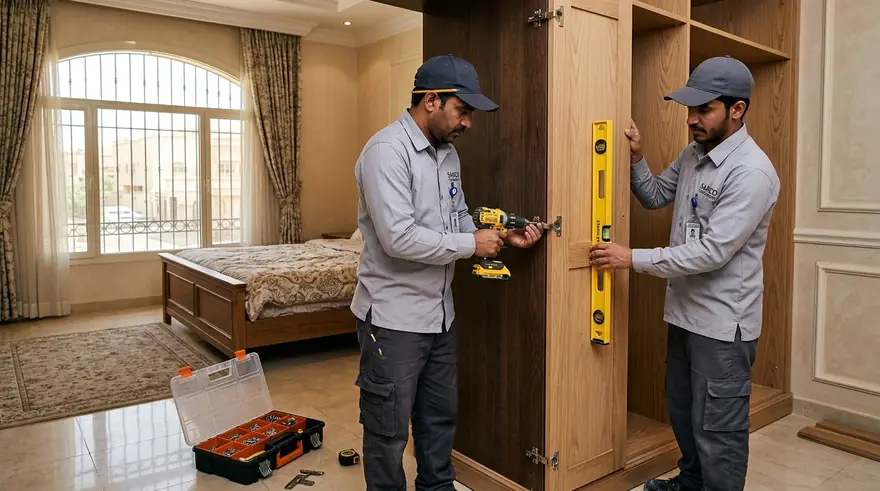
Dismantling and assembly protect furniture; they are not just extra time
A dismantled piece is smaller and lighter, fits through tight doors and stairs, and handles a long road better because large parts that can twist are not left hanging on their hinges. A heavy piece moved fully assembled, by contrast, can crack at corners and weaken at joints.
For Hafar Al-Batin movers covering long distances, tidy dismantling saves truck space and reduces load movement. But good dismantling is only complete with careful re-assembly, so we treat both as one process that starts with labelling and ends with a firm piece in its new place.
Items that usually need dismantling
Bedroom sets with beds, headboards and multi-door wardrobes are the most common, along with large wardrobes with sliding or hinged doors, some desks, large dining tables, bookshelves and wall units. Sometimes only doors and legs are removed to ease carrying without taking the whole frame apart.
Solid pieces sold fully assembled, such as complete wooden seating or older furniture held together with glue, may not be suitable for dismantling because it can weaken the structure. In that case we assess from photos and agree what is best. This overlaps with bedroom moving, which we cover in its own page.
- Beds and headboards
- Large wardrobes and sliding doors
- Big tables and desks
- Shelves and wall units
How a piece comes apart without damage
Order of work is the secret of a clean job:
Inspect the piece
We check the fixing type and look for hidden screws, locks or special hinges before any dismantling.
Empty it
Drawers and shelves are emptied and internal glass is secured so it cannot move.
Label
Each part gets a number or coloured tape and the parts of each room are listed to make rebuilding easy.
Bag the screws
Screws, pins and keys go into a sealed bag marked with the piece name and fixed to the piece itself.
Protect the parts
Panels and doors are wrapped, and corners and edges are guarded before loading.
Load in order
Panels stand upright close together, strapped, with delicate parts kept apart from heavy ones.
What dismantling and assembly really require
The work depends on suitable tools and an experienced hand:
Hand and power tools
Screwdrivers of various types, drills, wrenches and a rubber mallet to handle different fixings.
Flat-pack and solid-wood experience
Assembling flat-pack with metal fittings differs from classic timber with dowels and glue.
Labels and bags
Coloured tape, bags and markers ensure every part returns to its place without guesswork.
Protective materials
Blankets, film and bubble wrap to protect dismantled panels from scratches on the road.
Enough time
Careful assembly keeps the piece stable and stops doors and drawers from wobbling later.
Post-assembly check
Doors, drawers and joints are tested and tightened before the crew leaves.
The biggest part of the job: a full bedroom
A bedroom needs the most dismantling: a large bed has a frame, legs, headboard and base, while a wardrobe may have several doors, shelves, drawers and mirrors. Work starts by removing and protecting doors and mirrors, then shelves, then the frame. Each group of screws stays with its piece.
At the new place assembly runs in reverse: frame first, then shelves, doors and finally mirrors. Door alignment is adjusted so nothing sticks, and tall pieces can be fixed to the wall where needed with your consent. This care returns the room ready for use in a short time.
Flat-pack furniture, kitchens and fitted units
Flat-pack furniture needs special attention because its small metal and wood fittings can wear if taken apart repeatedly, so it is dismantled gently with the right tools. Photographing the piece before dismantling helps trace the order.
For kitchens and fitted units we review the situation before promising anything: are they fixed to the wall, do they need connections? We dismantle movable units and rebuild them, but electrical and plumbing connections need a specialist technician. See IKEA furniture moving for a similar idea.
Furniture and what it needs
A general table to show the idea:
| Piece | Usually dismantled | Care when rebuilding |
|---|---|---|
| Double bed | Headboard, legs, base | Firm legs and no wood squeak |
| Large wardrobe | Doors, mirrors, shelves | Door balance and mirror fixing |
| Dining table | Legs or top | Joint safety and even height |
| Desk with drawers | Drawers and runners | Smooth drawer sliding |
| Bookcase and shelves | Side panels and shelves | Stable frame, fixed if needed |
These are general, non-binding guidelines.
What lengthens or shortens dismantling and assembly
Time depends on the number, size and complexity of the pieces and whether instructions or earlier photos exist. A piece that was dismantled before and kept its parts is faster than an old piece glued together or with rusted screws. A cramped room also slows the crew.
Missing parts matter too: if screws or keys were lost in an earlier dismantling we may need suitable replacements, which takes time. For this reason we advise leaving pieces as they are and not trying to dismantle them before the crew arrives, since an earlier wrong dismantling makes things much harder.
Road distance and its effect on dismantling
The longer the distance, the more dismantling matters because it protects parts from vibration and lets panels sit along the truck walls. Ideally dismantling and loading finish before the hottest hours and assembly at the new place follows after a short rest for the crew.
For moves between Hafar Al-Batin and the rest of the Eastern Province it is wise to split large jobs into two stages: dismantle and load, then travel, then unload and rebuild. This can be agreed in advance so the schedule is clear.
What to do before the crew arrives
Empty wardrobes and drawers of clothes and belongings, and clear rugs and small items from the room to leave working space. Find any manuals or photos of the original assembly and tell us if some pieces were dismantled and rebuilt before.
At the new place decide where each piece goes, make sure the floor is clean and power is available if power tools are needed. If the building restricts noisy work at certain times, let us know so we follow the schedule.
- Empty the pieces
- Clear rugs and small items
- Decide the new spot
- Mention building rules
Mistakes that make dismantling harder
The main ones are using unsuitable tools that strip screws, mixing screws from two pieces, and leaving internal glass unsecured. Others are moving dismantled parts without protection so panels scratch each other, and not photographing before dismantling so the assembly order is lost.
The fix is to leave dismantling to the crew where possible, and if you must do it, label, photograph and bag screws for each piece. That cuts time and cost and protects the furniture. For more see the dismantling and re-assembly guide.
What affects the cost of dismantling and assembly with the move
We do not quote numbers because every move is different. Cost depends on the number, type and difficulty of dismantled pieces, whether they are new or old, the floor and elevator situation, the distance and whether packing is needed. The more photos and exact counts you send, the clearer the estimate.
When comparing offers check whether dismantling and assembly are included at both ends and whether packing and materials are covered. You can ask for an estimate through the quote page or read about packing with the move in Hafar Al-Batin to see what else can be added.
Final check before the crew leaves
After assembly, open and close doors and drawers, check pieces are stable and do not wobble, and sit carefully on the bed to confirm it is firm. Do not hesitate to ask for screws to be tightened or a door adjusted.
Note any remark with photos straight away, then check that leftover parts and empty bags have been cleared. This last step ends the move with you confident every piece is back in good condition.
Questions about moving with assembly in Hafar Al-Batin
Short answers:
Is dismantling and assembly included in the move?
Are all pieces dismantled?
How are screws kept?
Does it cover flat-pack furniture?
Can pieces be assembled on a high floor?
Should I dismantle before the date?
Do you handle electrical and plumbing connections?
How do I request an offer?
Related pages
You may also find useful:
Hafar Al-Batin movers
The service in the city
Packing with the move
Packing details
Best moving company in Hafar Al-Batin
Selection criteria
Furniture moving Hafar Al-Batin
Furniture moving details
Furniture assembly service
The service across the region
Bedroom moving in Dammam
Bedroom details
Request a quote
Send your move details
Send the list of items that need dismantling and assembly
Tell us the type of items (bedrooms, wardrobes, beds, desks, shelves), how many, whether they are solid wood or flat-pack, and whether the move stays inside Hafar Al-Batin or goes to another city. We review it and outline the plan with no obligation. Call or message 0566300558.